![MaritimeJournal[Seawork]](https://www.maritimejournal.com/wp-content/uploads/2026/09/MaritimeJournalSeawork.svg)




Gothenburg testing contaminated dredge spoils
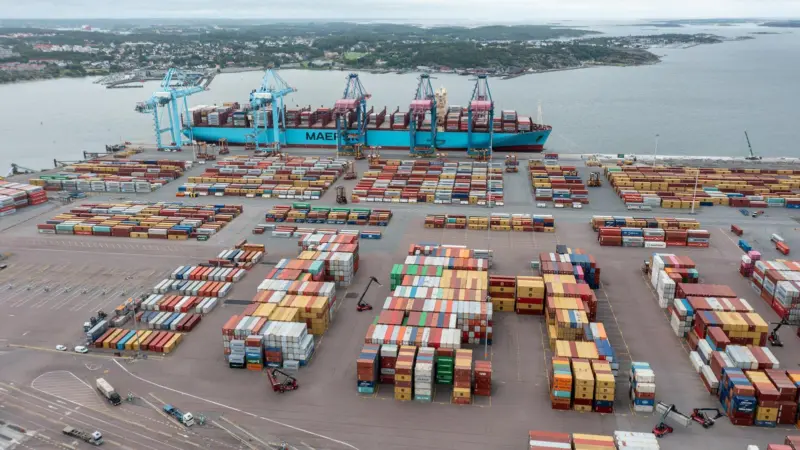
Many ports are faced with the problem of contaminated dredging spoils and how to dispose of them. Pioneering work by the Port of Gothenburg could provide a solution as the port is planning to make use of contaminated clay from a river bed to build a new freight terminal.
According to the port, a method of using the dredged spoils is currently being tested as part of large-scale field trials using dredging spoils taken from the Göta Älv river, the main river that runs through the port. Dredging spoils from this river are contaminated by a variety of substances including TBT, tributyl tin, an environmental toxin that can disrupt hormone levels. To ensure the spoils can be enclosed safely without seeping into the surroundings, exhaustive trials are being conducted. The contamination is the result of industrial pollution over the past century.
These field trials include testing two different combinations of materials. The first involves mixing the spoil with cement and slag, and the other involves mixed the spoils with cement, slag and fly ash which is a considerably cheaper and more eco-friendly alternative. The port reported that both methods have already been tested in the laboratory and now large-scale field trials are about to begin using dredging spoils taken from the area around the GÖta Älv Bridge.
“There is no suitable landfill site for contaminated spoil volumes of the size being dredged during maintenance dredging. This is a good way of using the spoils and at the same time helping to clean up the river.” explained Eduardo Epifanio, project manager at Gothenburg Port Authority. “It worked well in the laboratory and now it will be tested on a larger scale. It is important to ensure that no environmental toxins escape into the water and that the strength and durability specifications are met.” said Epifanio.
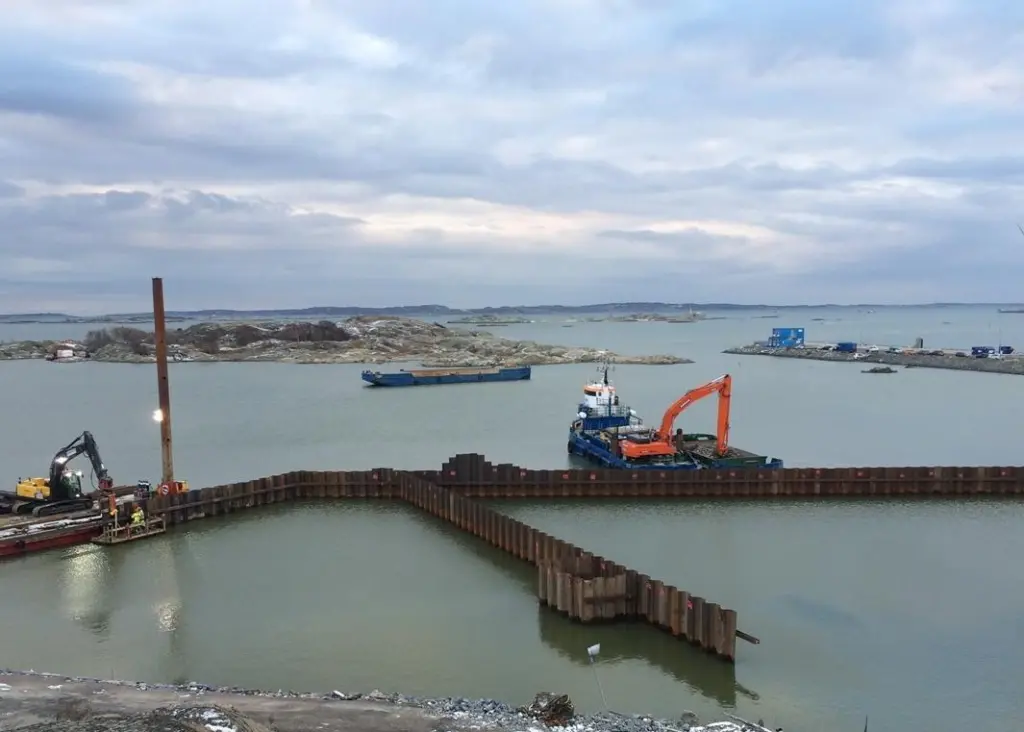
The contaminated dredging spoils from the area around the bridge are transported by barge to Arendal Bay. There the spoils are mixed with different combinations of binding agents (cement, slag and fly ash). The spoils are then pumped into two cells, which can then be compared with each other. The spoils are enclosed by a stone embankment and sheeting to prevent the contaminants from seeping into the river. The spoils will then be covered by a superstructure that will be 1.2 m thick. The first barges loaded with spoils have already arrived on site.
The new freight terminal will extend to 220,000 square meters and will be built at the outer port area at Hisingen using the clay spoils from the river, taken up as part of routine dredging to maintain the river depth thus solving two problems at one go.
By Dag Pike

Related Articles
 OTHER NEWS
 OTHER NEWS
 FEATURES & VIDEOS