![MaritimeJournal[Seawork]](https://www.maritimejournal.com/wp-content/uploads/2026/09/MaritimeJournalSeawork.svg)




A nose for the job
Coaxing a 16% increase in efficiency from a hull is impressive, but it becomes a formidable feat when even the waves and foam it creates need to be tightly controlled.
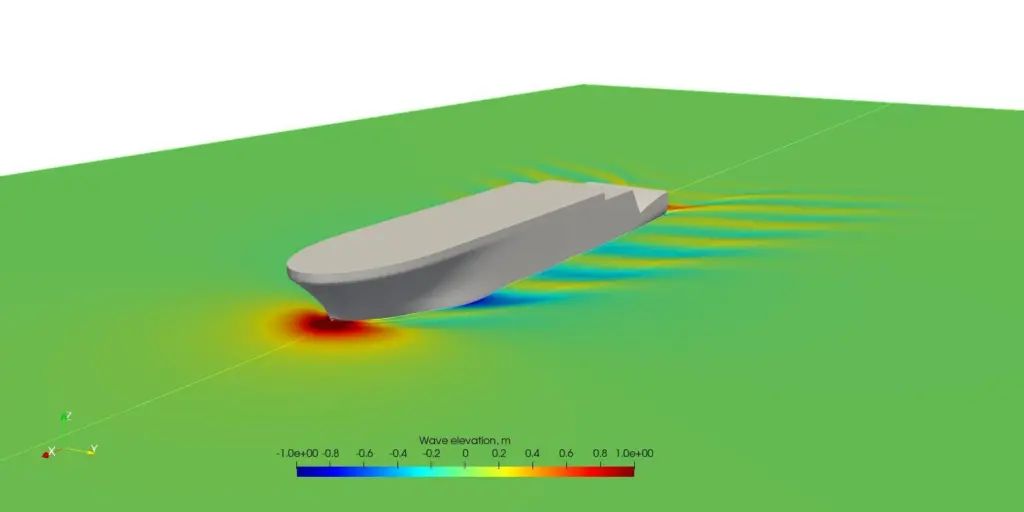
When the design team of a large research vessel recently approached the Cloud Towing Tank there were conflicting issues – mostly centred on the pros and cons of a nose job.
Larger research vessels rely on hydrodynamic hull forms: it’s not just about cutting fuel expenditure, it’s also a matter of improved seakeeping.
To this end, they’re often fitted with a prominent ‘nose’ in the form of a bulbous bow.
“These devices do create additional resistance,” explains naval architect Inno Gatin, “But the idea is you get this back as the bulbs create their own wave field, which interacts with those generated by the bow of the vessel. It forms a so-called ‘destructive wave interference’ and the net result is a smaller wave pattern.”
It doesn’t suit all ships, but in the case of this 100m-plus vessel it could have been a useful win.
However, the team had already hit other concerns.
“Even while our initial tests were pointing to lower resistance through increasing the bulb length, we already knew we needed to reduce it somehow,” says Gatin. “That was a shame.”
In fact, one of the operator’s biggest concerns was finding a bow shape that would produce as little foam as possible. That’s because the all-important sonar scanners need clear water to work well – mixing in air causes the signal to bounce back.
.As Gatin points out, these two shapes sit at opposing poles as you can’t just fill in the top of the bulb to create a more upright form without losing its important characteristics – further, it can’t protrude forward of the bow peak.
“In case of a collision you need something above water to make contact first, rather than something below,” he says.
“So the question was, how could we achieve a trade-off between the efficiency of a bulbous bow which is likely to create foam, and a more vertical stem vessel with a less efficient, not-so-prominent bulb that wouldn’t cause foam and splashing when you’re sailing through waves?”
Moreover, resolving the issues was less about hitting the midpoint on a sliding scale, and “rather more interrelated”, says Gatin.
“Of course, the owner wants to spend less on fuel… but it’s not just that. If you have a higher resistance your propeller needs to spin faster, which means that the propulsion is producing more noise,” he says. For a research vessel, this is an important issue because the onboard equipment also demands very low noise operation.
Luckily, efficiency isn’t only confined to these parameters – CTT’s combination of Computational Fluid Dynamics (CFD) and parametric shape optimisation brings other elements to the table. In fact, it was attention to the rear end of the design that gave rise to the biggest overall advantage.
“These vessels often have a submerged transom, but an almost rectangular profile at the stern,” says Gatin. “So if you move this vertically you’re not changing the waterline too much. Removing some displacement here means that you can add it somewhere else.”
Since retaining buoyancy is critical, that ‘somewhere else’ can be towards the centre of the vessel, adding volume amidship.
This also changes the form of the hull as it moves back from the bow – that is, how it transitions from a fuller shoulder into a straighter water entry.
The result is a ‘convex to concave’ pattern: a flattish ‘S’ shape that has a significant impact on overall ship efficiency and behaviour.
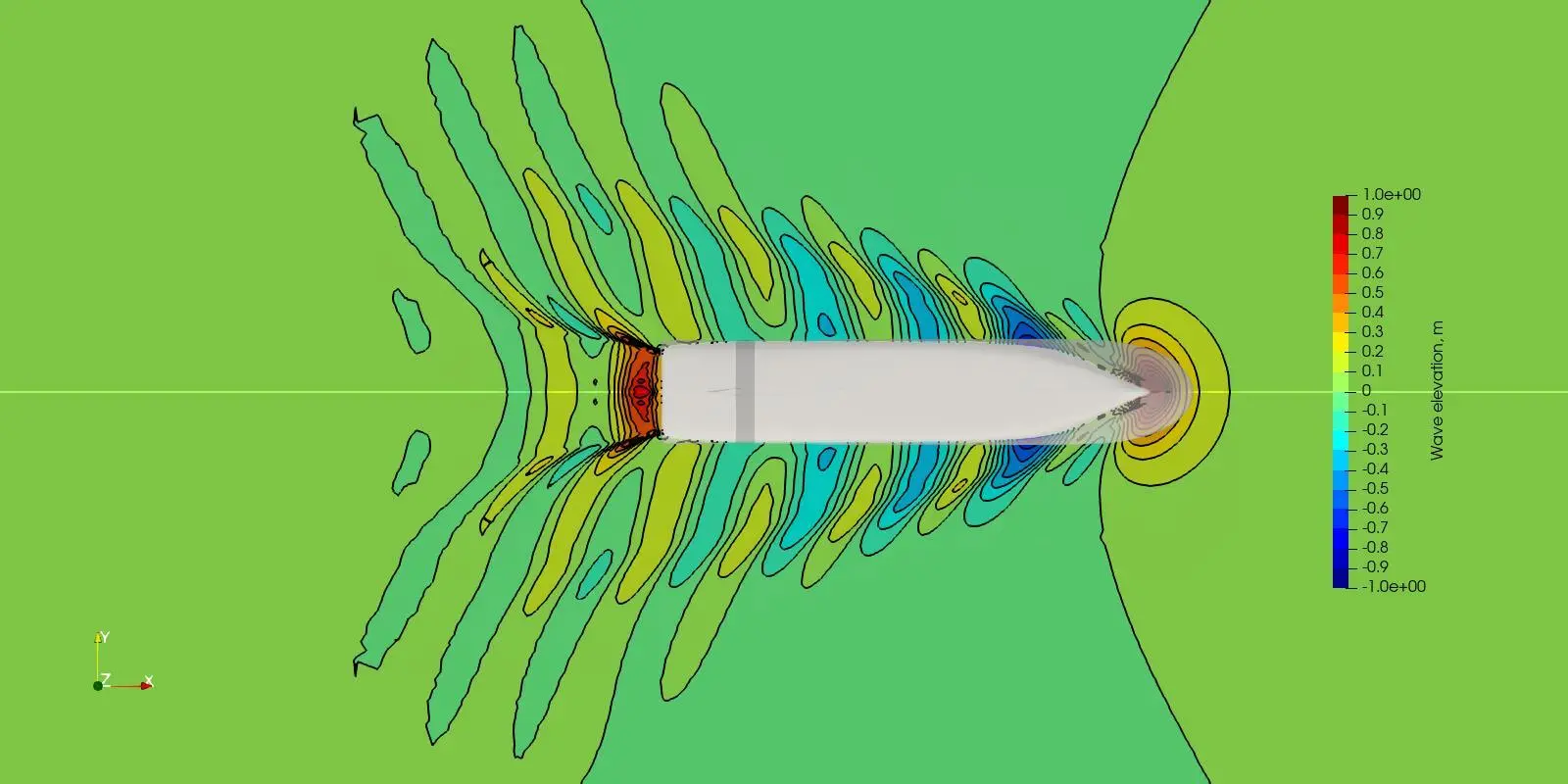
“The positioning and depth of these curves is very relevant to the way the hull interacts with the wave pattern generated by the vessel,” says Gatin. “Playing with this allows you to find a sweet spot.”
It’s also a very good move given the need for useful internal space below and working deck above, something else that CTT’s generation of alternate designs can highlight.
Finally, the research ship’s optimised hull form came together extremely well, satisfying the client’s requirements with curves in all the right places and a smaller but still effective ‘nose’.
After all, no-one can sniff at a 16% rise in hydrodynamic efficiency.