![MaritimeJournal[Seawork]](https://www.maritimejournal.com/wp-content/uploads/2026/09/MaritimeJournalSeawork.svg)



A busy first quarter for A&P
For the A& P Group, 2009 has already been a busy year, with plenty of activity ongoing in the ship conversion department at their various locations.
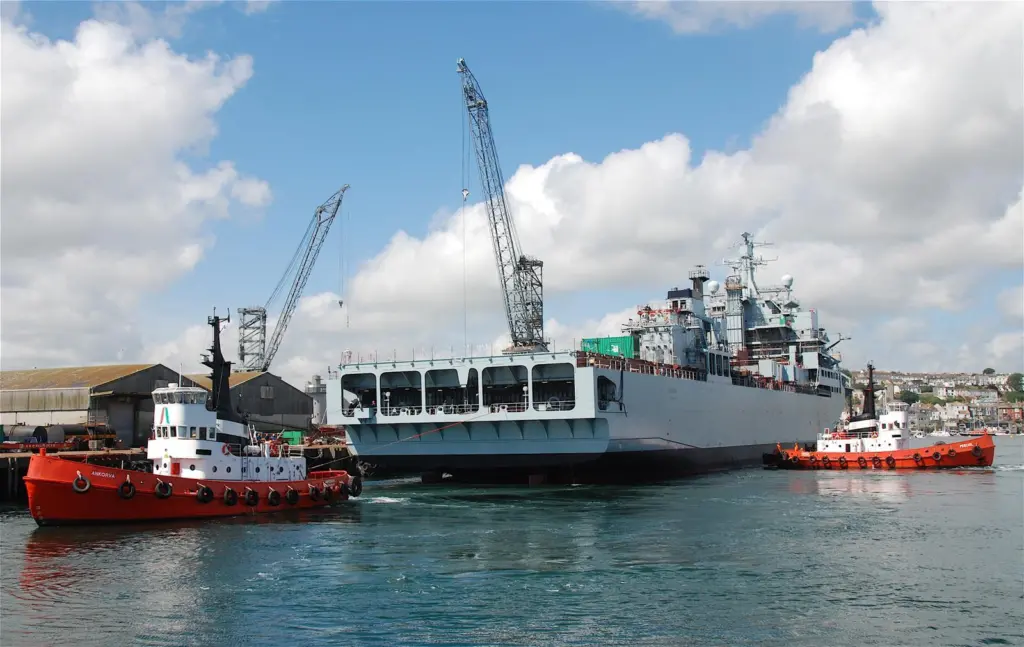
Falmouth has seen the return of
RFA Argus
to its base to undergo a 10 month ship safety conversion, currently the largest project to be undertaken by both A&P and the RFA in terms of scale and scope. The 28,000t
RFA Argus
originally had a primary role as aviation training ship capable of landing five helicopters simultaneously, with a secondary role as the British Navy’s primary casualty reception unit.
Due to capability requirements, A&P will undertake a conversion to reverse these roles, reducing helicopter capability by removing one landing spot and increasing the efficiency of the primary care facility to become the ship’s primary role.
The conversion includes the removal of the forward aircraft lift, construction of new casualty access lifts and an access/escape ramp, an upgrade and structural modification to the bridge front, a £5 million accommodation upgrade and an upgrade and replacement of the systems for refrigeration, ventilation, sewage treatment and reverse osmosis.
At A&P Tyne, the SeaFrance Berlioz, passenger Ro-Ro docked recently, becoming the first SeaFrance vessel to call there.
SeaFrance Berlioz was at the yard for a three week period to carry out annual drydocking and refit work, providing employment for 200 men during this period. The project included a main engine and auxiliary engine refurbishment, installation of an oily water separator, rudder refurbishment, minor steel work repairs and switchboard overhauls.
A&P Tees has seen a busy start to the year with nine vessels being docked in the first quarter including the ‘Sand Serin’ of Cemex UK, ‘Ocean Prima’ of The Schulte Group and ‘Svitzer Laura’ of Svitzer Marine Ltd.
The Hull repair team have recently completed alongside bow fender steelwork repairs on the tug MT Serviceman for Specialist Marine Services in the Port of Hull. The project was completed over a 10 day period and included removing all of the 25” diameter rubber fenders to access the vessel’s hull, removing and replacing damaged and corroded steel around the full circumference of the bow.