![MaritimeJournal[Seawork]](https://www.maritimejournal.com/wp-content/uploads/2026/09/MaritimeJournalSeawork.svg)




A finger on the pulse of ferries’ health
Striking the right balance between too much caution and over-optimism when it comes to ferry maintenance can be tricky, especially when faced with the kinds of service that run around the Shetland Islands.
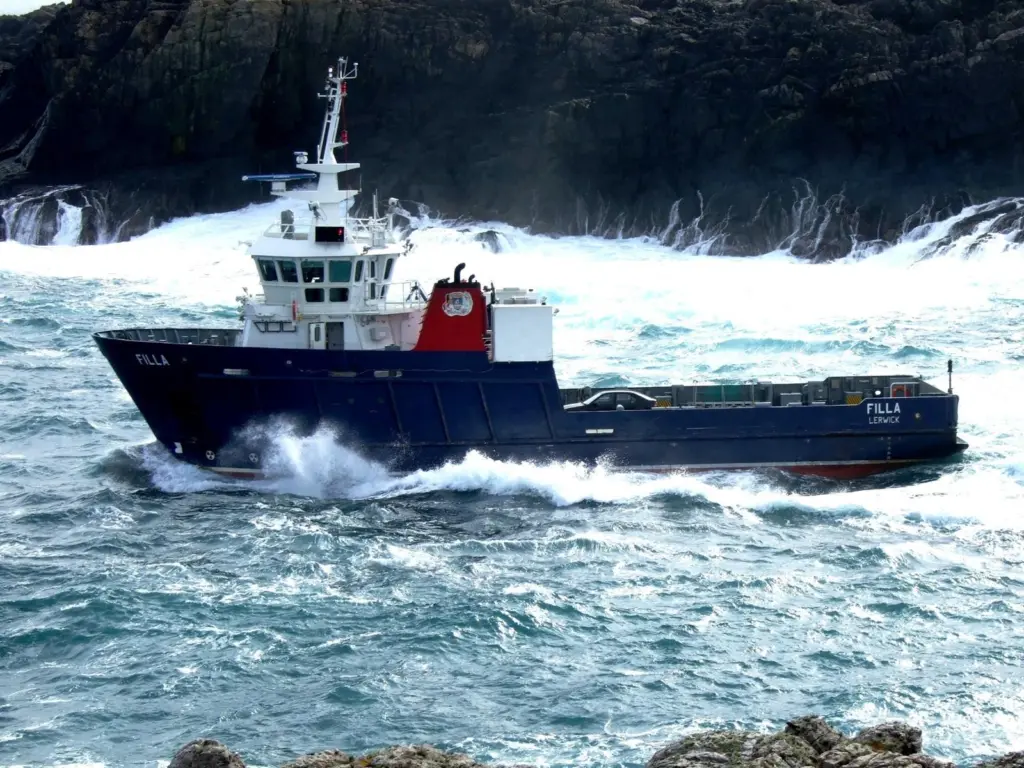
These ferries have to act a little like buses, with passengers hopping on and off (with or without vehicles). Services run from 16 terminals around eight islands, with 190 sailings per day.
However, when assessing maintenance and repair requirements as well as considering the problems of premature failure, most companies realise that bringing ships in for unnecessary repairs has financial implications. This is especially true when the owner is a council which is committed to running a ‘cost-effective’ service.
Thus a comprehensive, stand alone Condition Based Maintenance (CBM) system to collect and display vessel ‘health’ data was put in place. The idea was that following set-up and training, CBM could be effectively managed by local marine engineers, which would allow anomalies to be investigated without external support.
A Maintelligence stand alone CBM system implemented by independent industrial consultants AV Technology Ltd was selected to play a crucial role in ensuring the ongoing reliability of Shetland Islands Council’s fleet of ferries. The contract, won against strong international competition, involved the onboard set-up and ongoing support of this versatile CBM system, under the guardianship and tutelage of AVT’s senior marine engineer John Sykes.
Over a two week period John Sykes set up an asset database covering over 1,500 points across the fleet to support the installation of the new Maintelligence system. Although the majority of data collected is vibration based, data related to temperature, pressure and rotational speed is also included. Equipment within the asset register includes propulsion systems, motors, engines, pumps, gearboxes and heating systems.
Collecting and interpreting CBM data is a complex task. The operational conditions vary considerably, with factors such as weather, tides, loading and ballast playing a significant part. Unlike onshore CBM systems, the vibration patterns at sea vary according to these conditions, and the setting of normal peak tolerance levels from measurement points can be meaningless unless other factors are considered.
The set-up program presented a number of operational and logistical challenges in order to complete it within the allotted time. The shortest ferry crossing takes only seven minutes, giving a representative measuring window of less than five minutes, so setting up the asset register for this took eight consecutive crossings. The longest crossings of a couple of hours had to be scheduled in with a run-round via other transport.
Shetland Islands Council’s engineering superintendent Winston Brown said,’During the short time our system has been in place we have been able to predict abnormal component performance in several cases onboard our vessels. As a result we were able to plan and execute corrective action without any disruption to our schedules.’ He went on to add that due to the long hours and close partnership, Mr Sykes had become part of the company’s ‘marine family’.