![MaritimeJournal[Seawork]](https://www.maritimejournal.com/wp-content/uploads/2026/09/MaritimeJournalSeawork.svg)






A shield of bubbles keeps the beasties off
The USAF ultrasound system that uses fluid dynamics to form a ‘shield’ around a hull to prevent marine growth has been developed by Seawork exhibitor MCPS.
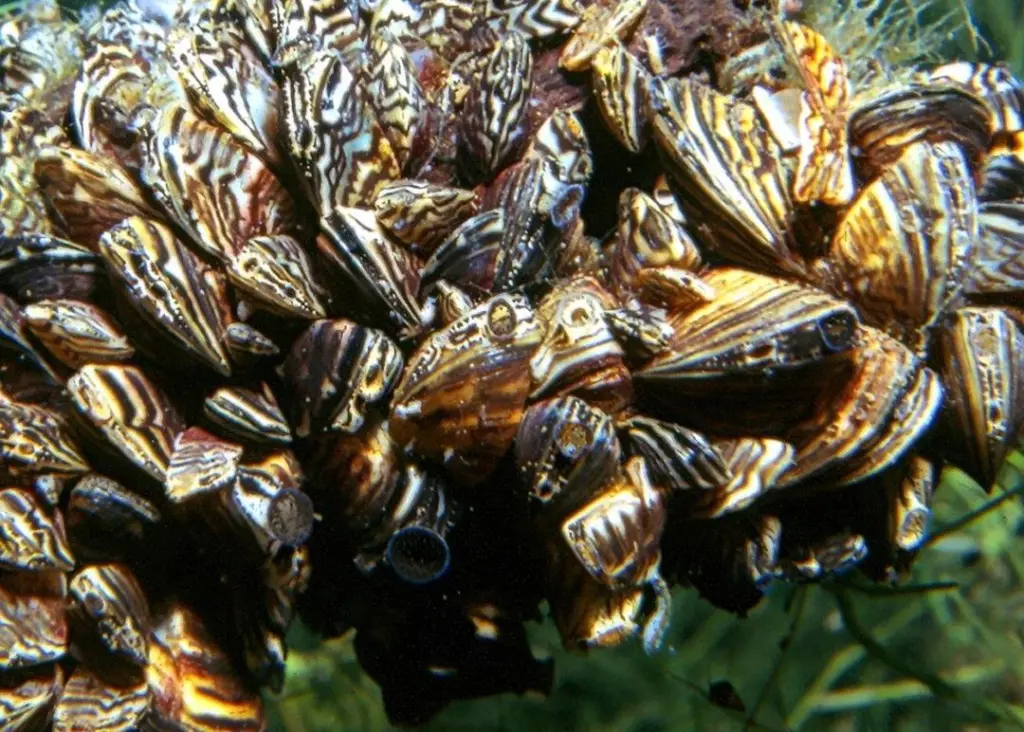
To start with, bacteria and algae form a primary slime film made up of either live or dead organisms, to which the larger macro-organisms such as mollusks and barnacles attach, using it like an incubator. Stop the slime, stop the fouling.
MCPS’ answer is to use ultrasonic sound waves which place micro-bubbles amongst the water molecules. In certain cycles, these bubbles expand until they reach critical size and implode. These implosions create extremely localised temperatures of up to 5,000° C and pressure waves of up to 2,000 atmospheres.
As liquids are not compressible, this wave will move through the liquid. Micro-organisms caught up in such a powerful pressure wave are damaged or destroyed, as they cannot withstand pressure higher than 100 atmospheres.
Before it starts to sound like the prevention might be worse that the illness, it should be pointed out that the effects are not harmful to anything larger than a bacteria, and that this model has for some time been used on small scale tanks such as found in marine aquatic centres. Since the transmitter produces vibrations that are bounced back and forth within the entire marina, these previous applications have shown that this system works well and is not harmful to either fish or humans.
Extensive field testing over two years has proven the USAF system keeps offshore structures and sea going vessels such as semi-submersibles and jack-up rigs completely free from marine growth and Micro-biologically Influenced Corrosion (MIC).
The USAF system is comprised of several robust transmitters and a control power unit. The types and sizes of these components and their positions on the structure or hull are specified according to design parameters which allow for the size of the foundation jacket/monopole or hull of a ship, semi-submersible and jack-up.
The transmitters are located in the electrolyte with the structure it intends to protect. They can be surface mounted around the periphery of the offshore foundation or recessed and fitted to port and starboard of a sea going vessel.
The turbulent flow/micro-bubbles are generated away from the structure by connecting the power supply to transmitters which generate the protective shield.
The transmitters are provided with a cofferdam, incorporating a double gland assembly that are required by the Classification Societies, to ensure a watertight hull penetration for the transmitter cable.