![MaritimeJournal[Seawork]](https://www.maritimejournal.com/wp-content/uploads/2026/09/MaritimeJournalSeawork.svg)



Air supported vessel breakthrough?
Tuco Marine of Denmark has partnered with EffectShips International and Diab in a high technology project to create a vessel in carbon fibre featuring a unique and patented hull technology.
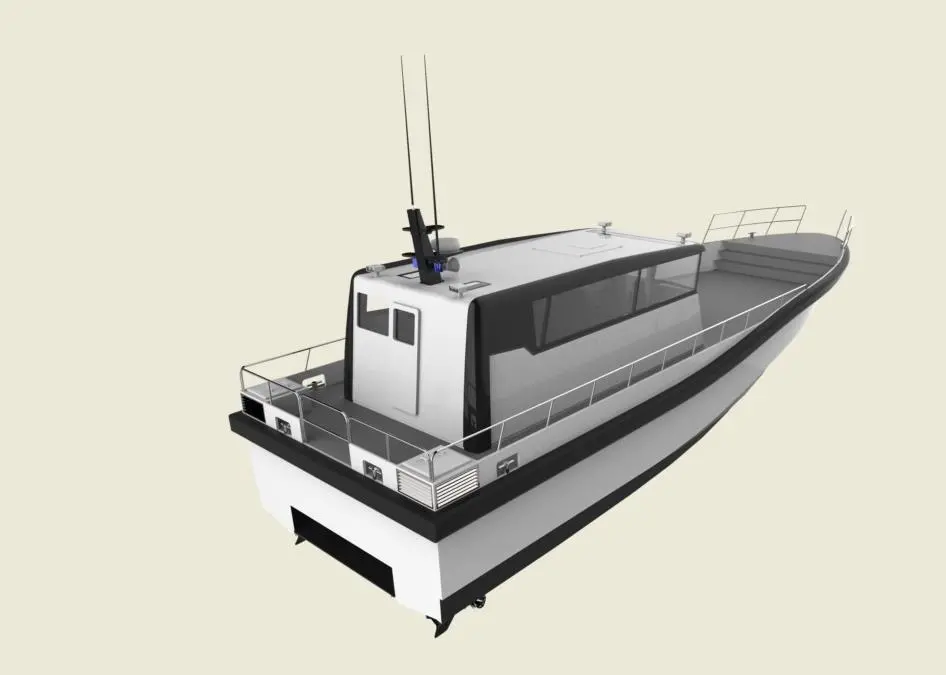
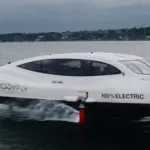
A 17m prototype of the proposed windfarm transit vessel is going to be built using the ASV (Air Supported Vessel) Technology, where minimizing hull resistance is the key ingredient, utilising pressurized air entrapped under the hull. The hull’s integrated air cushion chambers will support and separate hull and water. An ASV is designed for a minimum of air cushion ventilation.
When activating the air support system, approximately 70% of the overall weight of the vessel will be supported on a cushion of pressurised air, entrapped in an enclosed air cavity underneath the vessel. In contradiction to a hovercraft or a SES (surface effect ship), using rubber skirts to seal of the air cushion, the new ASV Technology utilizes solid, rigid hull elements to maintain the pressurised air underneath the boat. ASV designs can be tailor made’ and / or optimised for different functions, all depending on the end users’ requirements and vessel operations. For even further weight reduction, the Offshore Support Vessel is going to be built in a carbon fibre sandwich.
”Environmental aspects, operational capabilities and economy in use have been key drivers when the new ASV technology was developed. ” – said Tor Kolbjørn from EffectShips International, when asked about the values of ASV Technology.
The consortium believes that the remarkable low ASV hull/water resistance enables use of reduced sized engines, resulting in the vessel consuming much less fuel. Back to back comparisons with ASV monohulls vs. conventional designs have shown a reduction in consumption at 25 – 30 knots speed (20 m vessel) of 50 %. (Tests of first prototype, published in Motor Boat and Yachting).
ESI is of the opinion that any vessel can be further improved by combining complementary technologies. Combining high efficiency propulsion, lightweight construction and outfitting; with ASV hull technology, remarkable reductions in fuel consumption are within reach. Scientific documentation of fuel consumption for the first full scale ASV Mono test vest vessel has shown a staggering 50% reduction compared with the market leading conventional vessels of same size and weight. These values have been confirmed in the SSPA towing tank where the Zero emission ASV commuter ferry hull was tank tested. Another benefit is a significant reduction in wake wash.
EffectShips International (ESI)is going to be in charge of the development of the hull design. DIAB Group, which delivers sandwich composite solutions and core materials for the Marine Industry, is going to further develop the carbon fibre composites. Tuco Marine Groupis going to be responsible for the overall design and construction.
By Jake Frith