![MaritimeJournal[Seawork]](https://www.maritimejournal.com/wp-content/uploads/2026/09/MaritimeJournalSeawork.svg)





China, But No Crisis for Ship Repair
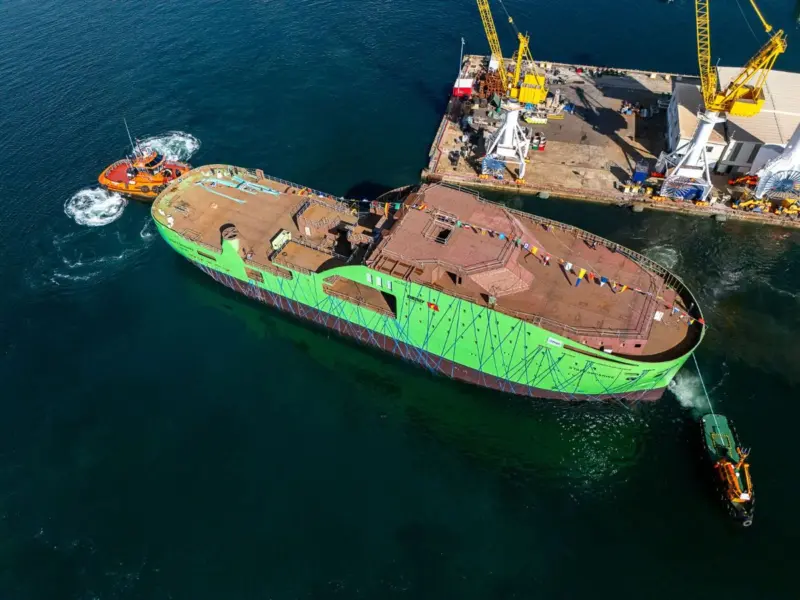
The ship repair and maintenance industry has been through some significant changes over the past few years. Increasingly, the larger scale vessel repair projects, involving significant steel renewals on bulk carriers, tankers and containerships for example, are being carried out at yards in China, where labour costs are relatively low.
There has been a tremendous amount of investment in new drydocks and repair berths in China recently, which has increased capacity, and this pattern is set to continue. There is little doubt that the epicentre of the global ship repair business will be in China for many years to come.
That said, shipyards in Singapore, Dubai and Bahrain continue to have a significant market share, within the tanker and LNG carrier markets especially. Yards in these locations are also carrying out a significant volume of work on dredgers and offshore support craft.
The Middle East is a strategically important region for vessel maintenance and repair activity, covering the full range of vessel types. Yards such as Dubai Drydocks and ASRY of Bahrain are to the forefront of the industry, but other facilities such as Basrec in Bahrain and Abu Dhabi Shipbuilding have a significant local role to play.
There are also some interesting new yard development projects in progress in the Middle East, including the development of Dubai Maritime City (DMC), which will replace the long established Jadaf complex in Dubai. There are larger yard investments underway in Qatar and Oman.
The focus of DMC will be on repairs to small to medium sized craft, including tugs, offshore support vessels, dredgers, vessels used on intra-Gulf trade routes, as well as yachts and leisure boats. With the booming Middle East construction and offshore markets creating strong demand, the opening of this impressive new facility seems particularly well timed.
Although China and the Middle East are the fastest growing shiprepair centres in the world right now, there has also been a steady improvement in fortunes for yards in Northern Europe in recent times. The freight market has improved tremendously over the past five years and this has encouraged ship owners to invest more money upgrading and maintaining their vessels. Around the world, yards are fully booked for months ahead, a situation virtually inconceivable just a few years ago, and Europe is no exception.
For much of the 1980s and 1990s the emphasis within the European shipyard sector was on rationalisation. Today, however, most yards active in this sector are reporting high levels of occupancy and seem to have a secure future.
European yards today draw much of their business from owners and operators of smaller but relatively sophisticated vessels, such as workboats and dredgers, as well and cargo ships deployed on regional trade routes.
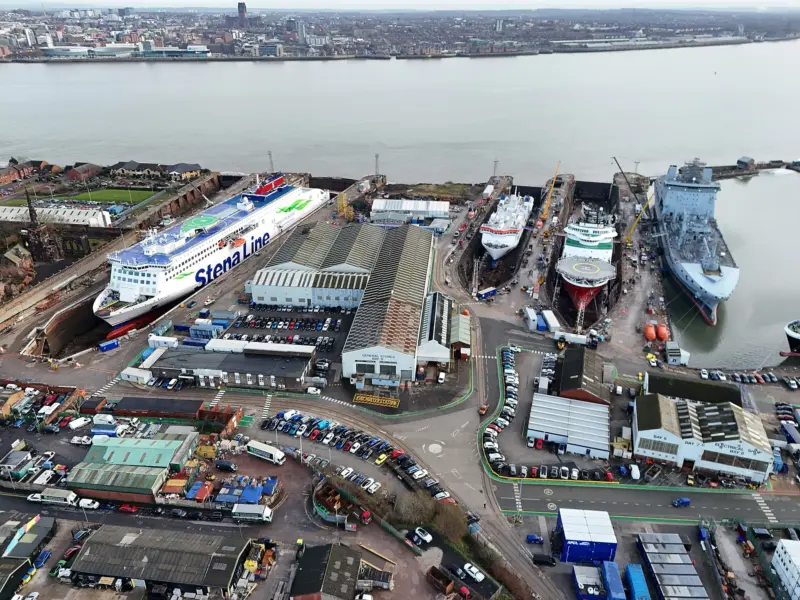
Within the UK, the A&P Group’s yards in Falmouth and Tyneside are still the favoured location for many ferry operators’ repair and annual refit projects, while the company also handles work on many of the dredgers operating in UK waters. Northwestern Shiprepairers (NSL) in Birkenhead and Fleet Services Limited (FSL) of Southampton are two other yards that have carved out a niche servicing ferries, and also naval auxiliary craft.
As far as mainland Europe is concerned, yards in Germany have been busiest in recent times, picking up lucrative refit contracts for cruise ships in particular. In Rotterdam, Keppel Verolme is the biggest local player, but smaller Dutch facilities, such as Damen Shiprepair and ShipDock Amsterdam, are very active in the repair and servicing of regionally operated local craft. Scandinavian yards, such as Cityvarvet and Oresundsvarvet, have continued to flourish, largely on the back of business from ferries operating in the North Sea and Baltic Sea, while yards in Poland such as Remontowa have become more important, and have been used for several major ferry and ro-ro vessel lengthening and conversion projects in the last few years.
Against this generally healthy commercial backdrop, some significant technical advances have been made in shiprepair and servicing techniques. One of the most interesting developments is SPS Overlay, a repair system that does not require the removal of any existing steel and is therefore much faster to carry out than conventional ‘crop-and-replace’ procedures.
SPS Overlay is an increasingly popular material for the deck reinstatement of ferries and ro-ro vessels. Not only is it much faster than conventional repairs but it can also be used to increase deck strength for today’s heavier axle loads.
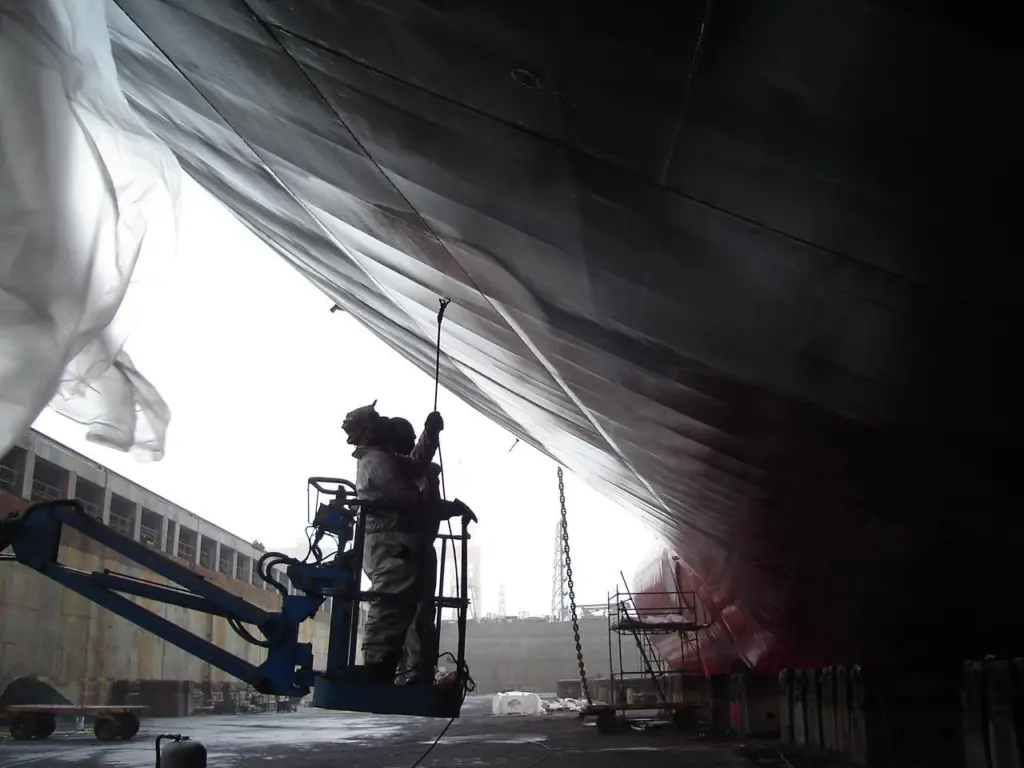
Many other improvements are environmentally related. For example, traditional shotblasting techniques are steadily being replaced by ultra-high pressure water blasting systems. More environmentally friendly, tin free coating systems are also being employed.
Looking to the future, one of the biggest challenges facing yards in Europe will be a growing shortage of skilled labour. Many yards are finding it hard to secure qualified labour from their own countries and are having to draw in recruits from eastern Europe and Turkey, for instance. This is not a long-term solution and also places pressure on yards in places like Poland which are facing an exodus of their best workers to higher paid alternatives overseas.
Many European yards have an ageing workforce and find they cannot attract young people into an industry that perhaps does not have the best public image. It is significant that the annual report of the Community of European Shipyards Associations (CESA) observes that companies active in the market have become ‘less concerned about the pressures of competition for work and more concerned about the availability of skills to perform the work that is available’.
In the 1980s and 1990s, the European ship repair industry had to deal with yard closures and redundancies. Today, the situation is reversed and many companies are struggling to recruit the skilled workers required to meet their needs.
Clive Woodbridge, a freelance journalist, is editor of Ship Repair and Conversion Technology.