![MaritimeJournal[Seawork]](https://www.maritimejournal.com/wp-content/uploads/2026/09/MaritimeJournalSeawork.svg)



Complex work on German special ships
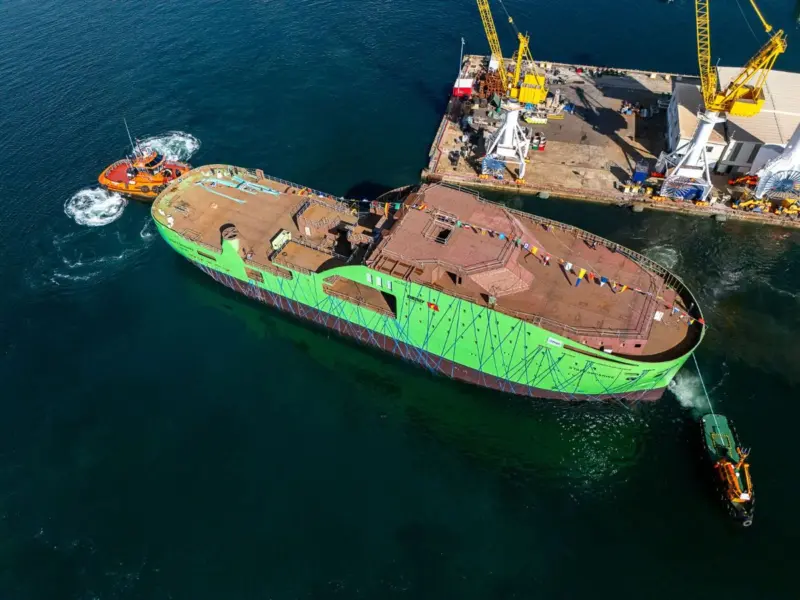
The complex fitting out of the €114 million Atair, the first of three planned LNG-fuelled special vessels for German service, is now underway after hull completion, writes Tom Todd.
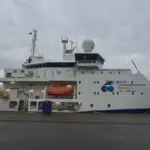
Tugs towed the hull of the 75m x16.8m survey and research ship from German Naval Yards (GNY) in Kiel to Fassmer Werft in Berne on the Weser. That followed hull construction at GNY because of limited capacity at Fassmer. GNY was also commissioned by Fassmer to install some of the newbuild’s initial equipment, including its LNG tank, piping and three generators.
After the transfer to Berne, Fassmer officials were quoted as saying the biggest part of the complex fitting-out of Atair – much of it reportedly pioneering work – still has to come before it can be delivered on time early next spring to the Federal Maritime and Hydrographic Agency (BSH) in Hamburg.
Because of the delivery time pressure on such a complex newbuild, Fassmer was reported relieved that hull completion and transfer from GNY to Fassmer were all on schedule.
Atair will have two 6-cylinder Wärtsilä 20DFand one Wärtsilä 6L20 engines developing max.13 knots. Other equipment includes two Wärtsila SCR exhaust cleaning systems and a 130m3 LNGPac tank along with a Schottel STT 1 bow thruster, a Pumpjet SPJ220 and a Schottel STT 170 stern thrusters.
Replacing a 33 year old namesake, the newbuild is being billed as the world’s first Government-owned ship of its type to use LNG fuel. Its scope of work will include wreck search and research as well as hydrographic and marine environmental survey and the testing of navigation and radar equipment.
A decision is meanwhile due this year on who will build two further specialists. Multi-purpose, they are for delivery expected in 2021 to Germany’s Waterways & Shipping Administration (WSV) and although originally tipped as DF ships, they will actually be “exclusively” LNG-fuelled according to a WSV statement last July. “Diesel as a fuel is no longer planned”, it said.
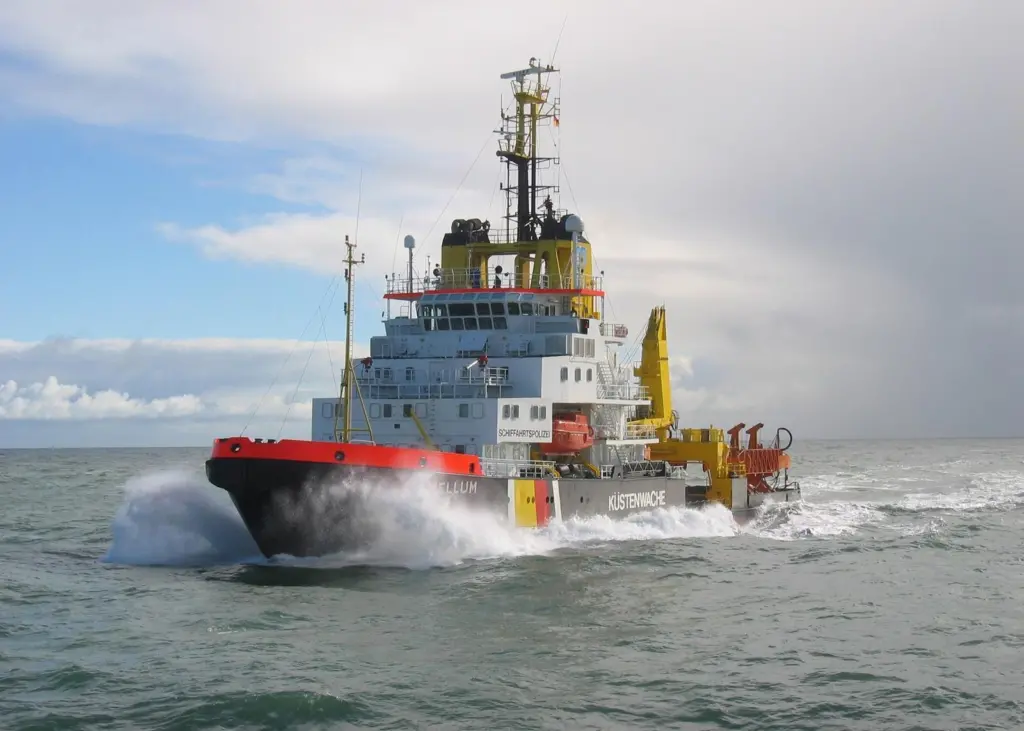
Tender-stipulated as of up to 85m long, they will replace two emergency response ships – the 51m diesel-electric MTU-engined Scharhörn, built in 1974, and the 80.4m diesel-mechanical MaK engined Mellum, built ten years later. The newbuilds will also have helicopter landing pads and their financing has already been earmarked by Berlin.