![MaritimeJournal[Seawork]](https://www.maritimejournal.com/wp-content/uploads/2026/09/MaritimeJournalSeawork.svg)



Converted windfarm ‘floatel’ goes to work
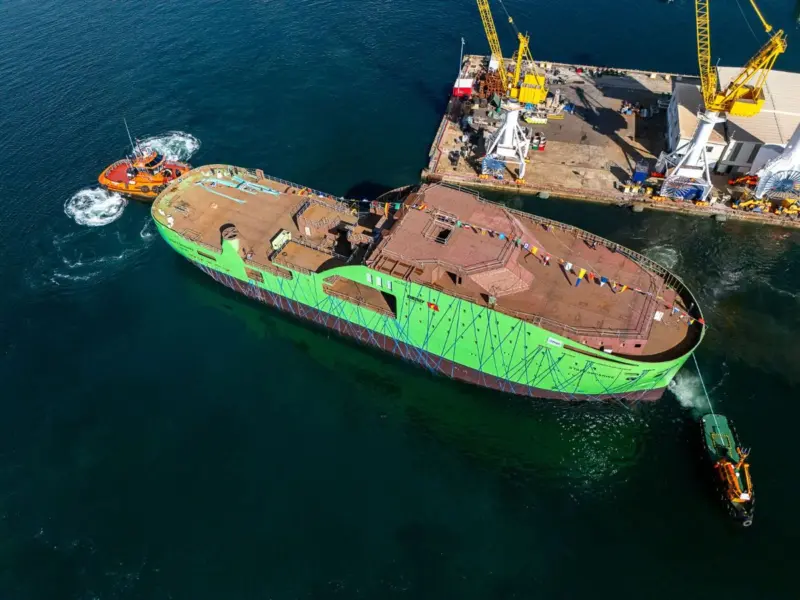
The naming of Service Support Vessel DP Gezina last week at Holland Shipyards’ premises in Hardinxveld – Giessendam introduced a vessel which is perhaps the first of its kind in the offshore wind industry.
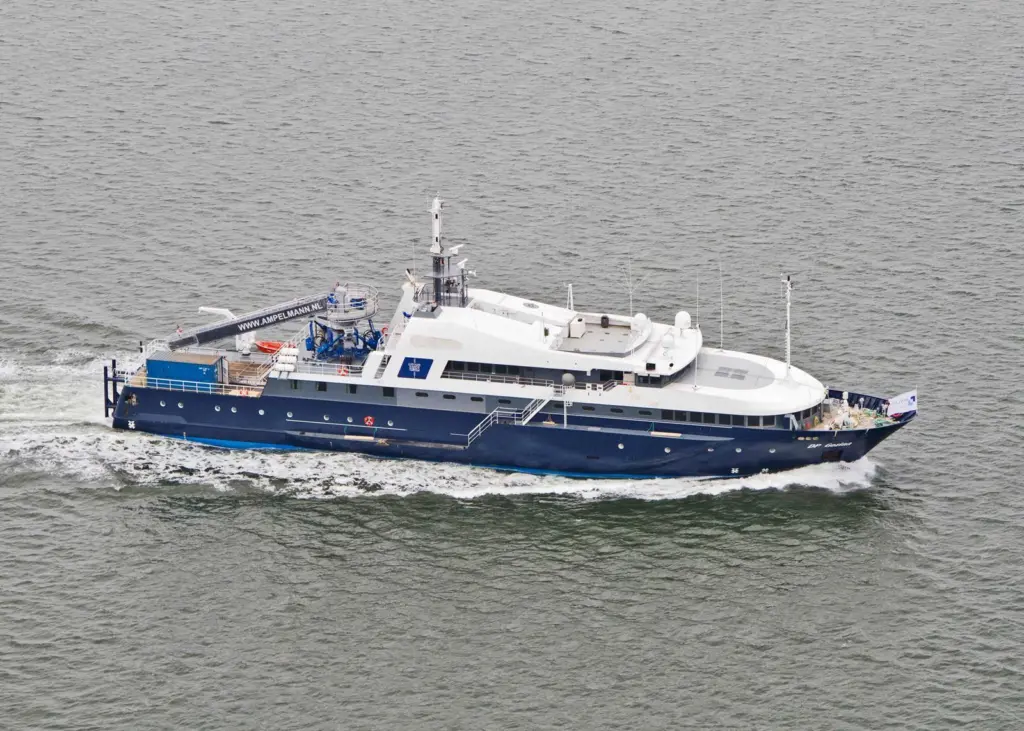
During the conversion works for Chevalier Floatels the vessel was lengthened by 9m and sponsons were added to improve the sea keeping and make the vessel more comfortable for those onboard. Internally the vessel was completely changed and is now capable of accommodating 60 to 90 persons, in its modern facilities.
Technically, the vessel was equipped with an additional machinery room to house the Ampelmann system and two additional generators. The generators provide power for the additional loads required to meet the requirements of DP2 notation and the equipment required for the vessel to fulfill its intended role, including a retractable bow thruster for the DP2 requirements and an Ampelmann crew transfer system.
The added machinery room, additional bow thruster and increased generator capacity allows the vessel to be equipped with a DP 2 system and consequent class notation.
The Ampelmann system allows for a significant improvement in operational time and scope compared to more conventional transfer methods. Where other systems are limited to wave heights of 1.5m significant, the Ampelmann has the capacity to work in wave heights up to 3m significant, thus greatly increasing productivity in the field.
On the aft deck a heave compensated work crane has been fitted, with capacity of one tonne at 20m outreach for servicing offshore installations. Also the vessel has been equipped with the facility to accept a multibeam sonar, thus allowing for works such as cable inspections.
After a relatively smooth building period of six months, the vessel has already secured its first charter, and the market is responding positively. Looking to the future, DP Gezina’s sister ship is currently being converted by Holland Shipyards to serve the same market.