![MaritimeJournal[Seawork]](https://www.maritimejournal.com/wp-content/uploads/2026/09/MaritimeJournalSeawork.svg)



Eco ferries add more green clout to Kiel port
Kiel ferry operator SFK is introducing all-electric and hybrid newbuilds this year as part of an eco-friendly fleet renewal costing more than €20 million, writes Tom Todd.
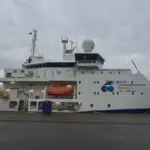
The city-owned tug and ferry concern takes delivery of its first plug-in hybrid boat in spring and has options for three more. At the end of the year it plans to introduce its first all-electric ferry.
Going into service soon in the busy German Baltic seaport is the 32m long and 8m wide hybrid Gaarden from Holland Shipyards. It is the first in a new generation of plug-in hybrid ferries for Kiel.
For 250 passengers, Gaarden is costing around €4 million. Its delivery marks the start of what is described as a long-overdue re-generation of Kiel’s passenger and commuter fleet.
Along with Gaarden, Kiel has secured options with Holland Shipyards for three more hybrid replacement newbuilds for delivery in 2022, 2024 and 2026. They will cost a further €12 million if taken up.
Gaarden will reportedly have two fixed propellers driven by electric motors. Power will come either from two generators or from a 273kW battery pack charged overnight using a conventional power plug. When required, generators can be turned off and the ferry driven entirely by battery power.
Maritime Journal has been told that SFK studied but rejected methanol and LNG propulsion for Gaarden. LNG propulsion was deemed not feasible for ships below 50m while LNG and Methanol required too much technology to operate safely.
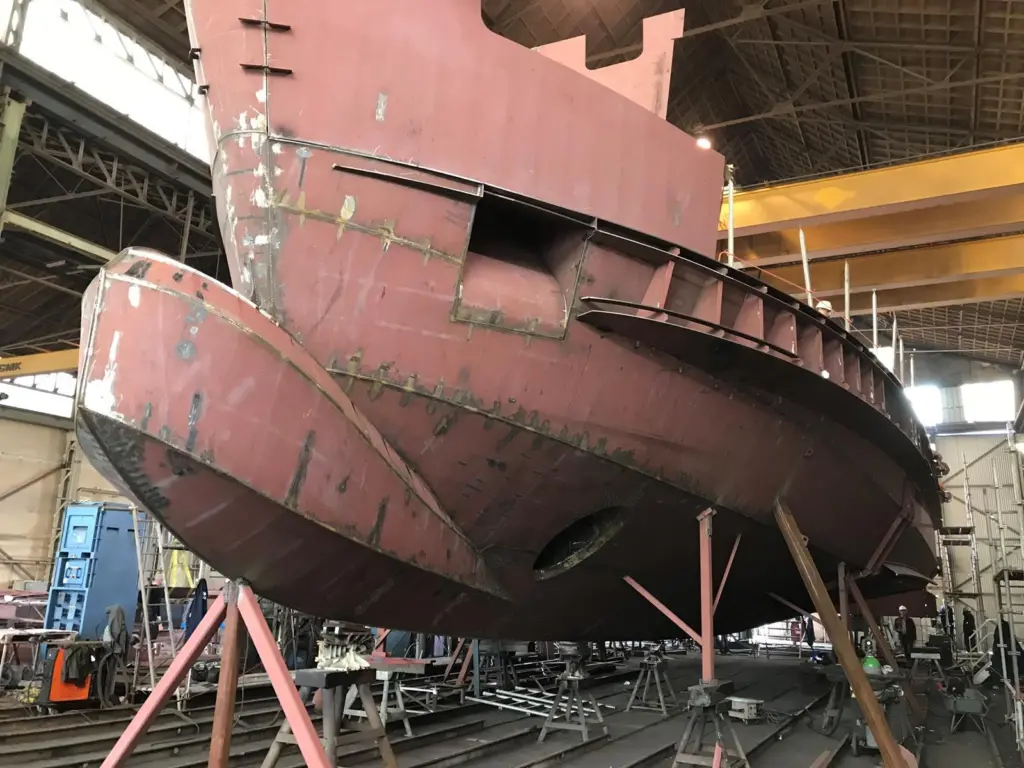
Holland Shipyard is also building SFK’s first ever all-electric ferry for delivery late this year.The 24.7m long and 6.5m wide Düsternbrook will draw 1.6m and carry 140 passengers and 60 cycles. It will have extra wide ramps for easier boarding and disembarking.
Full technical details are still not known but SFK Fleet Operations Manager Ansgar Stalder told Maritime Journal Düsternbrook would have an 819kWh battery package from EST-Floattech and be driven by electric motors operating on two shafts and two rudders and a bow thruster. Batteries charged overnight will provide ten hour operation. The ship will also have hydraulic positive drive enabling power-free berthing, Stalder told Maritime Journal.
SFK is investing three million Euros in Düsternbrook, some € 763,000 of which is from the Central Government under its “Clean Air” promotion programme.