![MaritimeJournal[Seawork]](https://www.maritimejournal.com/wp-content/uploads/2026/09/MaritimeJournalSeawork.svg)


Efficient utility vessel offers multiple propulsion options
An Italian design team has developed the EUVES (Efficient Utility Vessel) that is designed to meet the requirements of a number of workboat roles writes Dag Pike.
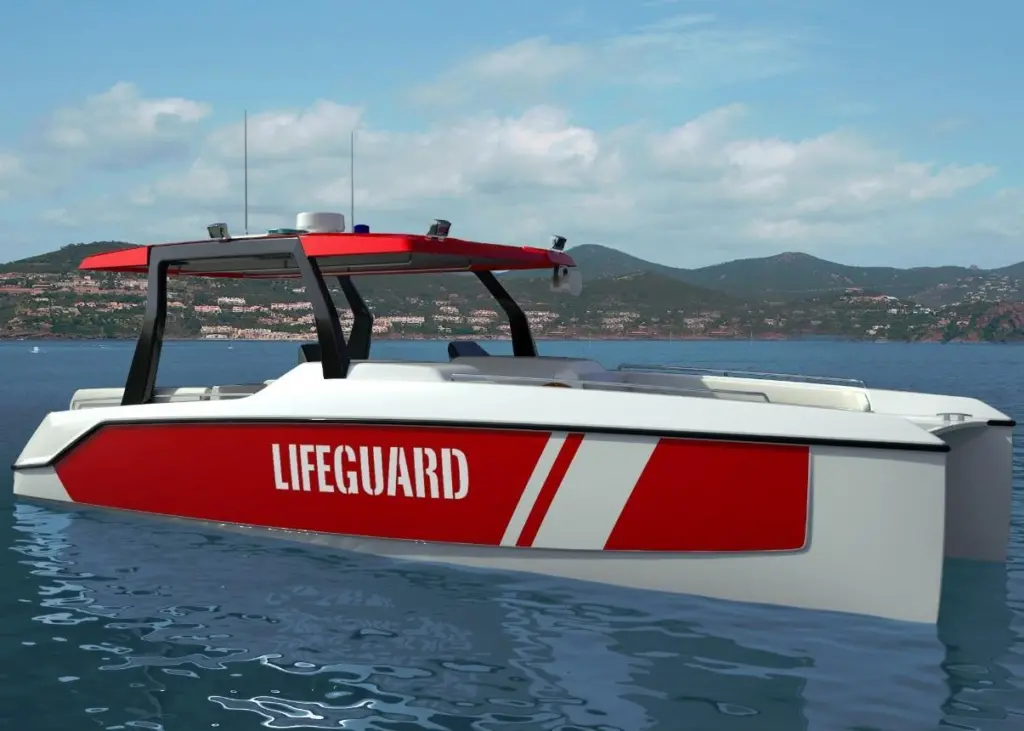
Gloss Design has chosen a catamaran hull for their EUVES 31 and the design is based on a semi-displacement hull that is designed for maximum efficiency in the speed range from 10 to 30 knots which covers most workboat requirements. The 9.5m/31ft catamaran hull can be configured and powered in a variety of ways to suit a variety of purposes, from a hybrid dive boat to a cargo boat or a water taxi for 12 to 20 passengers. A drive-on facility can be incorporated to allow light construction equipment to be carried to remote sites.
On the marine side, Gloss Yachts boasts an extremely impressive portfolio, having taken part in the creation of over 25 vessels between 6m and 60m long (20ft – 200ft) and covering everything from fast sport boats to coast patrol boats and ferries.
The concept was born mainly as a craft for electric propulsion. The full electric version can accommodate twin electric motors from 15kW to twin 100kW motors. The maximum and cruise speeds obviously depend on which motors have been configured, but the range is from 15kts to 35kts top speed and 12 to 18 knots as a cruising speed. Alternatively electric outboard motors with powers up to 50kW can be specified.
A hybrid version would be fitted with twin 15kW generators to recharge the batteries or they can also act as boosters to increase the available propulsion power. For use where electric propulsion is not required the EUVES can be fitted with two outboards up to 120kW or inboard diesel and petrol engines coupled to stern drives or waterjets.
The deck area between the two hulls can be fitted out in a variety of configuration including a helm console with a canopy that incorporates solar panels. Construction is in composites and it anticipated that the prototype will be available next year. The main application of the electric version will be in harbours where the craft can be recharged at regular intervals.