![MaritimeJournal[Seawork]](https://www.maritimejournal.com/wp-content/uploads/2026/09/MaritimeJournalSeawork.svg)



Engineers keep emergency repairs going at sea
Three weeks of intensive engine repairs, including 24 hour shifts and the creation of an onboard workshop that continued the overhaul while at sea, meant a massive cable lay vessel was able to meet its commitments.
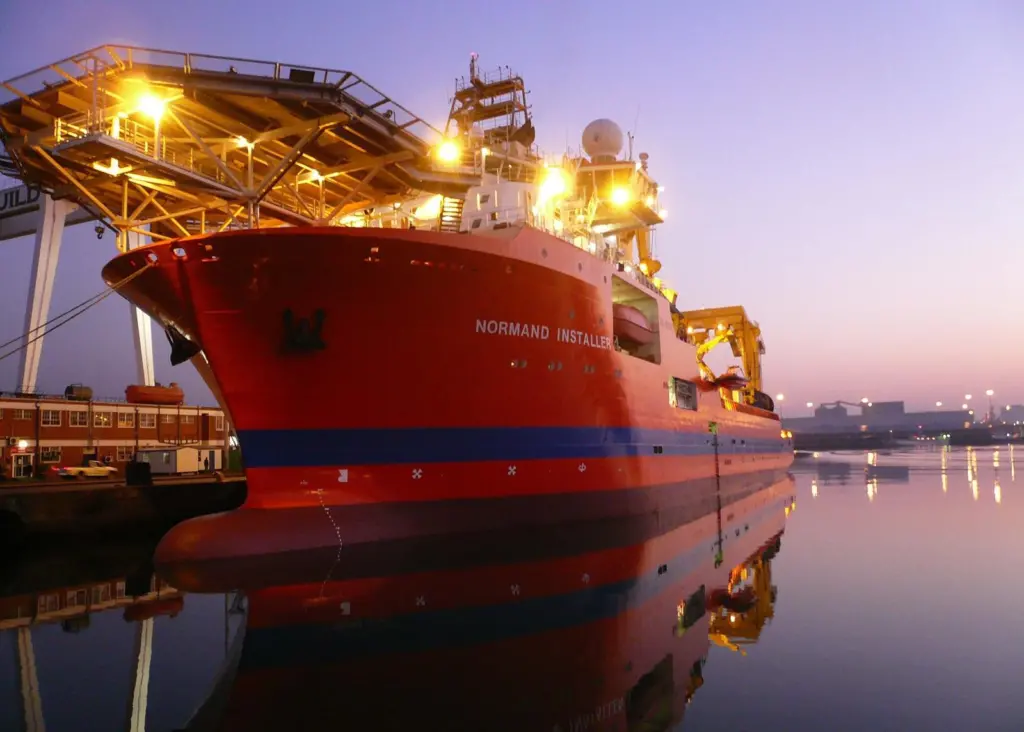
The 14,506 tonne offshore construction support vessel Normand Installer was in Hartlepool UK to load cables that it was about to lay on the Asgard Field off Angola. However, water leaks from the exhaust seat of a cylinder head meant trouble was brewing. Urgent inspection and pressure testing showed that each of the 48 cylinder heads on all of the ship’s engines needed to be overhauled before resuming work.
An engineering team was quickly assembled by Royston, which, working in cooperation with the on board Wartsila service engineer, devised a plan that would enable as many cylinder heads as possible to be removed and serviced while the ship was docked in Hartlepool. With 24 hour working initiated at Royston’s workshop in Newcastle-upon-Tyne, the company serviced and overhauled all of the cylinder heads for two of the ship’s main engines. The result was that 12 days after the problem had been identified, a total of 32 cylinder heads had been removed, cleaned, machined and re-installed.
With the Normand Installer committed to a tight work schedule off Angola, two Royston engineers sailed with the Wartsila engineer to Las Palmas, where they were able to resume the overhaul of the cylinder heads on the remaining engines. This was achieved in a workshop created on board with the use of equipment supplied by Royston, making it possible to machine the cylinder head valves and valve seats and to use a cylinder head cleaning tank and pressure testing equipment while at sea.
After a four day voyage, the ship arrived in Las Palmas where the team on board was joined by three more Royston engineers who enabled the introduction of another 24 hour shift pattern. This was maintained throughout the remainder of the voyage and ensured that every cylinder head on the ship’s four engines had been removed, serviced and replaced before it anchored off Abijan, Cote d’Ivoire.