![MaritimeJournal[Seawork]](https://www.maritimejournal.com/wp-content/uploads/2026/09/MaritimeJournalSeawork.svg)


ERRVs stepping beyond their traditional oil & gas role
A support vessel operator is moving beyond the now dwindling North Sea Oil & Gas sector it established itself in with a fleet of ships that are designed to go beyond the traditional role of protecting the lives of offshore workers.
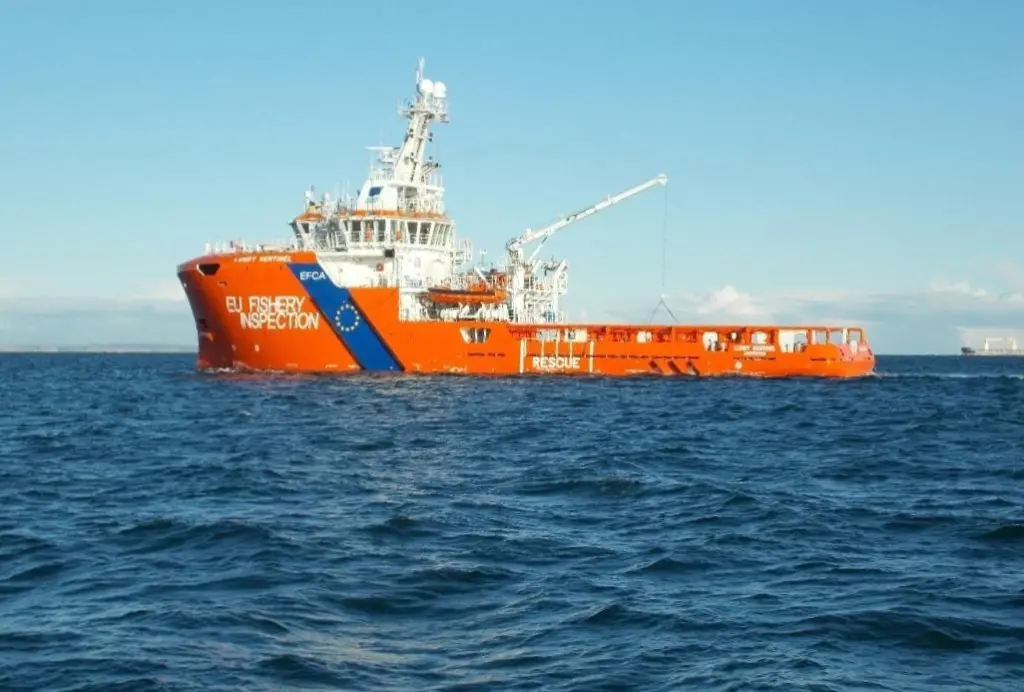
The approach that sees Sentinel Marine’s new-build vessels perform a wide range of tasks from collision avoidance to oil spill recovery, is making waves in other parts of the world according to a company spokesman.
Sentinel Marine chief executive officer Rory Deans said that other geographic regions – as well as other marine sectors – could see the benefits of using emergency response and rescue vessels (ERRVs) that offered flexibility and efficiency.
“There is a growing number of multi-role ERRVs being used across the world, everywhere from the Indian Ocean to the Atlantic,” he said.
“Operators can understand the efficiencies – both in monetary and operational terms – of using a vessel than can perform more than one task. There are many opportunities for our fleet outwith the ERRV sector: while there is demand for this type of multi-role vessel in the North Sea, the scope for Sentinel Marine vessels is very wide indeed.”
One such example is Lundy Sentinel, which is currently chartered by the European Fisheries Control Agency (EFCA) for use as a patrol vessel in international and EU waters. Fisheries inspectors use the ship as a platform for the monitoring, boarding and inspection of fishing boats, as well as associated transport and support vessels.
However, due to her multi-role capabilities, she can also be used in the framework of European coastguard cooperation for search and rescue, border control, disruption of trafficking routes, detection of criminal activities and enforcement of EU and national legislations.
In the North Sea, ERRV crews would normally expect to be on standby duty near drilling platforms, providing fast response during emergencies. But the type of vessel being pioneered by Sentinel Marine means that, on an average day, personnel might be involved in everything from cargo handling to in-field crew transfers.
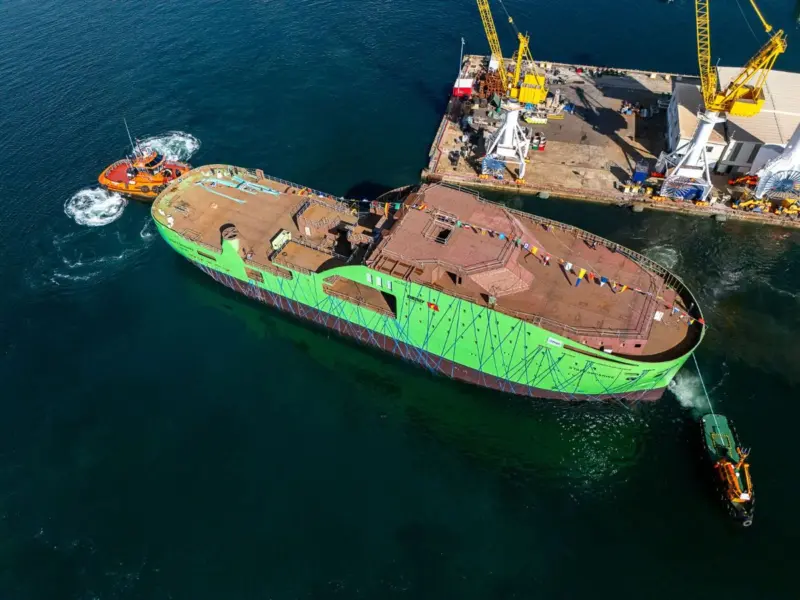
The firm currently has eight new-build ships operational, with a further four due for completion and delivery within the next 18 months. The ships – representing an investment of around £150m – have been built to a proven design, with those still under construction at the Fujian Southeast Shipyard in China offering enhanced capabilities.
The enhancements include increased DP capabilities, with a DP2 class notation, firefighting class 1, oil recovery, liquid mud and dry bulk capacities. All of the vessels have also been designed to provide greater levels of crew comfort, both in terms of facilities and through the use of anti-rolling tanks.
By Jake Frith