![MaritimeJournal[Seawork]](https://www.maritimejournal.com/wp-content/uploads/2026/09/MaritimeJournalSeawork.svg)



Growing a diverse capability cluster at Portland
Portland, after suffering a profound fall from grace when the Royal Navy packed its kitbags and moved on, is once again putting itself on the map. Moreover, that map includes Polish designers, as well as African contracts and German windfarms.
The port’s underpinning strategy is diversity: it has gained project cargo, marine construction, bulk trade, subsea cabling activities and an RFA presence (along with a growing cruise sector) making the most of the port’s 11m draft. “Our focus is broadening the mix so we are not overly reliant on any one customer or sector,” the port’s commercial general manager Ian MacQuade told MJ.
Interestingly, it’s doing this without splashing someone else’s cash. Owned by family group Langham Industries, “we are not in hock to anyone – the port and harbour self-fund” said MacQuade. He added: “Having no shareholders and our own money in the bank makes decision-making straightforward – it’s based on the business case.”
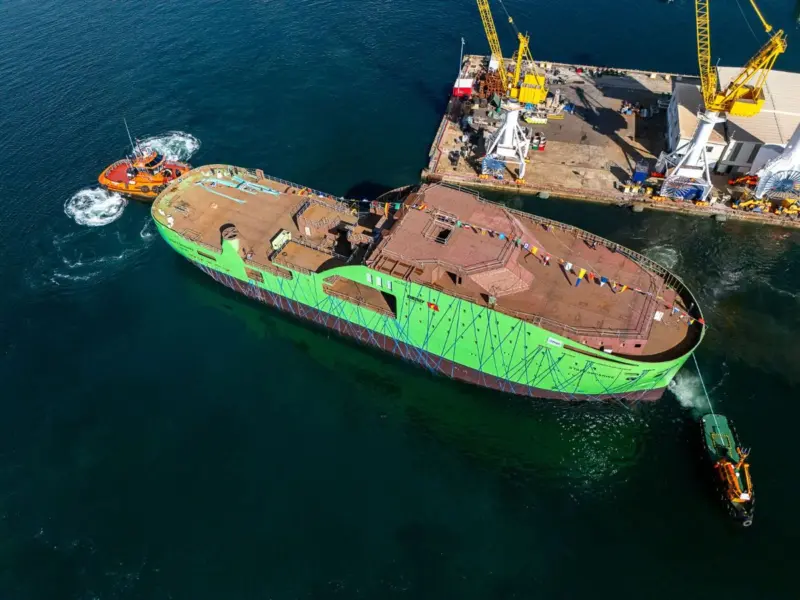
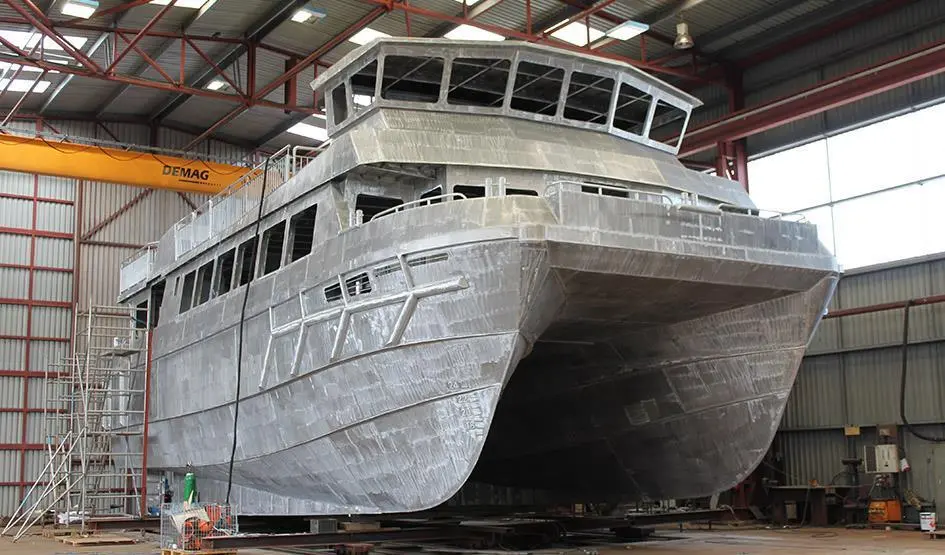
Portland is home to well-known Manor Marine. It’s a big, capable facility with two open slips, the main hall even having a custom-built hydraulic launch-pad, backed up a whole range of workshops. All in all, Manor has a newbuild capability around 40m, allowing the yard (with a little adaption), to take on the hefty London Titan for the PLA. Recently it’s seen the largest Pollcat so far, Fagio II, before its departure for Kenya.
Manor has also carved out a wind support niche for itself. Manor Venture, built for the group’s renewable energy arm in 2017, recently returned from a very successful, 355-day, 5,000 personnel transfer duty on the Galloper windfarm; it’s now back out working on the Baltic’s Sassnitz wind hub.
On the same note, subsea cable manufacturer Global Marine “has been part of our story from the beginning”, said MacQuade. However, wind support hasn’t been plain sailing he admitted: interest nosedived when the plug was pulled on the local Navitus Bay windfarm. Still, the plans for infilling the old Coal Pier, giving the port 80,000m2 of quay with 12m depths remain, potentially waiting for the right customer.
It might have dented, but not stopped development and Portland has some compelling charms: firstly, the water is extremely clear: “You can see straight to the bottom,” said MacQuade. That’s not just attractive for cruise ships, it’s also a blessing for in-water repairs, along with depths of over 11m at the quay.
Secondly, it’s in “a prime location” for offering repair and upgrade services to any vessels passing through the English Channel, plus “there’s easy logistics – no need to close roads”, explained Slawomir Kalicki, director of Poland-headquartered Inter Marine Group. So, despite first considering Scotland, Intermarine UK decided to put its roots down in Portland with a £450,000 investment, centring on a 20-year waterside leasehold.
Intermarine UK is offering everything from fabrication and welding (including hull and deck repairs), to valves, pumps and electrical installations, even complete engine-room upgrades. Interestingly, its invested significant amounts in specialised, heavy-duty pipework production kit, readying it for the green-refit segment, vessels that need ballast water or scrubber treatment kit. Most recently it’s landed the piping contract for the Sir David Attenborough research ship from Cammell Laird.
“We are not just creating a workshop here – we are also a design house and have established engineering partners” underlined Kalicki. “We want to offer a complete solution, as most clients want to de-risk their refit projects and let someone else take responsibility.”
Most importantly Portland has, said MacQuade, space to grow. Even the overlooking hill has inherited half a dozen large, flat plateaus originally inhabited by navy buildings: happily, the broad access roads still exist.
In all, given the space, the port’s proactive interest in development and drivers like Kalicki who want to see their company embedded in a successful cluster, the port has a reasonable chance of becoming a marine industry hub.
By Stevie Knight