![MaritimeJournal[Seawork]](https://www.maritimejournal.com/wp-content/uploads/2026/09/MaritimeJournalSeawork.svg)




Hamburg ferry upgrade delayed
A Europe-wide invitation to tender for three plug-in hybrid ferries for Hamburg is now expected later this year after being delayed by the COVID pandemic, writes Tom Todd.
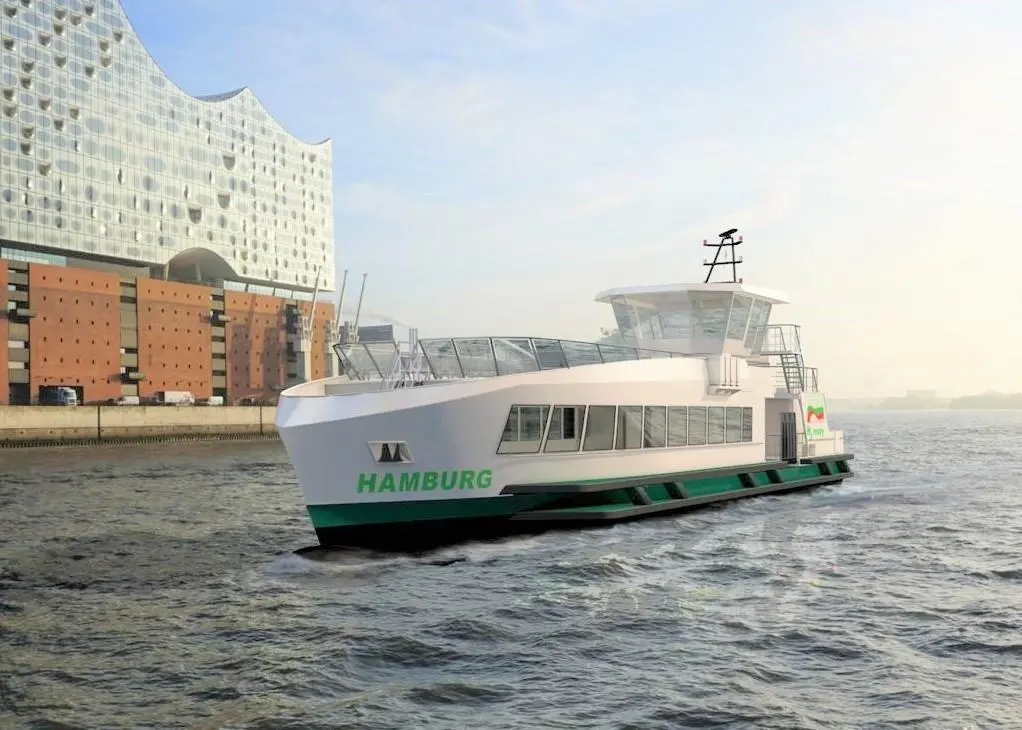
Originally the invitation to bid for the construction of the new Type 2030 trio plus at least one option was set for early this year with the first newbuild for delivery at the end of 2021 or the start of 2022.
Ferry operator HADAG’s Chairman Tobias Haack told Maritime Journal late August that the process had been delayed by the COVID pandemic. The “first phase” in the invitation to bid procedure had ended on July 7th, he said, adding that a “second phase”, during which presumably bid assessment is being made, was now due to end later this year.
It was not known immediately if or how the delay might affect the delivery schedule.
Haack also explained that for contract reasons he could not say who had so far put in offers to build the boats. German shipyards are expected to be among the main bidders. Local Hamburg yard Pella Sietas has already built boats in HADAG’s 2020 Class.
“We are stepping into new territory here”, Haack declared. “To date, there have been no comparable concepts for port ferries either in Germany or indeed Europe. So, we are curious to see just what the tender offers will look like”.
Once a shipyard has been selected and orders placed, the three newbuilds plus one option were – prior to this year’s delays – expected to be in service by 2030 boosting the current HADAG fleet from 26 to 30 vessels.
In earlier comments to Maritime Journal Tobias Haack said the Type 2030 hybrids would be about 33.3m long, 7.2m wide and draw 1.8m. Developed jointly with the Flensburg-based ferry design and consultancy firm NaValue, they will carry some 250 passengers.
The first of them will have a Tier V combustion engine configuration with reduced CO2 emissions. Later vessels however will be equipped with hydrogen fuel cells instead, enabling zero-emission operation. Provision has already been made for retrofitting the first Type 2030 with hydrogen fuel cells later.
HADAG explained that the two-step approach is because of what it called a “time-consuming approval process”.