![MaritimeJournal[Seawork]](https://www.maritimejournal.com/wp-content/uploads/2026/09/MaritimeJournalSeawork.svg)



High seas easy in Redbay’s largest RIB
Redbay Boats has been building boats for the past 35 years and building RIBs for 20 years, making them one of the more experienced RIB builders.
Located in Northern Ireland, Redbay has designed its RIBs to cope with the harshest conditions and they have a challenging testing ground right on their doorstep in the North Channel.
Because the local market has demanded tough and seaworthy RIBs, all the RIBs built by Redbay are geared to operate in the worst conditions. To meet this demand Redbay has developed its own unique RIB designs featuring a hard raised bow matched to carefully shaped curves.
The latest addition to their range is also the largest and one of the largest British built RIBs at 16.5 metres long. Tom McLaughlin, the CEO and founder of the company commented, “We were finding new orders hard to come by in the recession so we focussed our efforts on developing something new, a large RIB that would meet the demands of the commercial sector such as pilot and patrol boats and also as passenger boats. The result of our two years of development work is the Stormforce 1650, which embodies our years of experience of building RIBs for the commercial sector and it has several unique features.
“We looked at the types of boat available for the pilotage market and for other operators who put in a large number of operational hours in their boats every year. We saw the need for a boat with easy and simple maintenance and this, combined with the excellent seaworthiness and economy of this new design, makes our 1650 unique.”
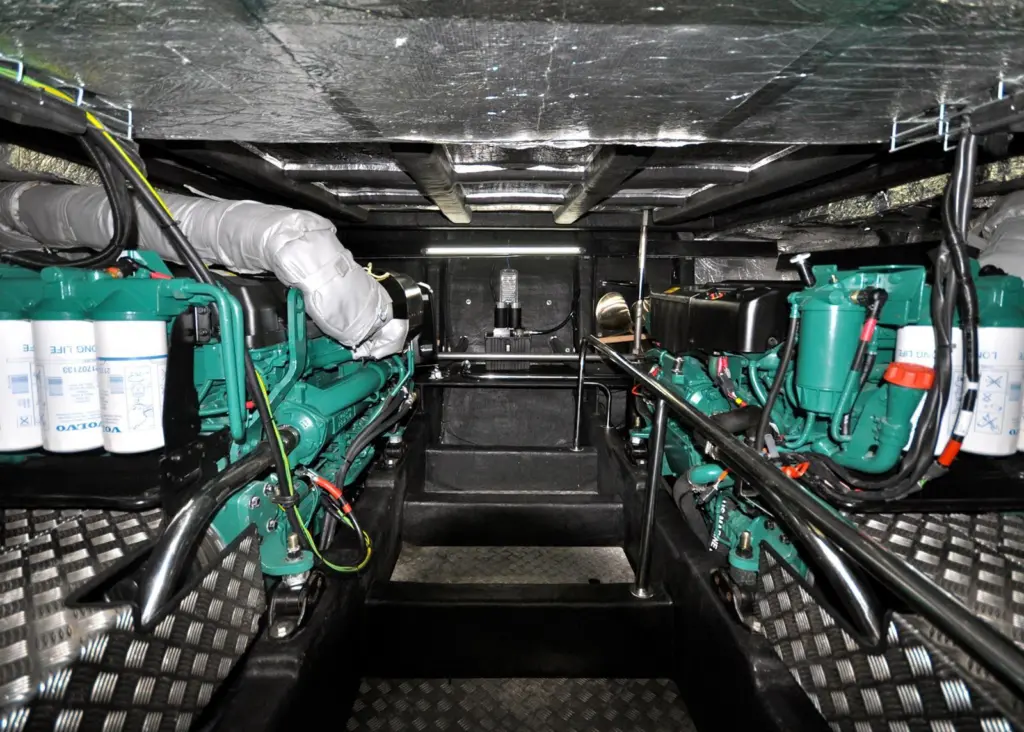
“Because of the easy access to the engine compartment and the spacious layout, we estimate that an engine could be replaced in less than a day. This means that something like a pilot boat could remain operational without extensive lay-ups and this could mean operating just a two boat fleet instead of three on a patrol or a pilotage operation, with a considerable saving in investment. Everything on the design of this new RIB has been developed to give easy access for maintenance and repair and we have built this design to the very highest standards”.
For a large RIB the 1650 has a very deep vee at 24° which accounts for its exceptional sea-going ability. On a sea trial out from Redbay it was blowing a full gale in the North Channel and there was a lively sea in the tide race around the north east corner of the land. The Redbay crew kept apologising for the lack of rough sea conditions when in fact it was the smooth and capable ride of the 1650 that made the conditions seem mild. On all points of the compass the 1650 performed well and provided a safe secure ride.
To build this larger RIB Redbay invested in a new construction hall in their yard. The hull is constructed using a combination of transverse and longitudinal framing with a glass/epoxy laminate. This has produced an immensely strong hull that can cope with the stresses of rough seas and challenging alongside situations. Sandwich construction is used for the superstructure to give increased rigidity plus heat and sound insulation, and the interior is lined.
The hull is divided into six compartments with the engines and steering right aft, then the vee-drive gearboxes and then the fuel tank compartment. This arrangement gives excellent access to all the key components of the machinery and with the engines aft they can be easily removed and replaced through the large deck hatch in the aft deck. Forward are the crew areas which include a galley and a bathroom. The fore peak has access from the deck and is used for anchor, rope and fender storage.
The large wheelhouse has KAB sprung seating for four and then a table and settee in the aft section but, like the rest of the boat, the layout can be varied to suit the application. The dashboard has Volvo Penta engine instrumentation plus a range of Simrad electronic navigation instruments, with two large display screens on the centreline. Visibility is excellent through the large windows and there are roof windows to give additional visibility when alongside.
The machinery on this prototype is a pair of Volvo Penta 500 hp diesels connected by a Carden shaft to ZF V-drive gearboxes with the drive then running aft to the propellers. This installation gives a top speed of 26 knots, which is probably adequate for pilotage and patrol duties but the design can accept larger engines and with a pair of the latest 1,000 hp Scania diesels, speeds of up to 40 knots are possible. Water jet propulsion is an option.
The prototype 1650 has been developed as a pilot boat and there is considerable interest from nearby ports in the concept. A foam tube has been developed for this application to reduce maintenance and the wheelhouse design enables the boat to be self-righting. This self-righting feature combined with the excellent seaworthiness can make the 1650 suitable for search and rescue duties and such activities could be combined with more routine pilotage and patrol duties.
A passenger version has also been developed and a special mould for the superstructure has been made. The aim of this design is to provide a concept mainly for inter-island work and provision is made for up to 35 passengers in comfortable seating with a toilet compartment at main deck level and the wheelhouse mounted above.
These various concepts for this new design make the 1650 a very versatile vessel for a variety of commercial and military applications. Combined with the superb seaworthiness, this 1650 from Redbay has set new standards in large RIB design and Redbay is confident of the first sales being finalised in the near future.
By Dag Pike