![MaritimeJournal[Seawork]](https://www.maritimejournal.com/wp-content/uploads/2026/09/MaritimeJournalSeawork.svg)





Medway Queen sails again
Built in 1924, the paddle steamer Medway Queen has sailed again.
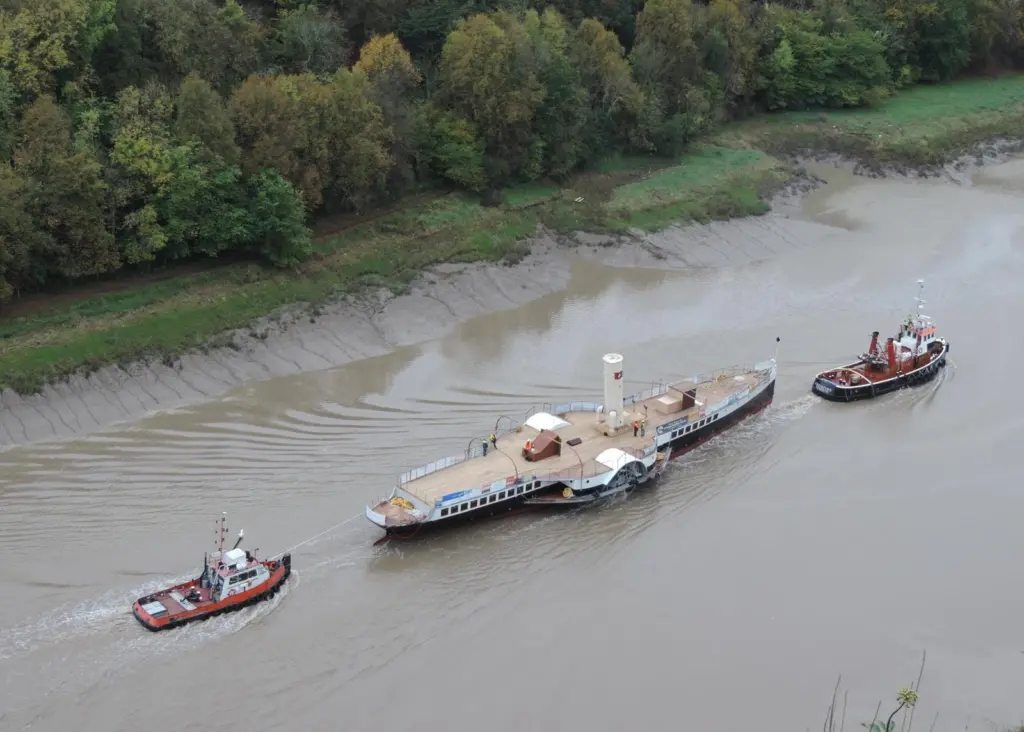
The vessel left Bristol Docks in the UK during the winter, where a five year project has seen the complete rebuilding of this historic vessel at the David Abels yard. The Abels yard has taken over three years on the actual construction work, starting from the bottom up in their historic drydock.
“This project was started five tears ago and it took two years of planning because we had to find new skills for this job, commented David Abels. “Riveting skills were hard to find so we had to start from scratch. Even finding the tools for riveting work was a challenge although a plentiful supply of rivets was still available.”
The 180 foot long Medway Queen is a remarkable vessel with a long and glorious wartime history. It is now nearing the end of an equally remarkable restoration project. The vessel was built in 1924 for the Medway Steam Packet Co as an excursion steamer to operate on the River Thames and was powered by coal fired boilers supplying steam to drive the paddles wheels.
It saw wartime service as the minesweeper HMS Medway Queen and is credited with saving over 7,000 men from the beaches of Dunkirk. The vessel was refitted in 1947 and continued as an excursion steamer, now with oil-fired boilers, but by 1962 extensive repairs were required and it was offered for scrap. It ended up as a night club on the Isle of Wight but eventually the hull deteriorated and the vessel sank. The first attempt at preservation came when it was patched up and taken by barge to Chatham. However, funds ran out and it again fell into disrepair and sank at its berth.
A Preservation Society was formed but it was only when Heritage Lottery money was found that the serious job of restoration started. Because the hull was in such bad condition it was decided that a new hull should be built and this task was entrusted to the David Abels Albion shipyard in Bristol. Now after three years the new Medway Queen is back on the River Medway where the finishing touches, including the installation of a new boiler, will take place.
The Medway Queen was built with very light scantlings and the new hull is constructed from 6 mm steel plate mounted on light steel angle frames. To heat the rivets an electric induction heater was used and the riveting jacks were pneumatic. “It was heavy, dirty and noisy work but we were lucky to find workers who could handle this, said David Abels. “She is the first ship of her size to have a riveted hull in over 50 years and now we are probably the only yard still capable of handling repairs to riveted ships and boats.”
By combining modern technology with the old fashioned art of riveting the yard has been able to make riveted joints to a much higher standard. “In the past the holes for rivets would be punched in the plates before assembly and there would often be difficulties with alignment, said Abels. “On the Medway Queen we drilled all the rivet holes in situ so that the connection was clean and lined up. Section cuts of the construction have shown the high quality that we have achieved.”
The hull has been constructed in modules on shore and as work progress the original engine was restored and rebuilt alongside. The engine work needed to be done with the construction of the ship as it had to be installed as work progressed. A new condenser had to be made, the cylinders rebored and the crankshaft restored. New paddle wheels were constructed out of the old wheel hubs. Modifications have been made in items such as the fuel and water tanks and the toilet systems to meet modern standards. New wooden decks in pitch pine have been installed and wooden window frames fitted along the sides.
The new Medway Queen left Bristol under tow and was delayed in Avonmouth Docks waiting for suitable weather for the long voyage around Land’s End. The final restoration work will be done through the Preservation Trust’s workshops, where many of the original fittings have been restored ready for installation.
The vessel’s future role has still to be decided but it seems unlikely that even with the restoration work that the Medway Queen will be able to meet the high standards required for modern passenger use.
Further information: www.medwayqueen.co.uk
By Dag Pike