![MaritimeJournal[Seawork]](https://www.maritimejournal.com/wp-content/uploads/2026/09/MaritimeJournalSeawork.svg)



Mersey launch for Solent freight ferry
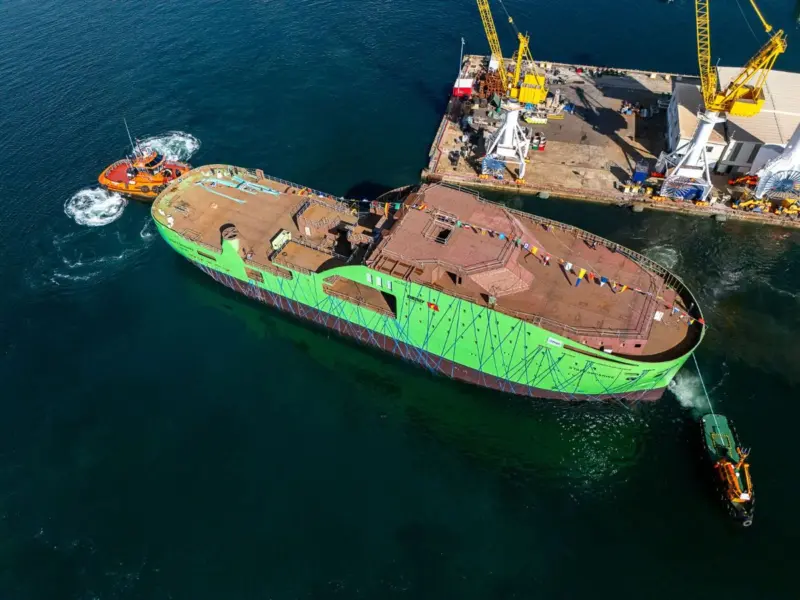
‘Red Kestrel’, a new freight-only RoRo vessel that will operate between Southampton and Isle of Wight has been launched at Cammel Laird, Birkenhead, UK.
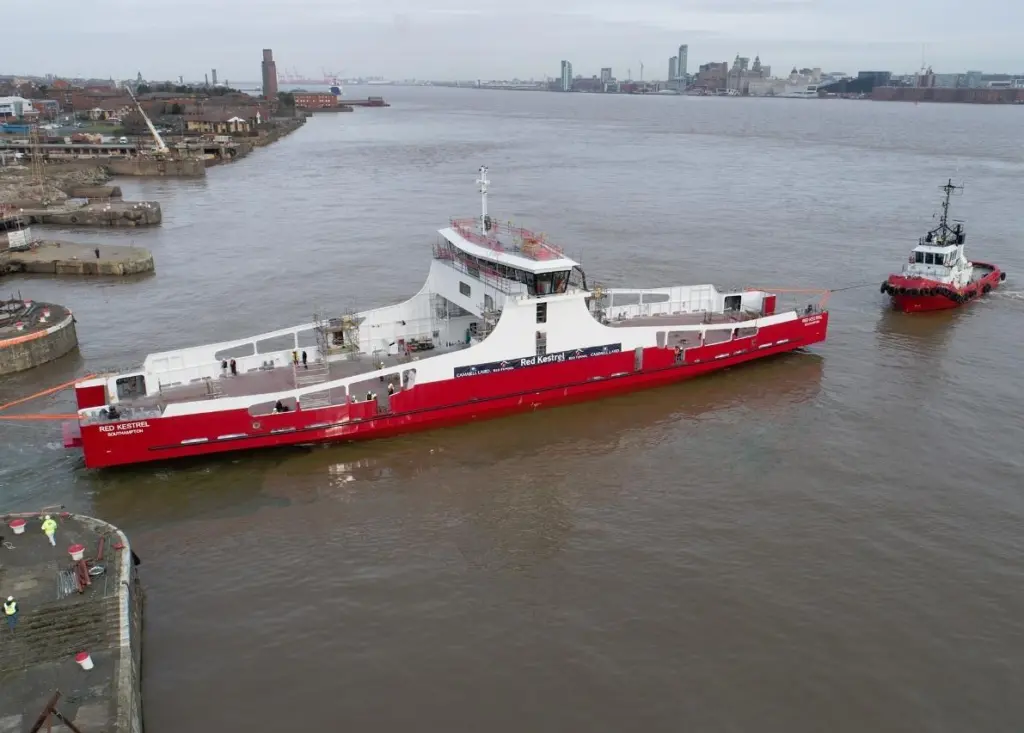
The vessel will officially join the fleet on arrival in Southampton, and enter service in May, following a trials and training period. The launch event, marks the debut of Red Funnel’s first dedicated RoRo freight ship since the company’s inception almost 200 years ago.
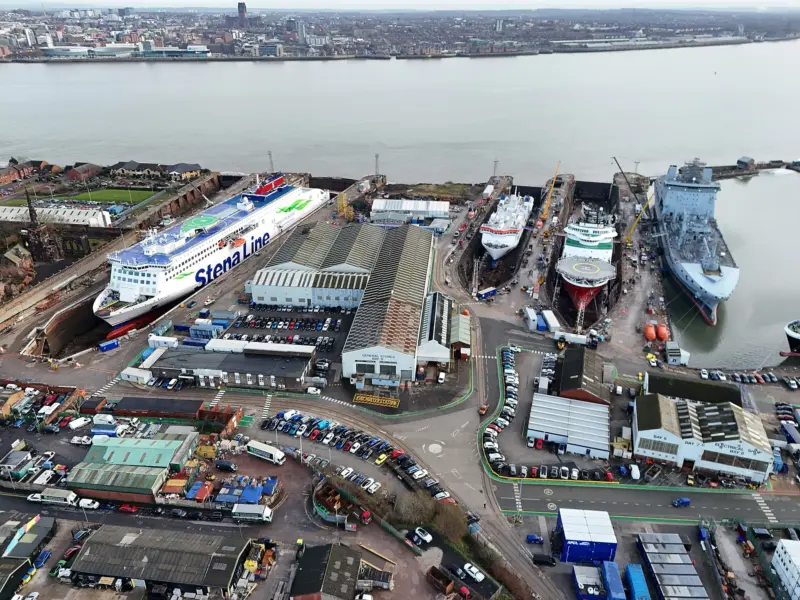
The £10million vessel, was built at Cammell Laird’s famous shipyard in Birkenhead and highlights Red Funnel’s commitment to British shipbuilding and engineering. Red Funnel has a history of investing in UK shipyards, having taken delivery of its high-speed ferries Red Jet 6 and Red Jet 7 from an Isle of Wight based shipyard.
Tony Graham Cammell Laird Chief Operating Officer said, “Cammell Laird sees a big market in ferry repair, conversion and new build and we will be showcasing our work on the Red Kestrel at the Nor Shipping trade fair in Oslo later this year. It is tremendous to see more ship owners and ferry operators choosing to build in the UK, this is very much in line with the Government’s National Shipbuilding Strategy which aims to recalibrate British shipbuilding as a major job and wealth creator now and into the future.”
Red Kestrel is Red Funnel’s first ship to be designed for freight traffic. As a freight vessel she is limited to 12 passengers and constructed specifically to provide additional year-round freight capacity for Red Funnel’s Southampton-East Cowes route, which currently handles 53% of all freight movements across the Solent. Red Kestrel is due to enter service in May 2019, with the current ferry timetable to be updated to accommodate the vessel.
At 74m in length, she will provide 265 lane metres of roll-on/roll-off freight capacity and will carry up to 12 passengers. To minimise the environmental footprint, the hull shape has been designed specifically to reduce wash and a propulsion package has been selected to make her highly fuel efficient whilst meeting the latest Tier III emission regulations.
By Jake Frith