![MaritimeJournal[Seawork]](https://www.maritimejournal.com/wp-content/uploads/2026/09/MaritimeJournalSeawork.svg)



Planned maintenance avoids failure at sea
A major way to avoid vessel failure at sea is developing and implementing a proactive maintenance strategy. Stuart Melling, manager for marine and crane service at ABB Ltd, looks at some of the latest techniques.
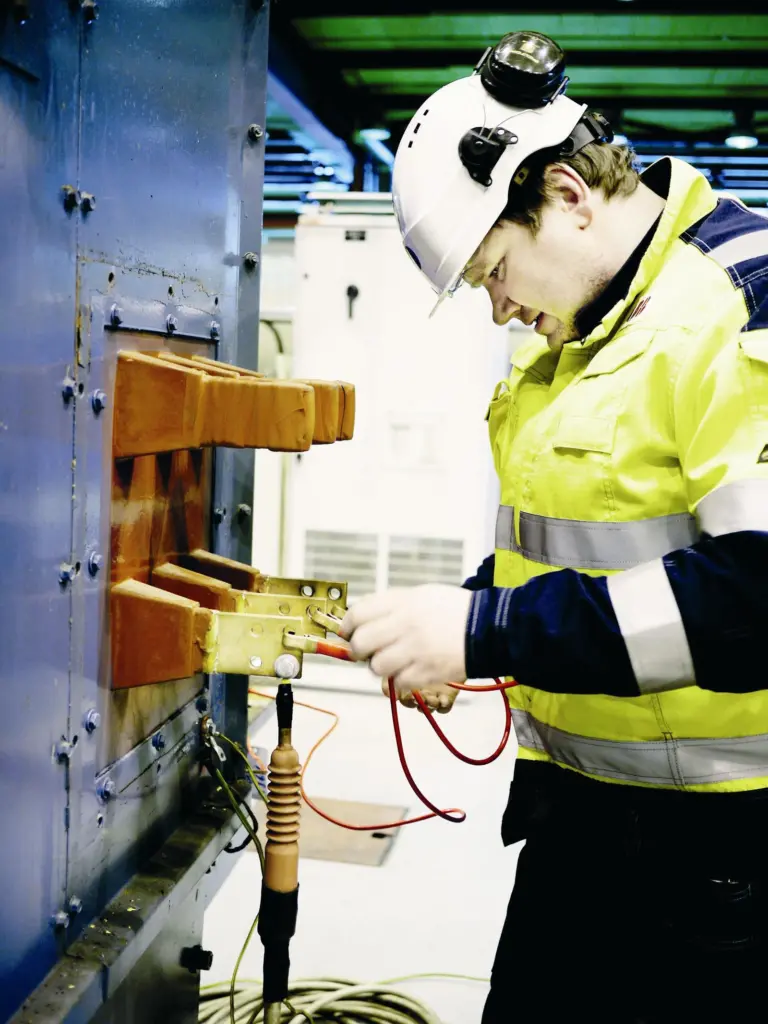
A carefully planned and risk based maintenance strategy is the key to keeping vessels working and reducing unexpected repairs. It is based on preventive maintenance, proactive condition monitoring and corrective interventions whenever required.
To aid long term maintenance, ABB can deliver a complete strategic maintenance plan tailored to the customer’s market, vessel operating profile and budget.
Preventing failure is crucial to long term competitiveness. Coordinated and planned maintenance programmes aim to provide lifetime reliability to electrical plant and systems. Such programmes are customised with technical support, the correct spares, and maintenance kits for upgrades. Maintenance is planned around a vessel’s seagoing time and plant schedules, in accordance with time or condition based milestones.
Risks of lost operation are minimised as are environmental and safety issues. Premature replacement of parts is avoided, cutting the cost of maintenance. Extended life cycles reduce capital spend, while unplanned disruption is avoided.
With a large generator or induction motor, a failure or unplanned maintenance can cause major problems, with long lead times for replacements and high capital costs. However, this can be a fraction of the true cost if a vessel has to be taken ‘off-charter’ or suffers in performance.
Condition monitoring can provide valuable maintenance information while the equipment is running. Regular measurement can highlight trends, allowing planned overhauls.
ABB has developed service technologies that can analyse the condition of many electrical items without the need for dry dockings or outages.
LEAP (Life Expectancy Analysis Program) provides precise information on the remaining lifetime of the stator windings of a high voltage machine. Access to this data significantly reduces the risk of shut downs from unforeseen failures. Standard preventive maintenance can also be planned around a vessel docking rather than according to the manufacturer’s preventative maintenance guidelines.
MACHsense-P is a new condition monitoring service for large machines that can detect potential failure well in advance. The service can spot trouble with bearings, rotor winding defects, imbalances, internal misalignments and voltage abnormalities, providing an early warning that can save costly downtime.
The service provides accurate diagnosis; reports quickly, with a summary delivered on-site; includes integrated analysis for current, voltage and vibration; rates defects clearly, by severity; recommends specific repairs; considers machine design in judging defect severity; reduces unplanned downtime; and issues early warnings, allowing time for planning maintenance.
A good maintenance strategy combined with condition based maintenance is the way to ensure maximum life from large machines and generators.