![MaritimeJournal[Seawork]](https://www.maritimejournal.com/wp-content/uploads/2026/09/MaritimeJournalSeawork.svg)




Repairs slow to follow Canal collision
German Naval Yards Kiel (GNYK) was late March reported preparing to repair damage to a lock gate almost cut in two in February on the nearby Kiel Canal by a 13,713dwt cargo ship, reports Tom Todd.
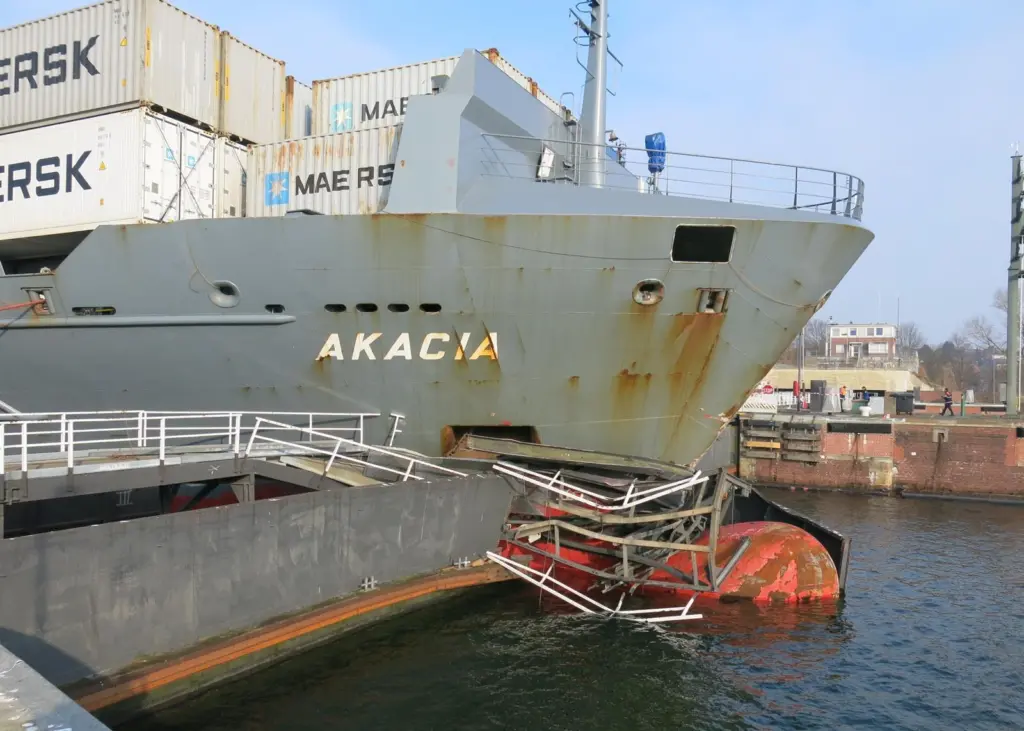
The damage was caused on February 19th when the 149.14m Portuguese-flag container feeder Akacia, after sailing through the Canal, entered the South Lock at the Baltic Sea lock facility in Kiel-Holtenau. It did not slow and instead punched through the lock gate at the Kiel Fiord end of the lock.
As Maritime Journal went to press, officials at the Waterways and Shipping Office (WSA) said the removal of the damaged sliding gate, weighing in total more than 1,000 tons, was expected to be completed late March or early April. However the timetable remained uncertain.
Since the accident, shipping has been using the big North Lock at Kiel Holtenau with considerable delays reported. The WSA said one of two available reserve gates would be installed at the South Lock – provided the gate tracks had not been damaged – as soon as the damaged lock gate components were separated and lifted out by floating crane prior to transport to GNYK. That yard is part of local repair and newbuild group German Naval Yard Holdings which was awarded the job of recovering and repairing the lock gate.
Work has been hampered all along by atrocious weather and technical problems. At last word local diving companies Taucher Knoth and Nordseetaucher were using traditional oxyacetylene cutting at 15m depths after diamond cable cutting proved unsuitable. Officials noted that normally a problem gate could be floated out using its own built-in ballast tanks but that in this case some of those tanks had been ruptured.
The damaged Akacia meanwhile was being repaired at the Norderwerft in Hamburg. A spokesman there told this correspondent late March that “more than 40 tons of bow and bottom steel are having to be replaced” but that the ship was still being inspected for further damage.
What caused the lock accident had not been officially determined as this report was written but accounts tipped a technical defect with the ship’s engine or propellers. A WSA official told Maritime Journal repairs would cost “a low double-digit figure in the millions” and German media spoke of “more than £20 million”.
That would make the Akacia accident one of the more expensive of the mishaps that have, in recent years, plagued the locks on the 98kms long canal – the world’s busiest man-made waterway used by more than 30,000 ships a year.