![MaritimeJournal[Seawork]](https://www.maritimejournal.com/wp-content/uploads/2026/09/MaritimeJournalSeawork.svg)



Responsible recycling on Merseyside
One of the latest ships to be dismantled under a new UK Government disposal and recycling scheme is HMS Intrepid, which had previously been docked at Portsmouth for a number of years awaiting suitable disposal.
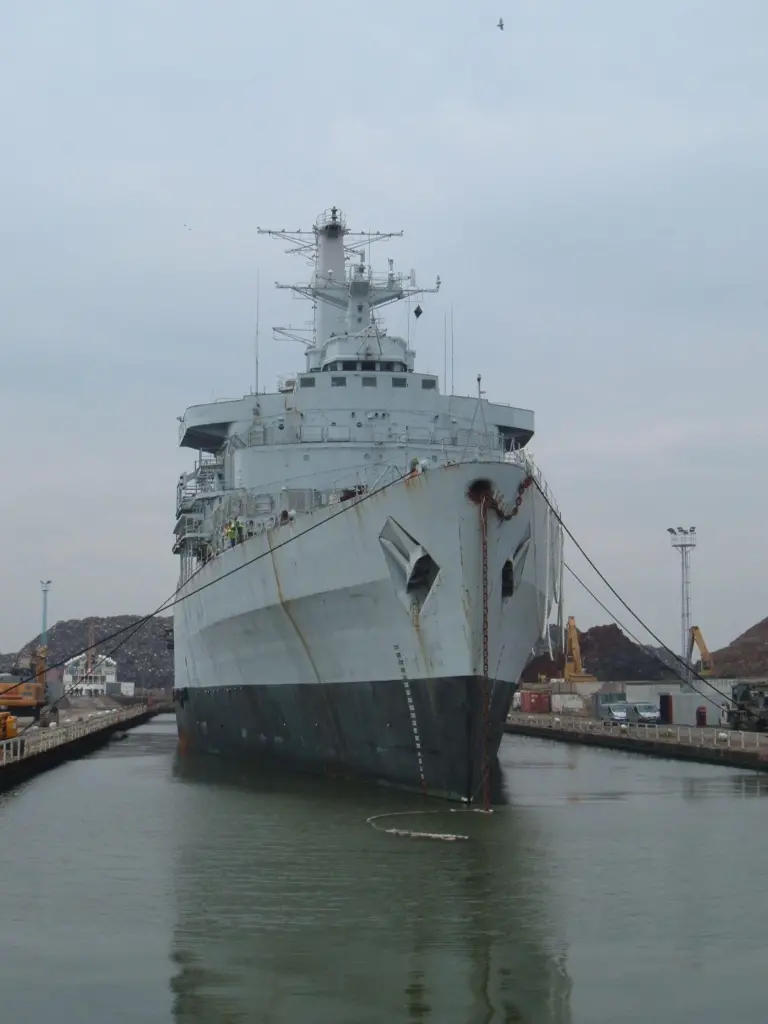
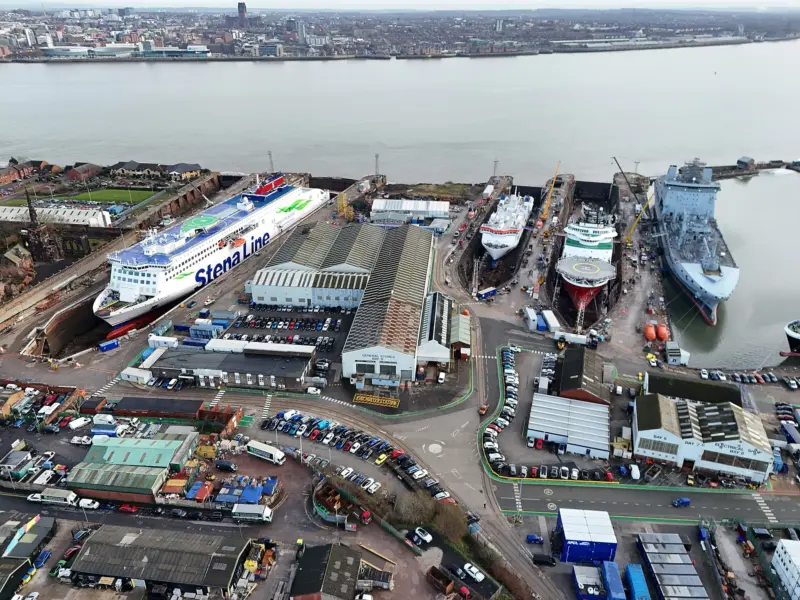
Royal Haskoning were asked to progress with the applications for the Waste Management Licence and the planning permission for disposal of the Intrepid at Canada Graving Dock in Liverpool. Canada Graving Dock, owned by Mersey Docks and Harbour Company, had been earmarked as an ideal dry dock facility for recycling decommissioned ships because of its size and the availability of an experienced local workforce, while being conveniently located to existing metal processing facilities within the Port of Liverpool.
In addition to the planning application, Royal Haskoning also produced a recycling plan, which looked at the physical controls needed to prevent pollution and oversee the movement of material from the site; an Environmental Statement, which involved close liaison with agencies such as Natural England, the Environment Agency and the local authority; the development of mitigation measures; and noise, air quality and traffic management assessments.
The project also included advising the client on all necessary legislative and regulatory requirements. Both the licence and the planning application were approved in 2008. Work has now started on the disposal of the Intrepid and is due to be completed in 2009.
The Government’s innovative new recycling and disposal scheme aims to ensure the responsible disposal and recycling of decommissioned vessels. It aims to limit the environmental impact of transporting ships to the Far East for disposal by utilising and enhancing existing port facilities within the UK.
Other news from the company is that Royal Haskoning has been exercising its ingenuity at Gladstone Lock. As a result of a storm in 2005 the Port of Liverpool’s largest dock entrance, Gladstone Lock, was severely damaged. The instability of the lock gate meant that standard solutions would not work. Royal Haskoning engineers had to employ new techniques to enable successful repair of the gate.
Project manager Mike Chambers told MJ, ‘Working closely with Mersey Docks and Harbour we developed an ingenious solution to a potentially disastrous problem. Although using a tipping cradle was an innovative solution, it involved the application of existing, basic engineering principles and processes. Employing this ‘lift and tip’ technique has enabled the client to consider a much wider programme of renovation and refurbishment that is both cost effective and efficient.’