![MaritimeJournal[Seawork]](https://www.maritimejournal.com/wp-content/uploads/2026/09/MaritimeJournalSeawork.svg)






Shark skin boat hulls are on the horizon
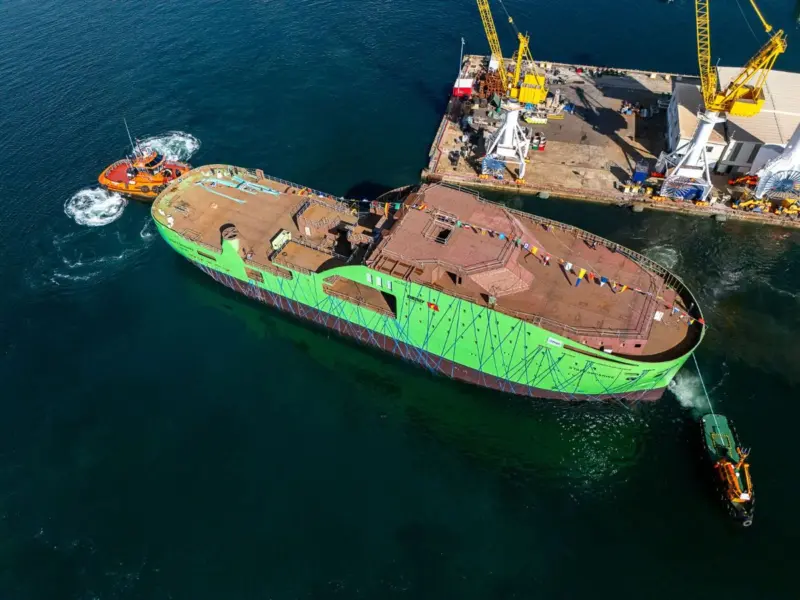
The multitudes of organisms that attach themselves to hulls are expensive freeloaders, as the extra drag they create on a vessel’s hull means higher fuel consumption and regular drydocking.
This is a particular problem for all sorts of workboats in these resource tightened times, and is costly for the marine environment also.
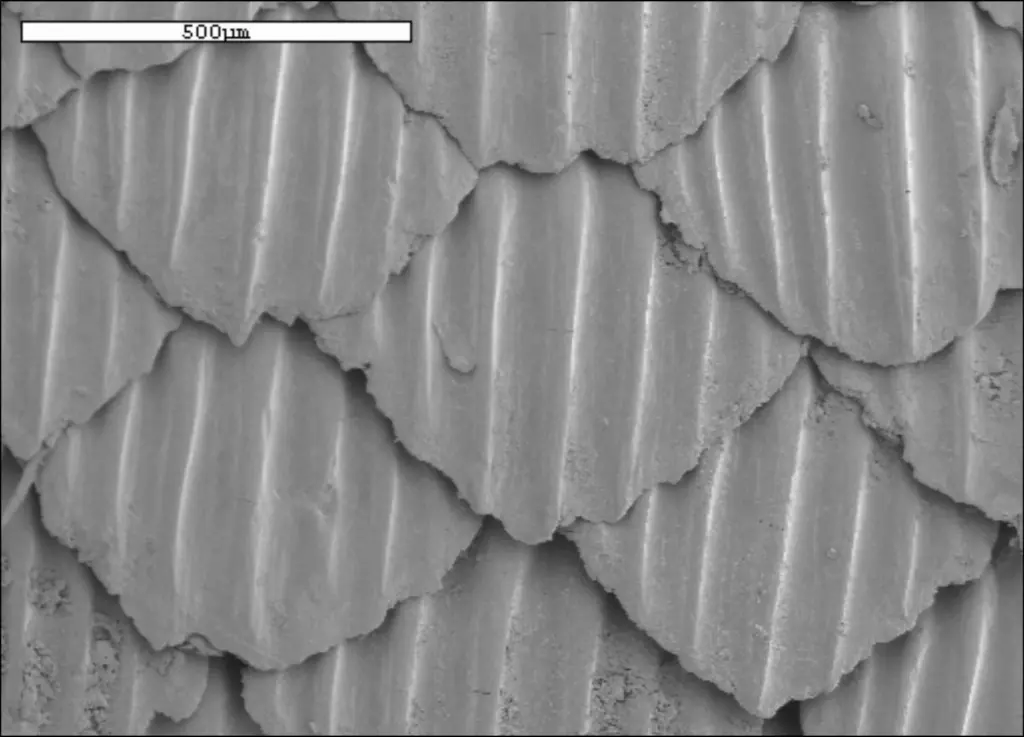
However a breakthrough has come from looking at nature’s anti-fouling solutions. Dr Anthony Brennan, a University of Florida Materials Science and Engineering professor, compared a muck laden submarine’s rotund shape to a whale and then began asking questions about shark’s skin which, unlike a whale’s, remains relatively clear of organisms.
Dr Brennan’s examination of sharkskin revealed the secret, a hydrodynamically unstable pattern that means microorganisms find attaching to the surface ‘undesirable,’ said Sarah Eder, a spokeswoman from Sharklet Technologies, the company which has licensed and commercialized the pattern. She goes on to explain that all microorganisms do a miniature analysis of what it takes to find a foothold and this particular surface dissuades organisms from adhering.
‘Sharklet holds the potential to solve the very challenging and costly problem of biofouling, Dr Brennan said. ‘Our research suggests that simple topography can be an alternative to toxic antifouling paints and present a host of benefits to both the environment and the maritime industry.’
Today, the Sharklet pattern is commercially deployed as a hygienic surface to help inhibit bacterial growth on high-touch, bacteria prone surfaces. It is applied to these areas via adhesive backed skins upon which the pattern is imprinted.
However, installing Sharklet in a marine environment is quite different. There are manufacturing challenges to putting the pattern directly into a boat’s hull, so the company is looking at several options for applying the pattern. Two of these options include moulding the incredibly small pattern directly onto the hull or applying the pattern via a skin of sorts.
Too tiny to be felt, and not even easily visible to the naked eye, the shark scale like pattern is made of bars and diamonds at a size of 2 microns to 16 microns, which would prevent extremely small organisms from binding (a human hair has a diameter of about 50 microns and a shark’s actual scales are in the range of 150 microns).
The latest round of tests has focused on the manufacturing of the pattern to keep it at a high enough fidelity to be effective, which is not easy. There is an unexpected extra possibility that the pattern, besides reducing the drag from bioorganisms, might even make a vessel more hydrodynamic.
The technology is still under development but looks likely to come onto the market in the next several years.