![MaritimeJournal[Seawork]](https://www.maritimejournal.com/wp-content/uploads/2026/09/MaritimeJournalSeawork.svg)


Tanker conversions address water scarcity
A research team from DNV-GL has developed a system for converting redundant tankers into waste water recovery vessels.
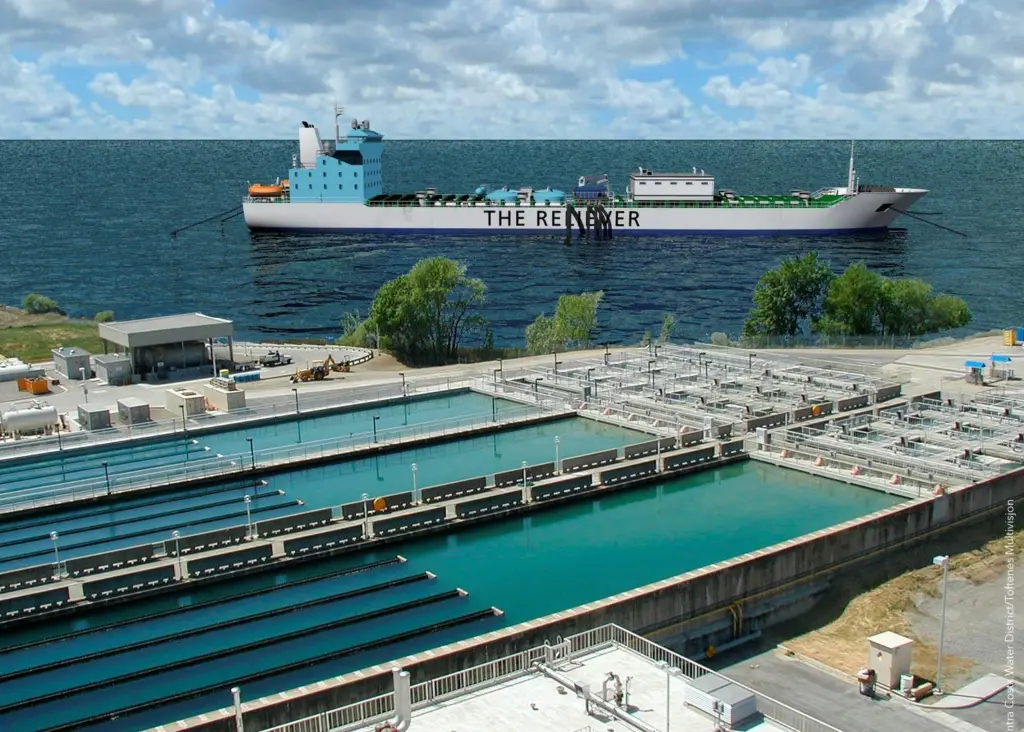
“The aim of the project was to transform ships into offshore treatment plants for waste water as a radical way of approaching global water scarcity”, said Bjorn Haugland the group chief sustainability officer of DNV-GL.
This research project was initiated by Sigmund Larsen, the CEO of EnviroNor, who approached DNV-GL a year ago. “We have to think differently if we want to solve the global challenges relating to water supply and pollution from the discharge of untreated waste water, said Larsen. “The concept of mobile treatment plants may help to ease this situation in some locations.”
The research project has shown that by outfitting redundant ships as waste treatment plants, the waste can be converted into clean water for irrigation, industrial purposes and even to provide safe drinking water. The treatment equipment can be fitted to most types of ship from tankers to inland waterway barges and by converting these redundant vessels rather than sending them to scrap it can add another 20 years to their life cycle.
Haugland said: “By converting, for example, a 15 year old product tanker we could treat the waste water from a city with 250,000 inhabitants.”
This approach to waste treatment is supported by the Norwegian Red Cross, which sees it as a way to provide much needed support in areas of conflict and deprivation. It is also supported by the World Wildlife Fund.
“The project is both cost effective and mobile and when faced with acute needs it is much quicker to build that an onshore plant, says project manager Petter Andersen. “By using converted barges the treatment plants could go up shallow rivers and treat river water into drinking water on location.”
DNV-GL envisages three versions of the treatment plants. The Reliever would be a temporary treatment plant that would be used where a land based plant was being modified, repaired or expanded. The Changemaker would be a more or less permanent plant that would process grey water and polluted industrial effluents into water that could be used for irrigation and/or industrial processes. Finally there is the Water Factory, that would treat slightly polluted river water to make it suitable for drinking water. This is thought to be suitable for high population density areas where drinking water is in short supply.
The floating treatment plant fitted to a 40,000 dwt vessel would have a crew of 20 to 25 and use much of the existing structure of the vessel such as the tanks, with the treatment equipment installed on deck. The treatment capacity of such a vessel would be 2,100m3 per hour. Biogas from the processing would be used on board for firing boilers which could provide about 25% of the onboard energy needs and solid waste would be converted into fertilizer. It is anticipated that the operating costs would be lower that a similar shore based treatment plant.
Further information: www.dnvgl.com
By Dag Pike