![MaritimeJournal[Seawork]](https://www.maritimejournal.com/wp-content/uploads/2026/09/MaritimeJournalSeawork.svg)





The power of bubbles
UK-based Marlin Environmental Services’ maintenance & engineering division recently installed a large-scale ultrasonic cleaning tank at its new head office site in Chichester Marina.
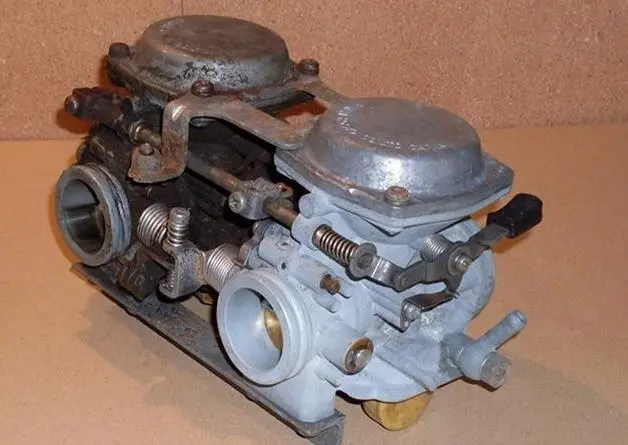
Ultrasonic cleaners were originally used in maritime industry in the 1950s. Today it’s a widely recognised method for rapidly cleaning substantial marine parts to small electronic components or other items time-consuming or troublesome to clean by conventional methods.
Simon Evans, Marlin’s new marketing manager explained: “Ultrasonic cleaning suits almost all hard, non-absorbent materials such as glass, plastics, aluminium, steels and ceramics. Marine use covers larger or precision parts such as Condensers, Heat Exchangers, Fuel Injection parts, Exhaust and Engine components down to delicate or precision-engineered items such as valves, fuel injection or machined parts.”
Ultrasonic cleaning works by introducing sound waves into a cleaning solution via transducers mounted within a tank. Items for cleaning are immersed in the aqueous solution and the sound waves create oscillating waves of compression and expansion in the liquid – an expansion so dramatic molecules are ripped apart, creating microscopic cavitation bubbles invisible to the naked eye, existing for only a blink.
While it sounds explosive it’s actually far more delicate than cleaning by hand as the process works without abrading or ablating, delaminating or scratching, yet thoroughly cleans all areas it contacts – even internal structures, galleyways, recesses, deep finning or blind holes! Ultrasonic cleaning removes crude & heavy oils, carbon deposits (including baked-on), algae, calcium, light oil, limescale, oxidation, swarf and surface contamination. With a change of cleaning solution it also prepares surfaces for electro-plating, welding or similar processes. The process is environmentally friendly as the bulk of the cleaning solution is water and it can be recycled for re-use many times, most cleaning cycles taking mere minutes.
Simon Evans continued: “We couldn’t find a convenient solution for our own requirements so we made our own, knowing if we needed it so might others along the South Coast.”
Marlin’s ultrasonic 4,000 litre tank suits larger items up to 2.0m x 1.5m x 1.5m in size (or parts cleaning requirements in quantity), reducing disassembly while filling the gap for cavitation cleaning across the UK’s South Coast and inland.
By Jake Frith