![MaritimeJournal[Seawork]](https://www.maritimejournal.com/wp-content/uploads/2026/09/MaritimeJournalSeawork.svg)




Emergency rescue towing: who should shoulder the cost when ships founder?
 Part of our special report
Tugs, Towing and Salvage – Tackling New Challenges · September 2026
All 7 features
Part of our special report
Tugs, Towing and Salvage – Tackling New Challenges · September 2026
All 7 features
Half a century after South Africa pioneered state-funded emergency towing vessels, debate continues over whether governments or commercial operators should finance rapid maritime rescue and pollution prevention services.
Peter Barker reflects on the background and history that led to taxpayers being asked to pay for a service otherwise carried out successfully (and profitably) by the commercial sector, and how the land lies today.
The process following a casualty at sea is similar to that ashore. Initial assistance is generally provided by state agencies or voluntary organisations with no up-front charge. Subsequent responses progressively take on more of a commercial nature, such as recovery assistance and insurance.
Saving of life takes priority, with coastal states respecting international conventions including UNCLOS, SOLAS and 1979 SAR. Commercial responders then generally become more involved.
Pollution has potentially long-lasting consequences for local communities and wildlife alike, and the assumption that the state will intervene for the greater benefit of all. Pollution doesn’t respect state borders however, affecting those who rely on the sea for their livelihood far away from the initial area and requiring coordination between governments.
When responding to marine casualties, salvors often operate over the horizon and beyond the public’s gaze. Major incidents attracting publicity beyond the industry itself however will soon catch government attention, remembering politicians’ jobs are dependent on the public’s perception of their effectiveness.
Changing situations
With the realisation that foreign tugs couldn’t guarantee an emergency response, South Africa adopted a government-funded approach, the key element being ‘emergency’ towing provision.
The catalyst was when 26,000 tons of oil spilled from the tanker Wafra after grounding off Cape Agulhas in 1971. Following a complex refloating operation, Wafra was purposely sunk in deep water, but the incident was considered a near-miss too far.
South Africa’s response was prompted by a drop in the number of tugs happening to pass by and offer assistance. Owners also reduced the number of tugs stationed at accident hot spots.
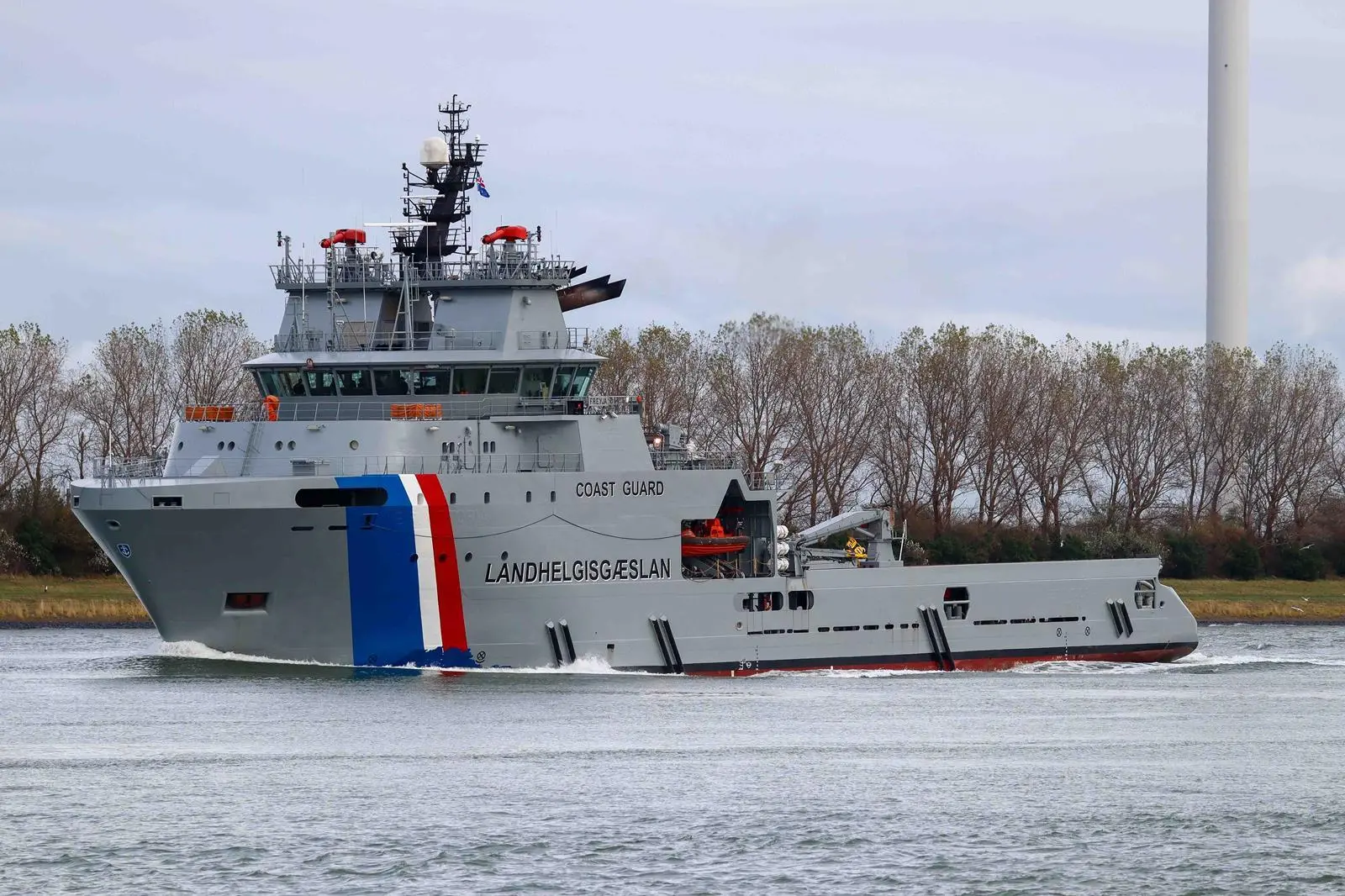
While some coastal states have arrangements for emergency response with local tug operators, some ports may only have sufficient tugs for their contracted activities.
At the critical early stages of an incident, the time for salvors and shipowners/insurers to reach commercial agreements can be a factor. Salvage companies often mobilise vessels and personnel on-spec at their own fiscal risk before contracts have been agreed.
Since entry into force in 1975, around 85 countries have ratified the Maritime Intervention Convention, which allows coastal states to take action to prevent pollution. The UK is a signatory, for example, to the convention, and can intervene through SOSREP and HM Coastguard including in extremis, appointing salvors itself and recovering costs at a later stage.
Following loss of the tanker Braer in 1993, the UK commissioned four anchor-handling tug supply vessels (AHTS) as ETVs stationed strategically around its coastline. A role for the Dover-based tug, the cost of which was shared with the French government, involved responding rapidly to tow disabled vessels clear of the busy Dover Strait Traffic Separation Scheme.
Such intervention provided a safer environment to undertake repairs or arrange a commercial tow by tugs (or the ETV) to a port for repairs.
Following a spending review in 2011 the government pulled funding of the four ETVs but following a local campaign, initially two then one tug was contracted on behalf of HM Coastguard, maintaining coverage in Scottish waters.
Options
The ability to perform additional roles can influence vessel type, given that a pure ETV may spend lengthy periods waiting for something to happen.
South Africa’s two supertugs, while purpose built for the role, were also capable of long-distance commercial towing. Other countries’ ETVs have included additional capabilities, for example navigational aid maintenance and fishery protection.
The vessels’ sponsors will demand a value for (taxpayers’) money solution within the extremes of a pure bespoke ETV and a ‘jack of all trades, master of none’ type vessel.
The role of ‘coastguard’ may be part of a country’s navy – for example in Norway, where the Coast Guard is part of the wider military and its vessels having towing and salvage capabilities. One example is KV Harstad, a standard Ulstein UT512 offshore patrol vessel capable of towing but also armed for defence-related activities.
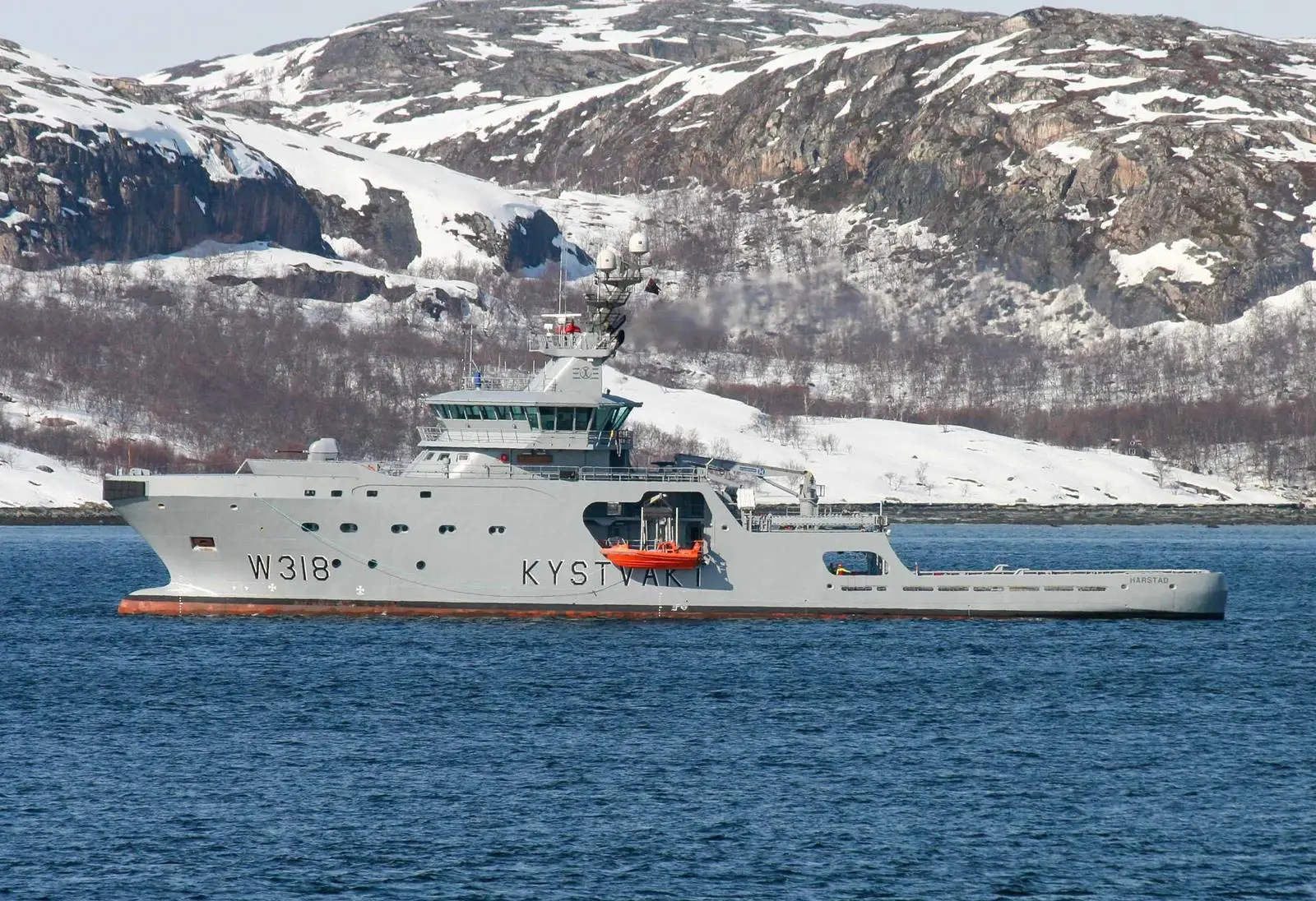
Age and maintenance challenges led to the decision to scrap the South African twins, as well as the availability of more modern and capable vessels. Replacement AHTS Umkhuseli lacks the speed of its predecessors and has twice the bollard pull and greater manoeuvrability.
Anchor-handlers are a popular choice, with bollard pulls up to 400 tonnes they often have other strings to their bow, including fire-fighting and pollution response capabilities, along with cargo-carrying provision, useful for salvage equipment and large survivor capacities.
In summary, many factors are up for consideration when determining type of vessel for the role, while acknowledging funding restraints that may apply.
Mixed bag
The loss of the tanker Amoco Cadiz and its 220,000 tonnes of crude oil on the Brittany coast in 1978 exposed shortcomings in France’s emergency towage provision. A powerful German salvage tug arrived just too late and the ensuing environmental catastrophe resulted in arguably Europe’s most impressive (but not largest) fleet of state-sponsored ETVs.
Their history reflects the ebbs and flows of vessel options with French Navy-chartered tugs currently stationed at Boulogne, Cherbourg and Brest covering the English Channel and Toulon in the Mediterranean.
Two powerful ex-Swedish tugs were initially deployed, followed by the bespoke Ulstein UT515 ETVs, Abeille Liberté and Abeille Bourbon, the latter since renamed VB Abeille Bretagne.
These distinctive ETVs have modern capabilities similar to the South African veterans, their yacht-like design hiding an impressive 200+tbp and speed 19.5kn, the signature of a dedicated rescue tug.
Again reflecting South Africa’s journey, in 2021 two 2010-built, ex-Norwegian VS491-CD standard-design 300tbp AHTSs were acquired for service at Toulon and also at Boulogne, where activities include responding to the current Channel migrant small boat crossings.
As The Netherlands’ waters become more congested with offshore wind farms, the Dutch government takes a proactive approach providing emergency towing provision for ships encountering difficulties.
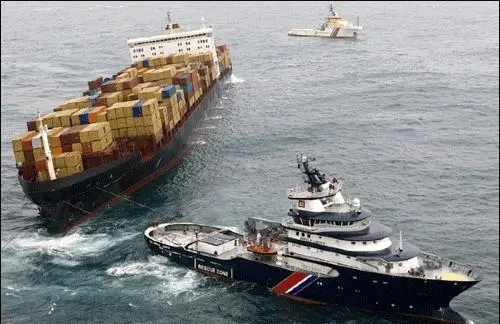
Dutch towage contractor Multraship operates three ETVs for Rijkswaterstaat and the Netherlands Coast Guard, who has plans for three newbuild electric-hybrid ETVs featuring green methanol gensets and are also capable of battery charging at offshore charging stations.
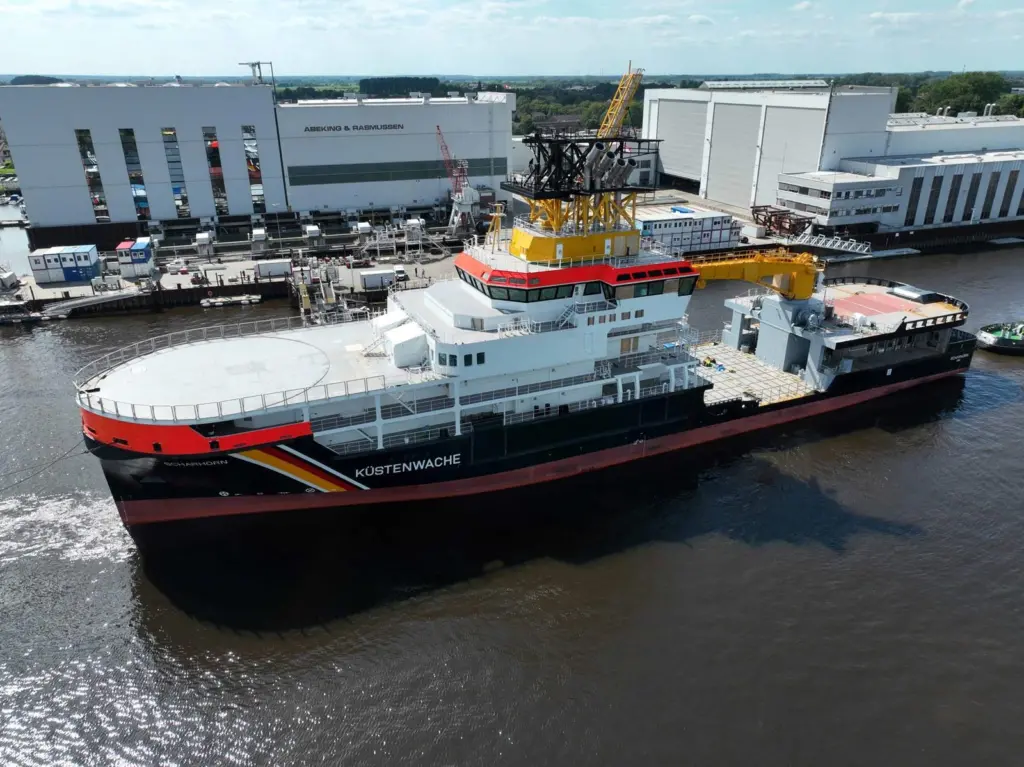
The German Federal Coast Guard recently introduced the 95m newbuilding Scharhörn to its ETV fleet, a true example of a multi-purpose emergency response vessel. Navigation aid maintenance, maritime law enforcement, pollution response and fire-fighting are among its capabilities and while visually bearing little resemblance to a tug, it includes a 1,000m tow wire and bollard pull of 145t.
Geopolitical tensions have seen ETVs engaged in activities beyond purely commercial and pollution prevention duties, introducing another consideration for new entrants into the government-funded ETV arena, or when considering replacement of existing vessels.
Whether investigating suspected intentional damage to undersea infrastructure or internationally sanctioned tankers passing through a country’s waters, and when the definition ‘multipurpose’ includes a degree of military capabilities, the buzz word ‘hybrid’ can mean more than reference to a vessel’s propulsion arrangements.
With little sign that peace is about to break out globally, options surrounding long-term decisions regarding previously purely peaceful commercial ETV activities, may include the bringing together of expertise found in the professional (civilian) towage and salvage sector and the equally professional military world.
This feature was included in our latest Special Report, which you can read in full here.

Related Articles
 SPECIAL REPORTS
 SPECIAL REPORTS
 SPECIAL REPORTS