![MaritimeJournal[Seawork]](https://www.maritimejournal.com/wp-content/uploads/2026/09/MaritimeJournalSeawork.svg)





UK seabed carbon storage licensing attracts bids for 2 million acres
The North Sea Transition Authority (NSTA) has received applications covering more than 2 million acres of North Sea seabed at the close of the UK’s second carbon storage licensing round last week.
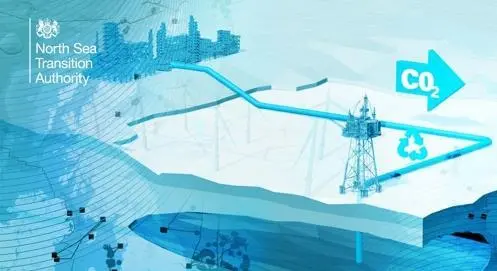
The bids signal strong industry interest and pave the way for the development of additional carbon storage sites in the UK.
Launched in December 2025, the second round followed extensive consultation with The Crown Estate, Crown Estate Scotland and other seabed users, building on expressions of interest received earlier in the year.
The second licensing round aims to expand on the four storage permits already awarded across two UK locations.
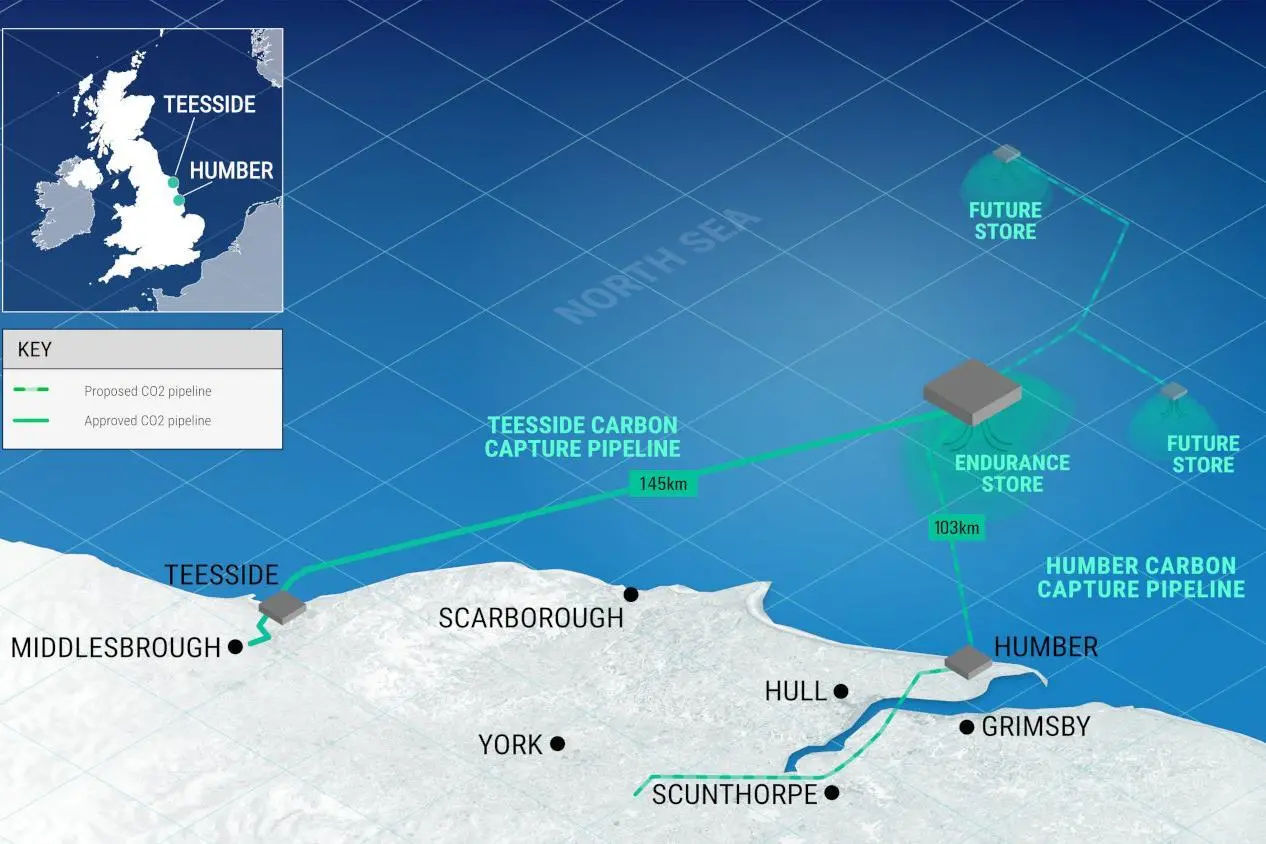
The Track 1 Endurance project, off the coast of Teesside, is aiming for a first injection by 2028, while the HyNet project was granted three storage permits, also targeting first injection in 2028.
Endurance has recently begun drilling an appraisal well, following a similar effort by the Bacton CCS project in the Southern North Sea. To support the sector, the NSTA has published maps highlighting future storage appraisal potential and issued stewardship expectations to guide licensees.
“The growth of the carbon storage sector is great news for UK jobs, growth, skills and the supply chain,” said Andy Brooks, NSTA Director of New Ventures. “The UK holds a unique position in developing offshore energy, including carbon storage, benefiting from decades of North Sea experience, commercial know-how, optimal geological conditions and spatial co-ordination.”
The NSTA will now review the latest applications and work with applicants and stakeholders, including The Crown Estate and Crown Estate Scotland, to ensure any licences are spatially coordinated alongside other marine uses.
Emerging industry, emerging tech
The emerging CCS industry centres on transporting captured carbon dioxide from industrial emitters into deep geological formations beneath the seabed, where it can be stored permanently.
The overall CCS chain involves capturing CO₂ at source, compressing it into a dense, supercritical state for efficient transport, moving it via pipelines and injecting it into subsurface reservoirs with suitable capacity and sealing characteristics to keep the gas trapped over the long term.
The HyNet North West project in the Liverpool Bay area encompasses CO₂ capture from heavy industry in northwest England and north Wales, followed by transport and storage infrastructure developed by Liverpool Bay CCS Ltd.
This infrastructure will include a combination of new pipeline construction and re-purposed existing lines that carry compressed CO₂ from capture facilities to offshore storage sites in depleted gas reservoirs beneath Liverpool Bay.
These reservoirs, having held hydrocarbons for millions of years, provide proven geological seals for long‑term CO₂ containment, developers believe. Firms such as Penspen are advancing detailed engineering on the large‑diameter pipeline and associated above‑ground installations, including block valve stations and compound facilities, to support this high‑pressure CO₂ network.
Further north, the Northern Endurance Partnership (NEP) is developing the UK’s first large‑scale CO₂ transport and storage infrastructure to serve industrial capture projects in the Teesside and Humber regions.
NEP’s approach involves an integrated system of onshore CO₂ gathering networks, compression plants and a 145km offshore pipeline that conveys CO₂ to the Endurance saline aquifer around 1,000 metres below the North Sea seabed.
Once injected, the CO₂ will be held within the porous rock of the saline reservoir, with impermeable caprock above acting as a long‑term seal. This project has been granted both a transport and storage licence and a storage permit, with start‑up currently planned for the latter half of the decade.
In both clusters, the technology depends on adapting industrial carbon capture systems, mega‑scale pipeline engineering and deep geological storage science, integrating decades of oil and gas reservoir expertise into a new low‑carbon infrastructure designed for secure, permanent CO₂ storage beneath the UK continental shelf.
Related Articles
 OTHER NEWS
 MARINE CIVILS
 MARINE CIVILS