![MaritimeJournal[Seawork]](https://www.maritimejournal.com/wp-content/uploads/2026/09/MaritimeJournalSeawork.svg)


Lessons learned following tug capsize
The Marine Accident Investigation Branch (MAIB) has published its report into the girting and capsizing of a mooring launch while assisting a small chemical tanker leaving its berth on the UK south coast.
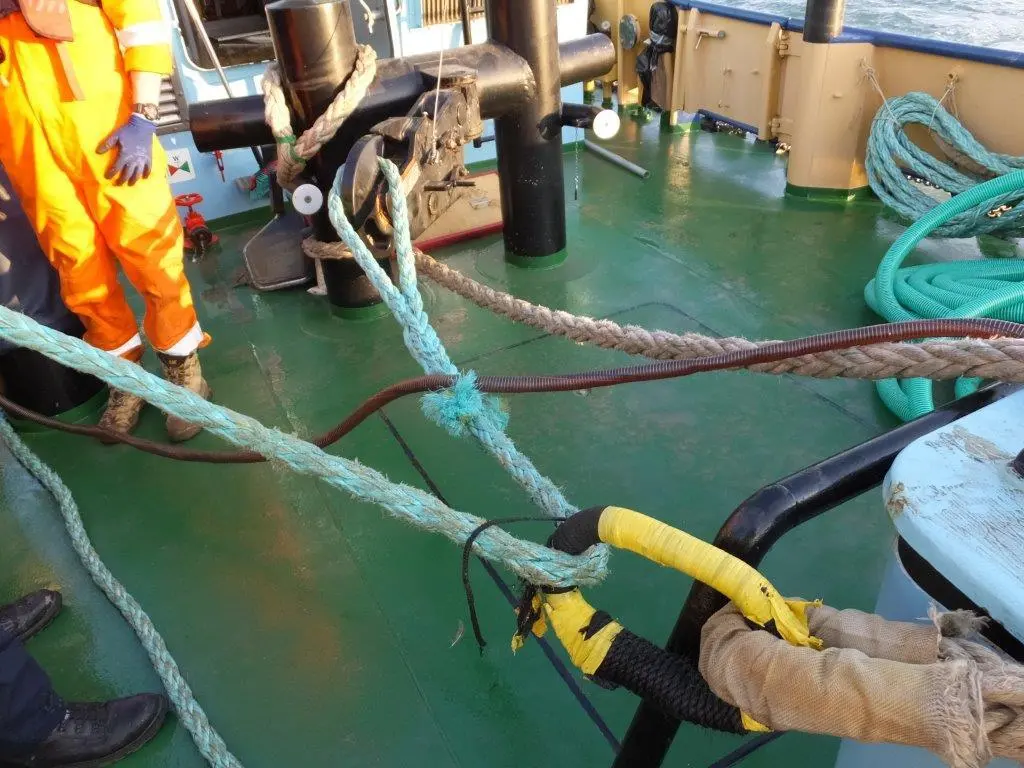
The launch was used regularly, assisting small tankers manoeuvring in the confines of the berth and on this occasion, the tanker’s pilot elected to use the launch to pull the vessel’s stern off the berth. The tanker moved ahead after leaving the berth and despite attempts to manoeuvre to run with the vessel and release the towline the launch remained beam-on before listing to port and subsequently capsizing. An attempt to operate the emergency towline release on the tug failed.
The deckhand was able to swim clear and was picked up by a vessel on an adjacent berth. The launch coxswain was trapped in the wheelhouse for around an hour before being rescued by a crewman from an attending tug who entered the water and broke a wheelhouse window with a sledge hammer. Both crew members were treated for shock and hypothermia and the launch subsequently sank but was later salvaged.
One element examined by the MAIB was the use of the gog rope. It was essential for the launch to be able to manoeuvre from pulling the tanker’s stern off the berth to running with the vessel. The gog rope was however ‘set at an intermediate length that was neither short enough to move the towing point sufficiently aft to prevent girting nor long enough to facilitate maximum manoeuvrability’.
Risk assessment, control measures and situational awareness were examined in detail and anomalies found in respect of towing endorsement qualification requirements surrounding the Merchant Shipping (Boatmasters’ Qualifications, Crew and Hours of Work) Regulations 2015. The Maritime and Coastguard Agency has been recommended to inform tug operators and port authorities of the importance of ensuring that masters engaged in towing operations have the necessary knowledge and skills.
Testing of the emergency towline release arrangements found the loading needed to manually operate the release increased in a linear relationship to the load applied to the hook requiring a steady pull rather than a sharp pulling action and it is suggested that including a monthly routine emergency release into planned training scenarios would increase emergency awareness and preparedness for such situations.
Parties involved have been quick to take action following the accident and a number of recommendations have been made to those involved. As is usual with MAIB investigations a lot of detail and background is examined, going deeper than just immediate circumstances surrounding the incident. Aspects mentioned here are just part of that analysis and the report will be interesting and important reading for those involved in similar operations and a close study of the report is highly recommended.
By Peter Barker
Related Articles
 SPECIAL REPORTS
 TUGS & SALVAGE
 EQUIPMENT