![MaritimeJournal[Seawork]](https://www.maritimejournal.com/wp-content/uploads/2026/09/MaritimeJournalSeawork.svg)






Biggest ever Speed@Seawork: We pick our highlights
Seawork’s sea trials day for fast commercial vessels brought a very wide range of vessels together this year, writes Jake Frith.
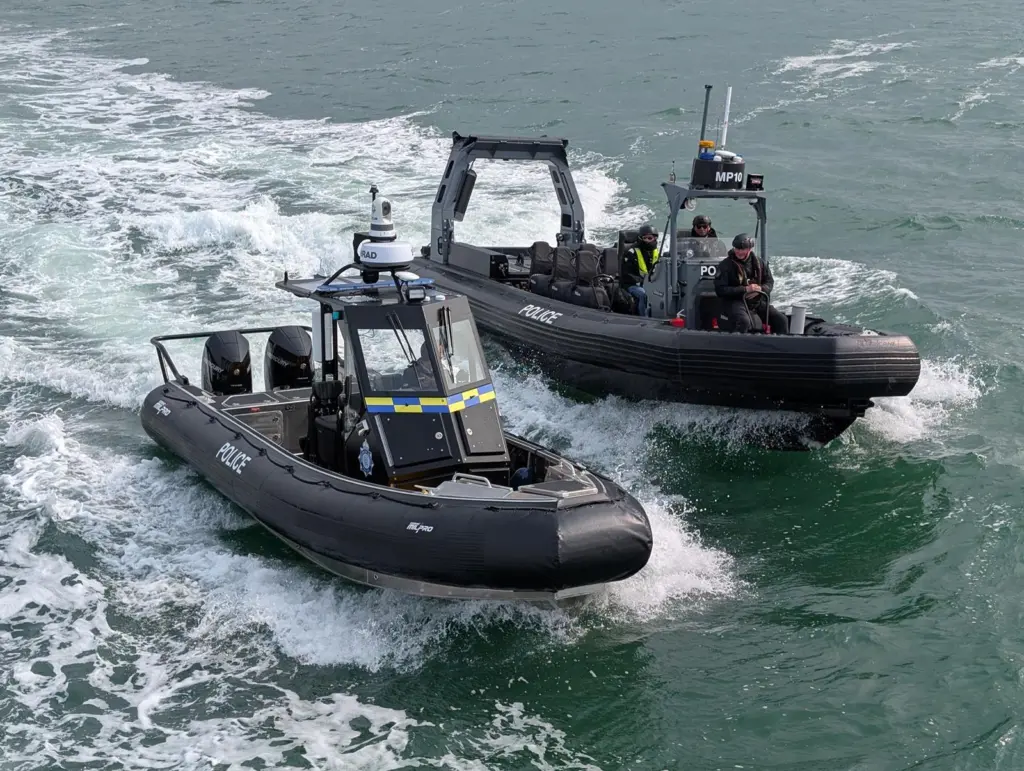
With 12 high speed commercial craft in attendance, 2025’s Speed at Seawork also brought serious buyers to the table at the 8th edition of this unique sea trials day for fast craft.
While many of the 150 registered attendees were under no illusions that the strong interest in military vessels and equipment was in part due to our more precarious geopolitical times, there has been no shortage of interesting technical development in these capable craft in recent years.
In no particular order, here are some of my more memorable findings at Speed 2025.
Zodiac Twins
In certain parts of the world, principally in Europe, so synonymous is the Zodiac brand with RIBs, the brand has ‘done a Hoover’ and become the go-to noun to describe such craft, whoever their manufacturer may be. The overarchingly French brand has a complex family of daughter brands, mostly containing the Zodiac name somewhere, and we had two of these daughters present at Speed. The larger Zodiac Hurricane was built in Vancouver, while the smaller SRA855 was built by Zodiac Milpro in Spain. Both hugely capable and solidly constructed aluminium-hulled boats, we only had time to trial the 855, such are the hard decisions when it comes to testing 12 boats in only six time slots.
Zodiac’s SRA range offers D-Tubes which are fitted with a slide-on mounting system, the option of inflatable or foam collar and a deck system supporting multiple configurations and allowing rapid, cost-effective configuration changes. The D-Tubes offer much more interior space than comparable round tubes, and the boat uses this to maximum effect with plenty of stowage hatches in the vertical internal hull spaces. Although this boat didn’t have the feature, the SRA RIBs can be specified with side-opening doors, particularly handy on the Search and Rescue market.
The SRA 855 at Seawork was one from a large order being fulfilled for the UK’s Ministry of Defence Police. These vessels, among other diverse tasks, will work out of Scottish and English naval ports, escorting submarines while they are on the surface, entering and leaving port. Powered by twin Mercury 350hp V8 outboards, our trip around a short chop-strewn Solent at over 50 knots reminded me of the solidity of these RIBs. They are a customisable production boat, built in a very modern and automated facility to high quality standards.
Customers that want an even more bespoke solution from the Zodiac range are steered towards the Hurricane models built in the Vancouver factory. Here, almost anything goes for those who are prepared to pay for it. The Zodiac Hurricane at Speed was one of three delivered to counter terrorism Police to work on the River Thames. London’s river is a major artery for the capital and hence represents the city’s vulnerable underbelly. Speed is of the essence for this job, and at 54 knots, the Zodiac was one of the quicker boats at Speed this year.
Galaxy Trident 8
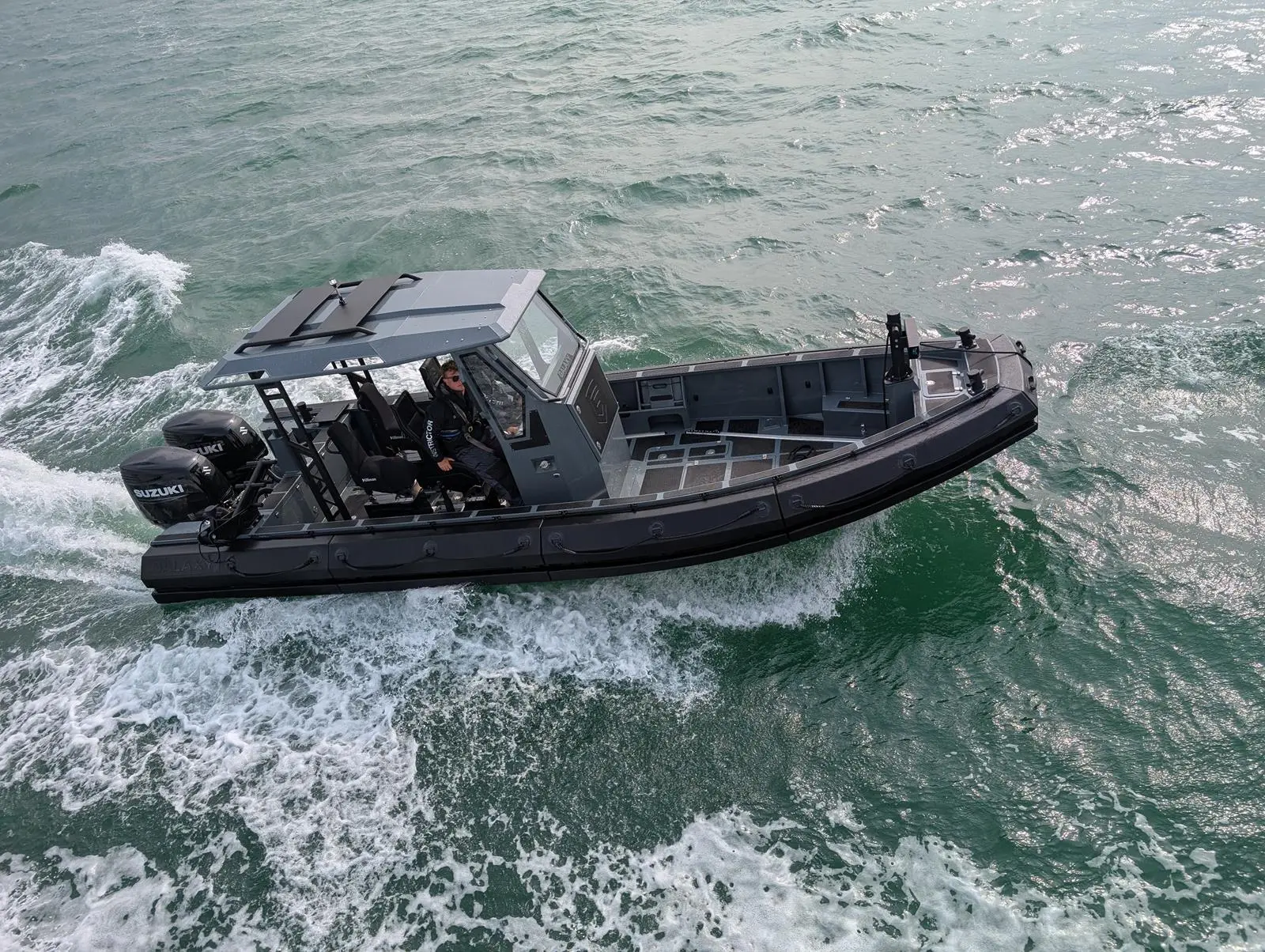
Demonstrating that Zodiac Milpro doesn’t have the market entirely cornered in aluminium-hulled commercial RIBs, the Galaxy is a new brand just being brought in to the UK by the Wolf Rock Boat Company in Devon.
With 6 or 5mm bottom plating and D-collar or round tubes respectively, Galaxy’s Trident and Pilot range are launching to the commercial sector at Seawork this year. The 8m we tried at Speed was a very accomplished package. The hulls are built in Ukraine (don’t panic, the factory is in the Western, peaceful side of Ukraine and all designs and project management aspects sit in the UK), in a modern facility who’s lower labour rates can roll through into the final pricing.
The quality looks excellent with perfect welds and a nano passivated coating process promises a long service life. Turnaround is quick, with the hulls arriving in the UK for rigging and delivery just over two months from order, and that’s with a pretty customisable boat. Things like Sampson posts, rear tow points and opening sea doors can all be accomplished as the factory builds plenty of commercial-grade aluminium hulls for various clients.
The 8m Trident we tried offered a good commercial compromise, power wise. Its twin 250hp Suzukis offered 51.5 knots, adequate for most commercial applications.
Wolf Rock Boat Company claims to be the UK’s biggest Suzuki outboard dealer and so can offer some good deals, but all brands of propulsion can be accommodated.
We found the boat to be full of sensible features for commercial users, from an easily accessible central fuel tank to solid feeling fold-out access steps to well thought-out wiring spaces incorporated into the aluminium coach roof.
On the Solent, this 8m deep vee boat offered an excellent pliant ride and felt like it would be a particularly fatigue-free place to spend a work day out on the water.
Bring the noise
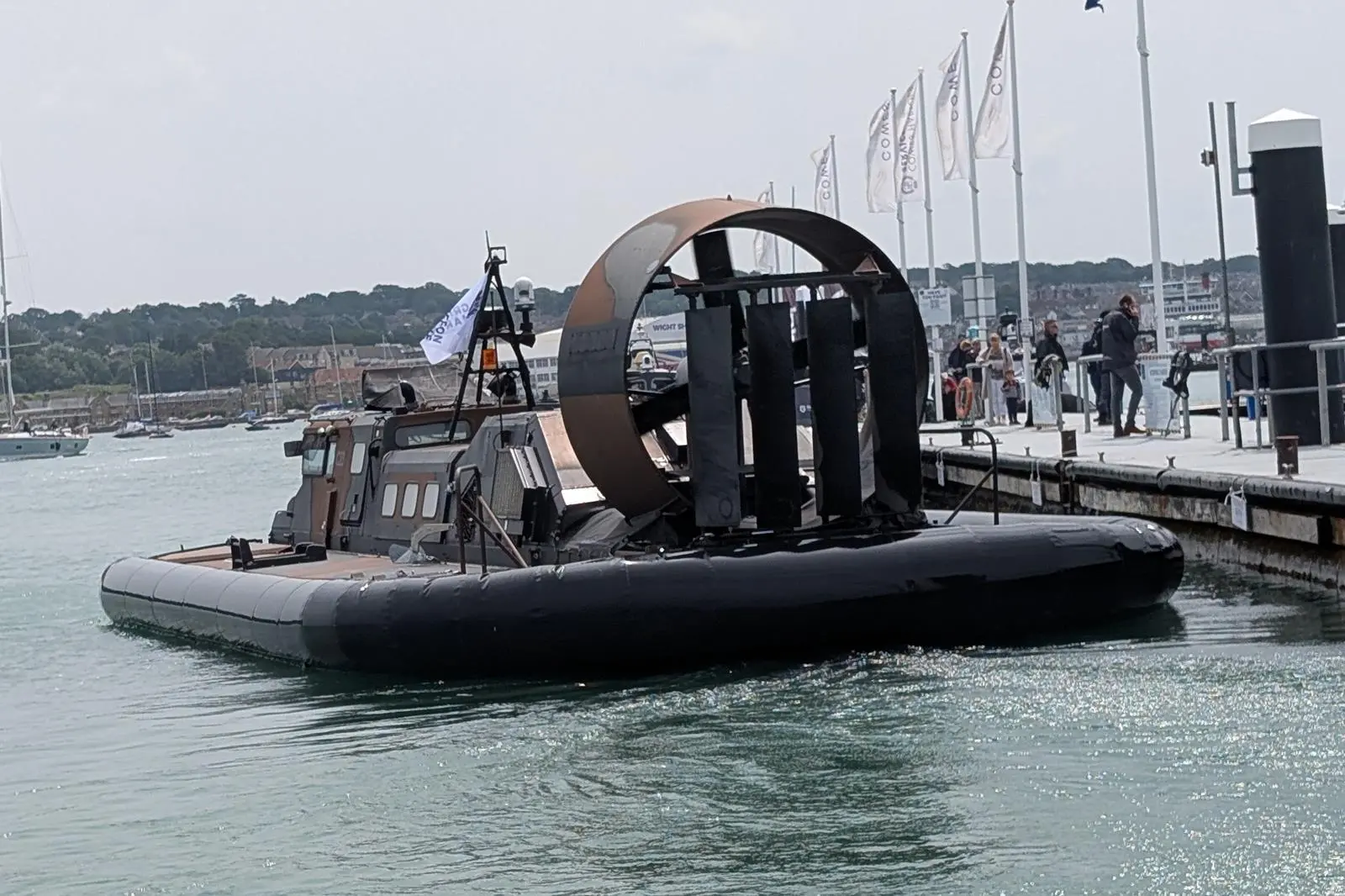
The ‘least conventional craft’ award this year definitely went to Griffon Marine’s 2400 hovercraft. Formerly Griffon Hoverwork, this local, Southampton headquartered manufacturer of air cushion vehicles has had a recent restructure into three distinct and satisfyingly sibilant business units: Solutions, Shipyard and Support.
This 2400 was an ageing ex Royal Marines Commando craft, which was back with Griffon to get a mid-life rebuild before going out to serve again with its two sisterships, having all been bought as a job lot and now being given a new lease of life by the Pakistan Navy.
Having only been on small open hovercraft or large passenger hovers, this military version was quite expressive of what I’d imagine being in the Royal Marines would actually be like much of the time. When seated in the large cargo/crew transfer area, one sits well below window level (for obvious reasons when transiting a war zone). The whole experience of fairly high noise levels, not particularly knowing where we were going, why, when we would get there and what we’d find there when we did, was a recreation of the military service experience that was as near as I’d like to get.
Joking aside though, hovercraft serve an irreplaceable service for situations when a boat can’t land and helicopters are too expensive. In that respect, other than occasionally reminding potential buyers of hovercrafts’ existence and capabilities, Griffon says the craft sort of sell themselves. For operators that require a hovercraft (and there are extensive hovercraft passenger and search and rescue services in the UK, Canada, Estonia, Finland and Japan), simply nothing else will do the job.
Smuggler: You’re fired
One of the most interesting areas of warfare to me is the endless array of practical, inventive solutions to stop bad actors going unchallenged.
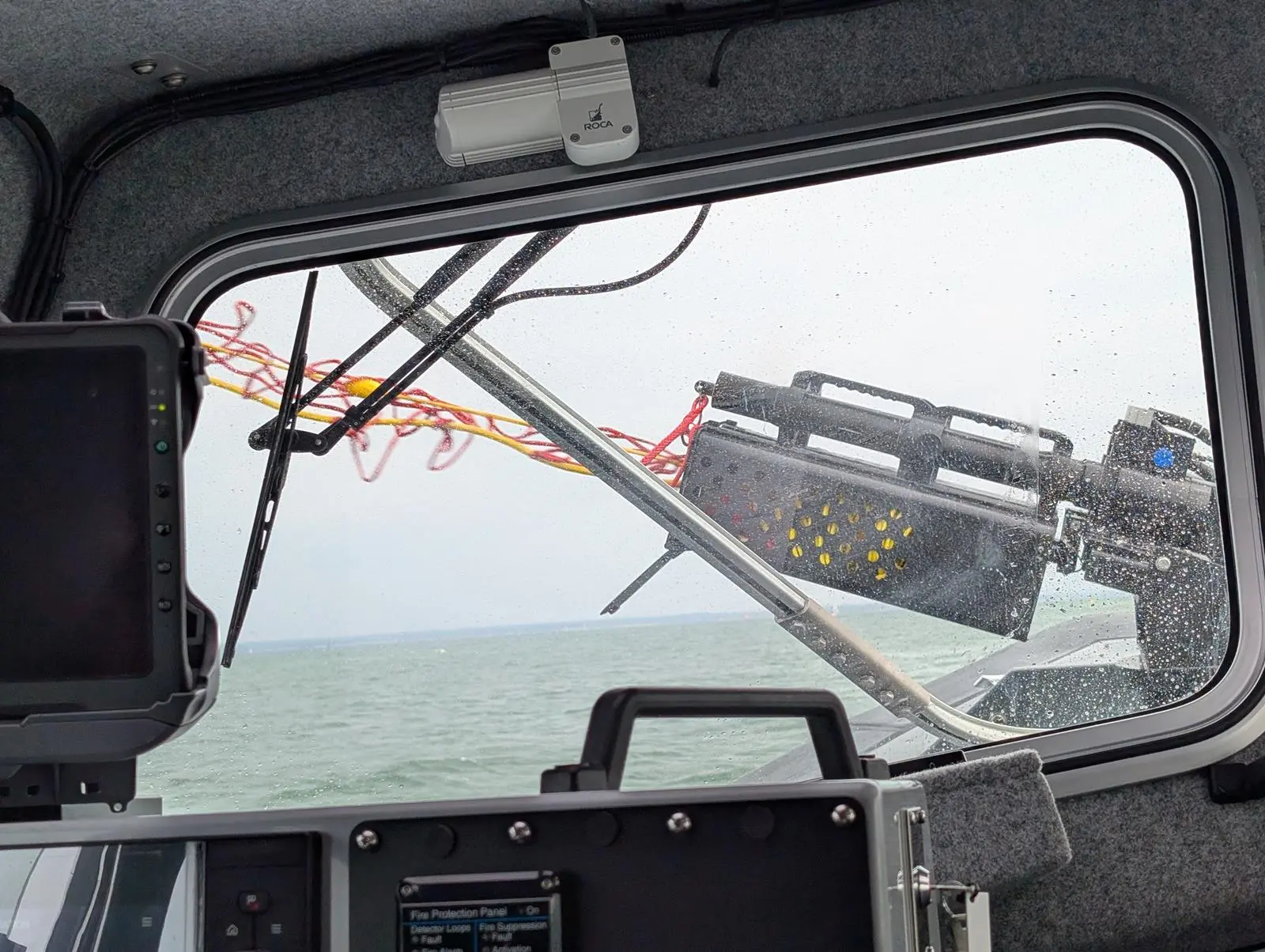
Vessel Arrest Systems falls squarely into that category. The company makes a range of compressed air-powered line launchers, which fire lines and nets into the water to stop boats. These are non-lethal systems, despite looking fairly dangerous from a distance.
Fitted into an impressively refined and soft-riding Delta Sentinel 12.5 cabin RIB, the fore and aft launchers are always controlled from the inside of the boat by remote.
Stopping boats is a necessary skill for authorities to have, according to Vessel Arrest Systems, and it came into its own when the UK Home Office looked at the risks on the River Thames and at the Weymouth Sailing Centre presented by the 2012 Olympics. It was realised that a fast moving boat, perhaps packed with explosives or potential bad actors, should perhaps not create carnage on the river and be impossible to stop.
We weren’t able to actually stop a boat at Speed@Seawork: the system when fully deployed under a fast-moving boat has a nasty habit of snapping outboard motor driveshafts. But I was delighted to hear that the Cowes Harbourmaster had been somehow talked into letting the company fire the lines out into one of the busiest stretches of leisure boating water in the UK. Vessel Arrest Systems sponsored a particularly tasty lunch for delegates (and local Harbourmasters) at the Royal Ocean Racing Club,Cowes, which I like to think might have helped matters on that.
There is of course a reasonably intense training requirement for the system if it’s not to end up ‘arresting’ the boat that is firing it. The various lines and nets have been designed to be pulled into any propeller or water jet as readily as possible.
Range is 60 to over 100m, depending on model, and the arresting boat can use a range of techniques, usually either head on to the arrestee or at 90 degrees, with a sharp turn immediately after deployment. We found a quiet bit of Solent and deployed two configurations, one a line with drogues, another a shallow net. Both carried well and it was clear to see that they would present an unavoidable barrier to any fast-moving boats.
Nine times out of ten, the systems are deployed in the dead of night so the arrested boat doesn’t know what’s happening until it has happened. The company also provides boom-type fixed defences for ports against surface and underwater craft and is working on a system that will stop ships up to 250 tons, using a specially laid-up Dyneema line.
While buyers of these systems don’t shout about it for obvious tactical reasons, one Spanish anti-smuggling authority used the system to stop nine drug smuggling boats in one night, by repacking and reusing the launchers afloat.
Planing rails rethought
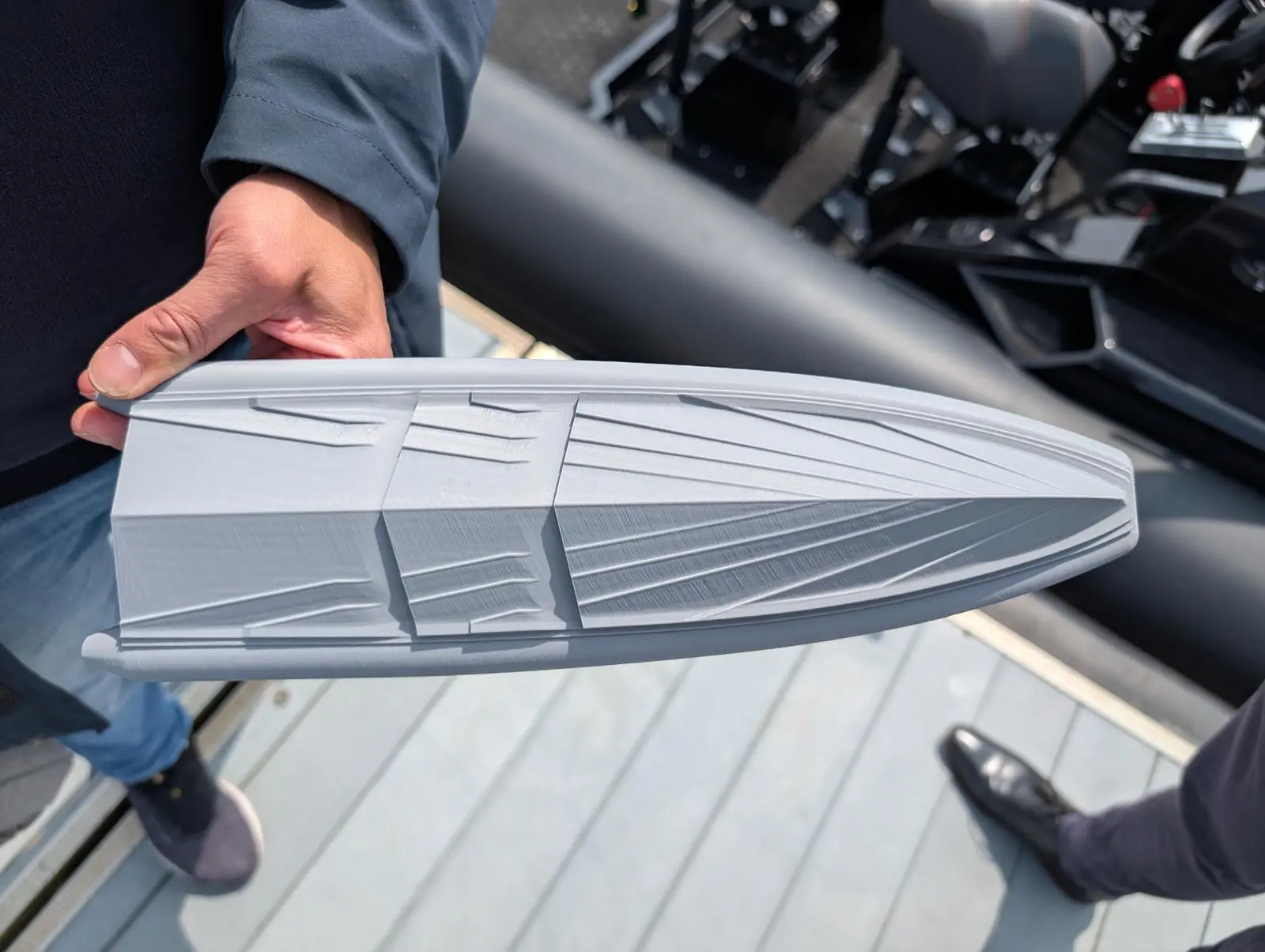
Planing rails are the horizontal strakes under the waterline in vee-hulled planing craft. They are usually parallel to the keel line, but one Swedish ex Firefighter and powerboat racer decided there was a better way. Having made a small fortune from a previous invention in a different field, this intrepid Swede started working on the premise that if the water on a V-shaped planing hull travels outwards as well as along the keel line, then surely, so should the planing rails, otherwise you are forcing lots of the water flow to travel over these rails in an inefficient manner.
Prototypes were built, back-to-back testing was conducted, naval architects were employed, and Petestep was born.
Petestep doesn’t design hulls, it offers its patented technology to boat builders and designers, so the product is best considered as a ‘surface treatment’ rather than a hull design.
On smaller boats it can offer massive efficiency gains, and Petestep claims to have improved a personal water craft’s hull efficiency by 35%. On the 8m Fugu 29 hull we tried, they claimed it was more like 15%. Obviously I can’t test or comment on the efficiency claims, but the system is also claimed to reduce slamming by a significant margin. That was much easier to observe at Speed@Seawork, as the very light (1.2 tons lightship) Fugu with only 22 degrees deadrise should have felt a bit of a pig at over 45 knots on the nasty short chop day we had. The fact that this boat rode beautifully, easily the least slammy boat of its size at Speed, and by far the lightest, suggests Petestep might be onto something.
Related Articles
 OTHER NEWS
 ACCESSORIES & EQUIPMENT
 SPECIAL REPORTS