![MaritimeJournal[Seawork]](https://www.maritimejournal.com/wp-content/uploads/2026/09/MaritimeJournalSeawork.svg)

CTV builder calls time on future fuel ‘greenwashing’
The future fuel frenzy shows no sign of letting up in the maritime industry as naval architects and boat builders seek the Holy Grail for their vessels. Farra Marine CEO Martin Farra speaks to us about the obstacles facing the industry.
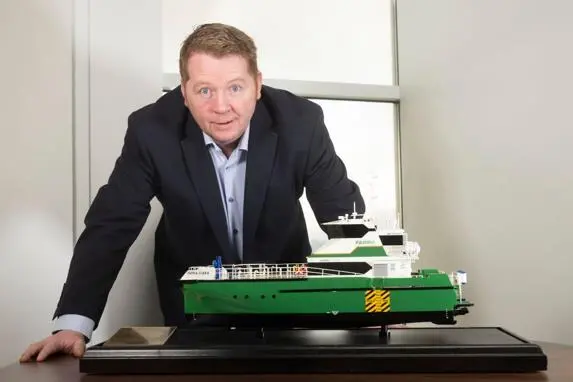
Who’d say they wanted to be a vessel builder when they grew up these days?
With the vast unknowns facing the whole industry in upcoming regulations, untested long-term alternative fuels and electric propulsion, and the sheer cost involved in all of it. No, at the moment, few would argue that diesel remains the best fuel for the job both with cost and performance.
But what about the climate? Few also diverge from the path to ‘green’, and cutting carbon emissions is top of the agenda at every conference, webinar, discussion.
But how much of a part, and how soon, the commercial marine industry has to play in saving the planet before it knows how best and most affordably to do it are surely valid questions.
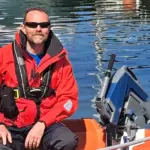
Speaking to Maritime Journal, Farra Marine CEO Martin Rice says he has no intention of switching from conventional diesel propulsion in his fleet yet, and that the alternative fuels and battery options on the table now simply do not work.
“I don’t mind changing to any propulsion system but for me it has to work,” he says. “At the moment nothing works. The client demands that a vessel must be able to do 25 knots carrying 10 tons of cargo, and it has to be a hybrid or methanol or electric vessel. These fuel options change the performance of the vessels and they can’t do it.”
Rice says he has often been in talks with the likes of Volvo Penta and Scania, who have admitted a vessel using this kind of technology with sufficient horsepower is at least four or five years away.
“If I build my next boat methanol-ready it means adding all the heavy new pipelines, stainless steel tanks, and so on that the regulations say you have to have – and that means a boat that’s seven tons heavier than a diesel one. Are we saying that for five years I will have to drive around with an extra five tons?”
A hybrid boat, he says, will cost up to £1 million (€1.1 million) more to build – and it’s the CTV builder who has to bear that cost, not the client, who won’t pay a higher day rate.
“All the risks are on me and if they decide they don’t want it I’m left with a white elephant,” he says.
Technical issues
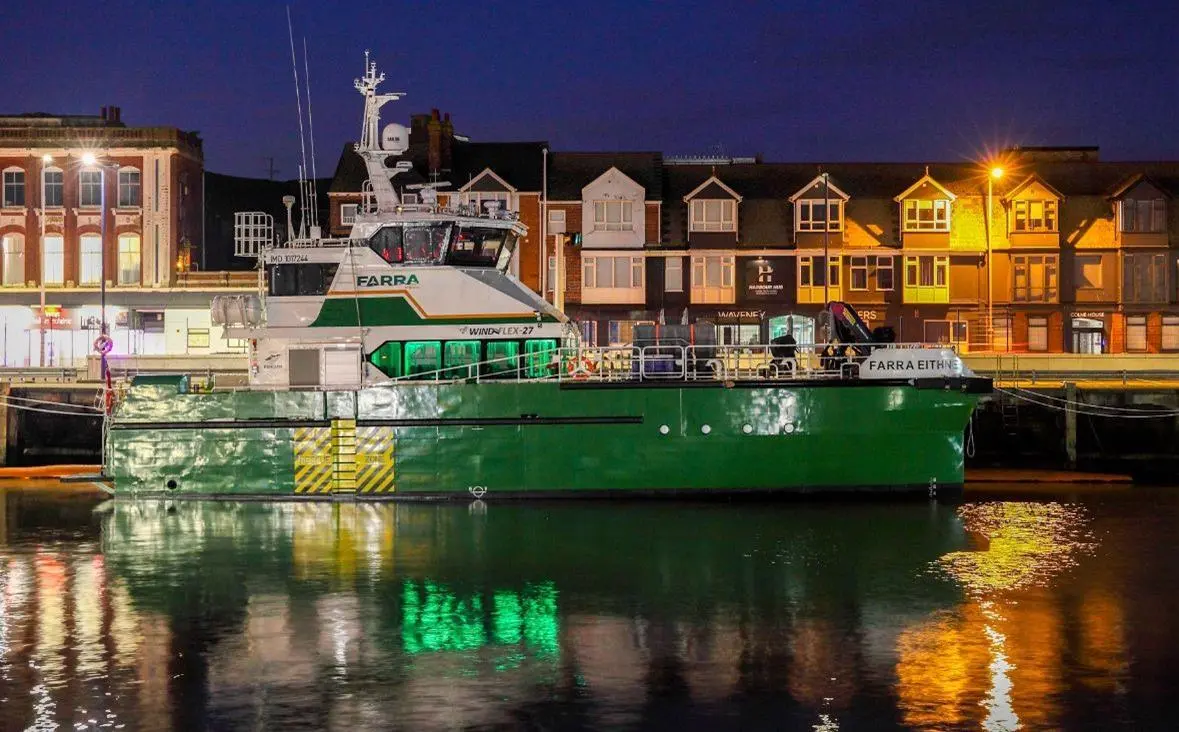
So what issues is Rice seeing with the new wave of vessels?
“They don’t work because they are so complicated,” he says. “Hybrid boats keep tripping, the gearboxes fail – there are too many systems trying to talk to each other and all coming out of the electrical system.
“It only takes a fuse to blow and it all shuts down. I know of boats that haven’t worked for five months – well that would put me out of business.
“You also have such complicated systems on board that when they trip you have to have a back-up. Even manoeuvring in a harbour is dangerous using batteries. When we go to the wind farm, we put a rope around the turbine and stop all the engines. Our green solution is a 300-euro rope.
“Everyone tells us this off the record. They won’t say it openly because it’s too political. I know of one operator who says he uses batteries in the harbour for 20 minutes, then drives out on diesel to get to the wind farm – then uses the batteries for a few minutes before switching back to diesel.
“It frustrates the life out of me.”
Rice says clients are forcing CTV builders to build hybrid boats so they can ‘tick the green box’.

“It’s greenwashing,” he says. “I would be happy to switch from diesel but only if they can give me something that works. It’s not really a good business plan trying to build these Chitty Chitty Bang Bang vessels – it’s a big risk to offshore renewables – all this money that’s being pumped into funds that want to invest in green.”
All of Rice’s vessels are IMO Tier III compliant, which means that although they run on diesel, they clean out ‘all the badness’. And he says that if there wasn’t such a frenzy to get turbines installed and built bigger and bigger, slow steaming could be used, the vessels could be operated at 14 knots and carbon emissions would be halved.
“But they won’t hear of it,” he says.
Rice is also concerned about the ‘S’ in ESG – Environmental, Social & Governance.
“Everyone’s concerned about the Environmental bit but no one mentions the Social part,” he says. “Using cobalt dug out of mines by 10-year-olds, or the materials coming from other parts of the supply chain that are not socially ethical. Well we care about that.”
“If you can tick the green box they don’t really care if it works,” he says. “There might be a better solution in five or 10 years’ time, or they might spend money trying to get carbon out of the air, but for the moment, diesel is the only viable option.”
HAVE YOUR SAY
Do you have an opinion on the issues raised by Martin Rice?
Please contact the editor.
Related Articles
 OTHER NEWS
 ACCESSORIES & EQUIPMENT
 SPECIAL REPORTS