![MaritimeJournal[Seawork]](https://www.maritimejournal.com/wp-content/uploads/2026/09/MaritimeJournalSeawork.svg)

GPA releases cargo ship wreck removal update
A report on the wreck of a cargo ship that crashed into an LNG carrier and was sunk last August has confirmed that the risk of oil leakage has been ‘dramatically reduced’.
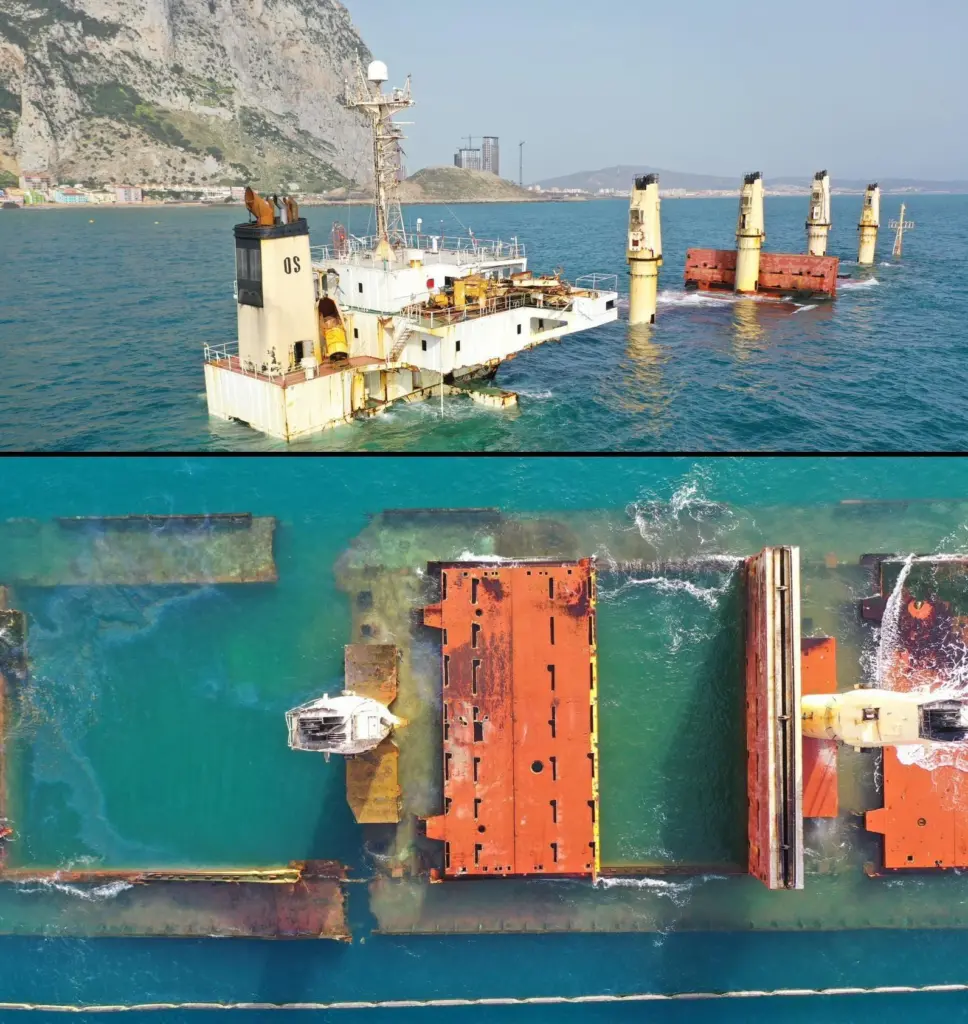
The 35,362dwt, 178m LOA OS 35 bulker with its load of steel bars collided with the LNG carrier as it left Gibraltar, whereafter it anchored off Catalan Bay and was subsequently sunk. Around a month later GPA said that while the 73m long forward and 105m long aft sections were at that time still connected by cracked, bent and buckled steel, the ship itself could be considered as two pieces.
Resolve Marine carried out work including securing the vessel in place and preparing a Heavy Weather Plan, and in November Dutch company Koole Contractors was appointed to remove OS 35 and all its contents, with the handover from caretaking contractor Resolve to Koole approved just before Christmas.
Tugs Koole 42 and Koole 31, along with a salvage barge, were mobilised to the location and work to remove oil residues from inside the vessel commenced, with the first batches of steel cargo removed a month later, at times hampered by bad weather.
In anticipation of damage to the accommodation and hull, stripping of the interior and unloading continued before bad weather arrived. Structural damage, most visibly on the starboard side, was not considered to be extensive with debris contained within the site of the wreck.
After more recent bad weather, the original crack in the hull has since extended and the two parts of the ship, initially only “tenuously held together” by the bottom part of the structure, have separated completely, leaving the ship finally in two parts.
The wreck had previously not moved, however, demonstrating the effectiveness of stabilising the vessel with a controlled sinking to give it maximum possible stability, a standard procedure to improve prospects for work in the longer term.
Hull and fuel tanks damage
The hull damage allowed divers to inspect the fuel tanks and they confirmed that all four making up tank one that had suffered damage with some light sheening were contained successfully within the boom.
The survey confirmed “with certainty” that number two fuel tanks remained undamaged and was not at risk of failing and causing a sudden release of residues. The tanks had been emptied earlier in the operation and while some residues were likely to remain, the risk of future oil escape was now “dramatically reduced”.
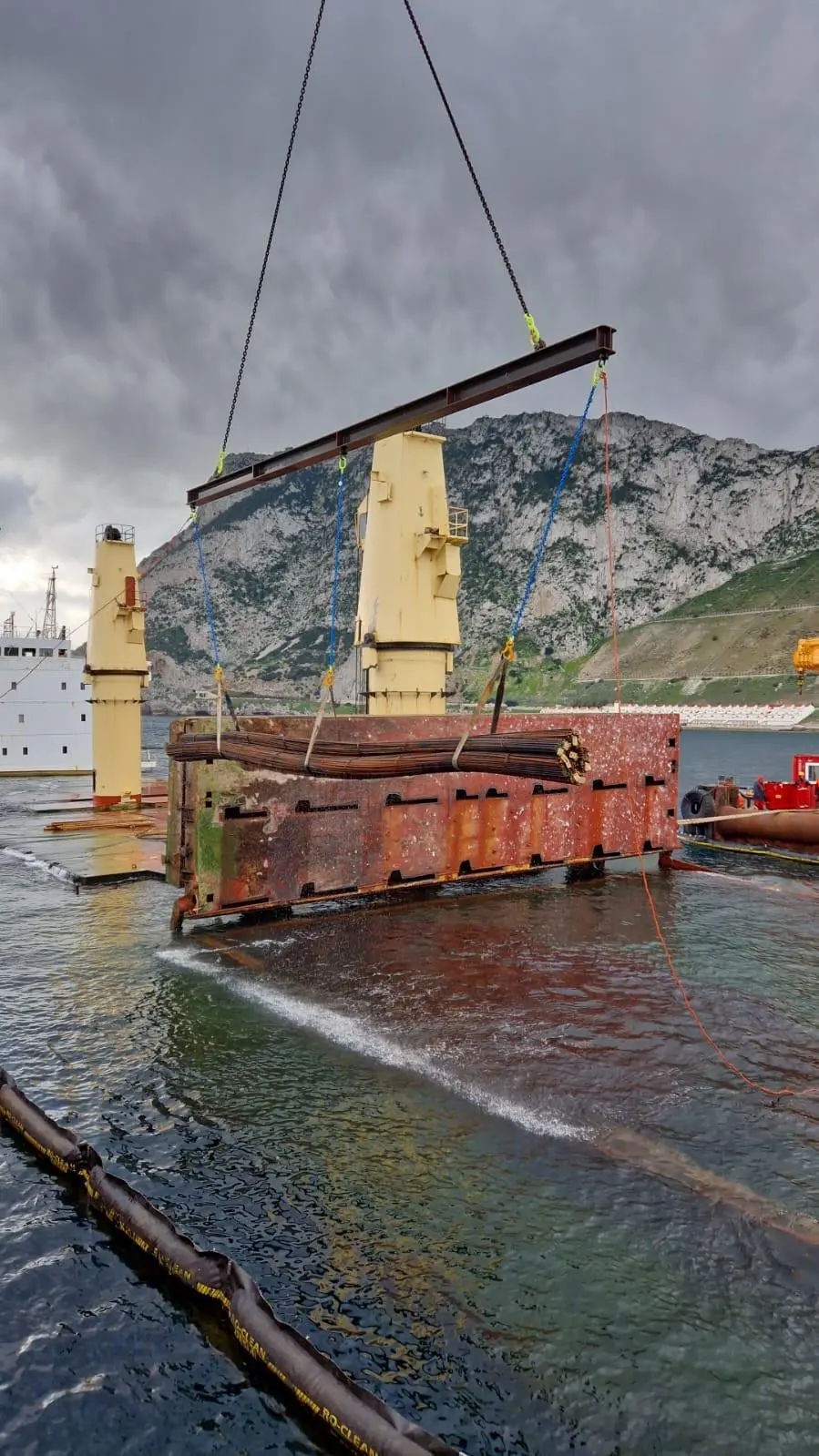
Around one third of the cargo, more than 1,000t, had at the time been removed, this part of the operation unaffected by storm damage with the remaining 3,000t due to be removed at the time of writing.
GPA said work to remove the wreck and its cargo had continued to progress well with downtime dictated by winter storms built into the planned project timeline. The condition of the wreck at the time meant that some plans for final removal may need to be “tweaked”, although it is unclear as to how this may affect the projected timeline, if at all.
Following the storms, small amounts of residual oil was found on Eastern Beach, Catalan Bay and the rocks at Sandy Bay and remedial work by the P&I contractors, monitored by GPA and Department for Environment, allowed some beaches to be reopened to the public.
Stripping of the accommodation’s interior in anticipation of the storms meant that no secondary contamination or debris was detected.
The importance of keeping stakeholders briefed in an open and timely manner, including media who are often the main source of information for local communities affected by such incidents, is now recognised and the Captain of the Port has maintained constant publicly accessible communication with those involved, including the Spanish authorities.
Captain of the Port John Ghio said: “The damage to the vessel’s hull and accommodation block, whilst not ideal, were anticipated and prepared for with the removal of as much oil as possible and the complete stripping of the accommodation.
“These measures, together with the decision to sink the wreck in a controlled manner and thereby secure it in place, gave the vessel maximum possible stability to withstand the winter storms as far as possible. Overall, I’m pleased that works continue to progress well, with cargo removal remaining the priority.”