![MaritimeJournal[Seawork]](https://www.maritimejournal.com/wp-content/uploads/2026/09/MaritimeJournalSeawork.svg)



Korea steps up to growing European icebreaker demand
Europe is entering a new cycle of icebreaker demand, driven by both climate variability and strategic needs in northern waters.
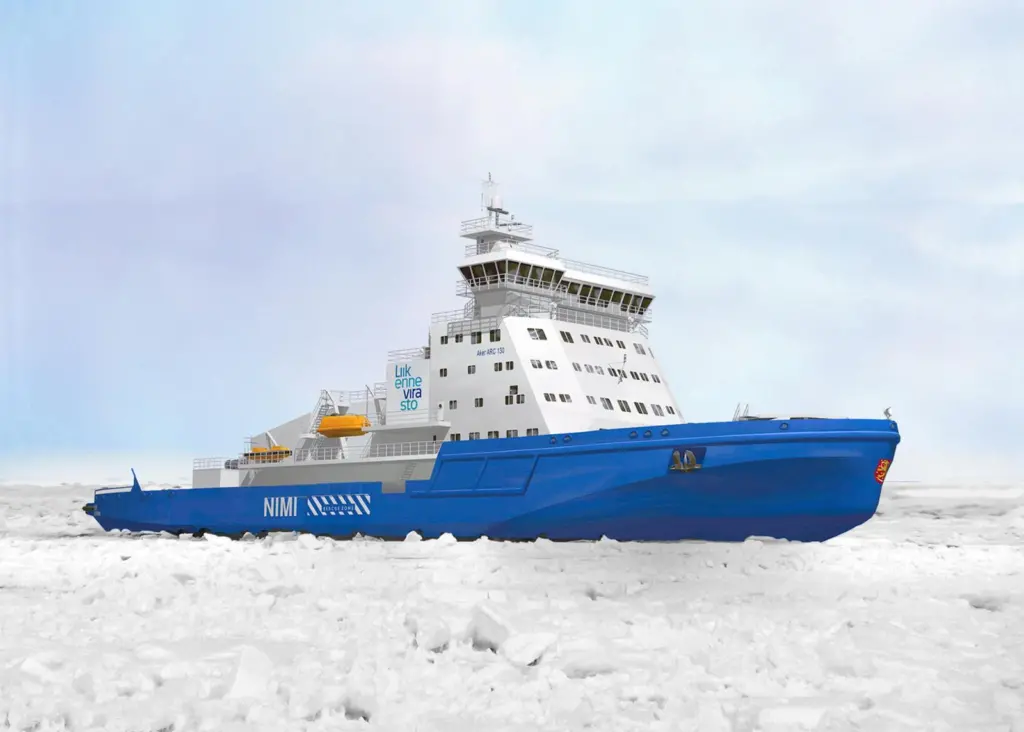
And in a step away from the usual route of sourcing the vessels from icebreaker-building nations such as Norway, Sweden and Finland, South Korea’s Hyundai Heavy Industries’ contract marks the first for a Korean shipbuilder.
Ordered by the Swedish Maritime Administration, the $350 million Polar Class 4 icebreaker will operate in the Baltic Sea, one of Europe’s most ice-prone regions.
Due for delivery by 2029, the 126m vessel, with a displacement of around 15,000 tons, will be just the first of many in the years to come, Hyundai said.
Northern European countries, including Sweden and Finland, rely heavily on winter navigation to keep ports open, particularly for energy and industrial supply chains. As geopolitical tensions and energy security concerns rise, maintaining year-round maritime access has become more critical.
Climate variability
One might ask why demand is rising if the global temperature is rising, and the 2025-26 winter was not particularly cold in Europe as a whole, according to data from the Copernicus Climate Change Service.
February, it says, was one of the warmest on record.
However it also says that parts of the continent – northern Europe and the Baltic region – were colder than average, and this reflects current trends, which show that while overall warming appears to be happening, there is a lot of variability.
The Baltic Sea, Arctic routes and northern offshore wind zones will continue to require robust ice-breaking capacity.
The Swedish order is being seen as a breakthrough that could position Korean yards as serious contenders in the icebreaker niche, long led by countries such as Finland and Russia.
Hyundai Heavy Industries’ says it aims to build between 70-90 icebreakers over the next decade.