![MaritimeJournal[Seawork]](https://www.maritimejournal.com/wp-content/uploads/2026/09/MaritimeJournalSeawork.svg)

Sanmar tugs delivered far and wide
Sanmar Shipyards has reported completion of tugs for owners in Germany and the Seychelles along with the end of a long delivery voyage to Canada for two “emissions-free” electric tugs.
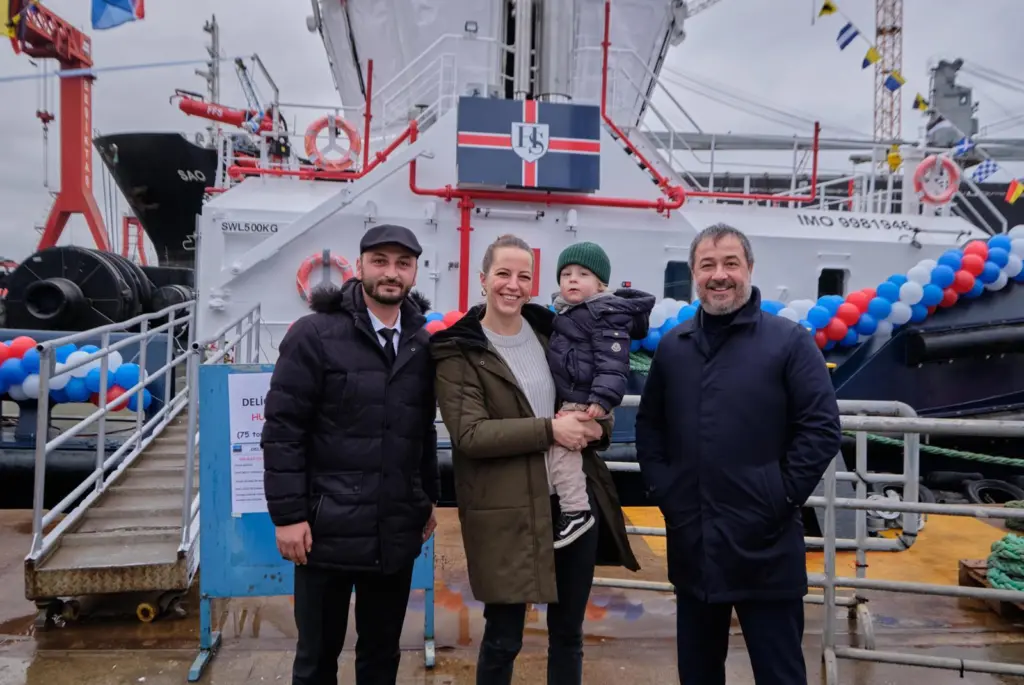
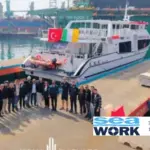
Brunsbüttel-based H. Schramm Towage is a regular customer for Sanmar, having already taken delivery of five tugs since 2005 from the Turkish shipbuilder. Vessel number six was christened recently when the Sanmar-exclusive, Robert Allan-designed (RAL) TRAktor-Z 2500SX tug Bo was named by Lara König, who took on the honorary role of godmother to the new vessel, named after her two-year-old son, who is the godchild of Schramm group owner Hans-Helmut Schramm.
Designated the Deliçay series by Sanmar, Bo is powered by EPA Tier III and IMO Tier II compliant, electronically controlled Caterpillar main engines delivering 75tbp and speed 12kn.
The vessel, designed for escort, shiphandling and terminal support duties, also meets fifi1 standards and will join Schramm’s fleet, which mainly operates at the intersection of the River Elbe, North Sea, Baltic Sea and Kiel Canal. Bo will join the operations at Brunsbüttel at the mouth of the Elbe and western end of the Kiel Canal.
Other Sanmar-built vessels in Schramm’s fleet are the 2005-delivered 45tbp twin-screw tug Corvin, a second of the same name delivered in 2007, Max delivered in 2009, Torsten a Navtug delivered in 2012 and the 71tbp ATD tug Sönke delivered in 2020.
Delivery to Seychelles
It is around 8,000km from Brunsbüttel to the Seychelles, or around 5,000km from Turkey, and recently Seychelles Port Authority took delivery of the RAL-designed RApport 1900SX, Bozçay class general-purpose harbour tug Mamelles.
The popularity of Sanmar’s Bozçay class tug provides proof that the age of conventionally powered shiphandling tugs, in this case with twin-screws in nozzles and adequate manoeuvrability provided by four rudders, is not yet over. The hull form is based on an array of previously successful tug designs ensuring good seakeeping, manoeuvrability and stability.
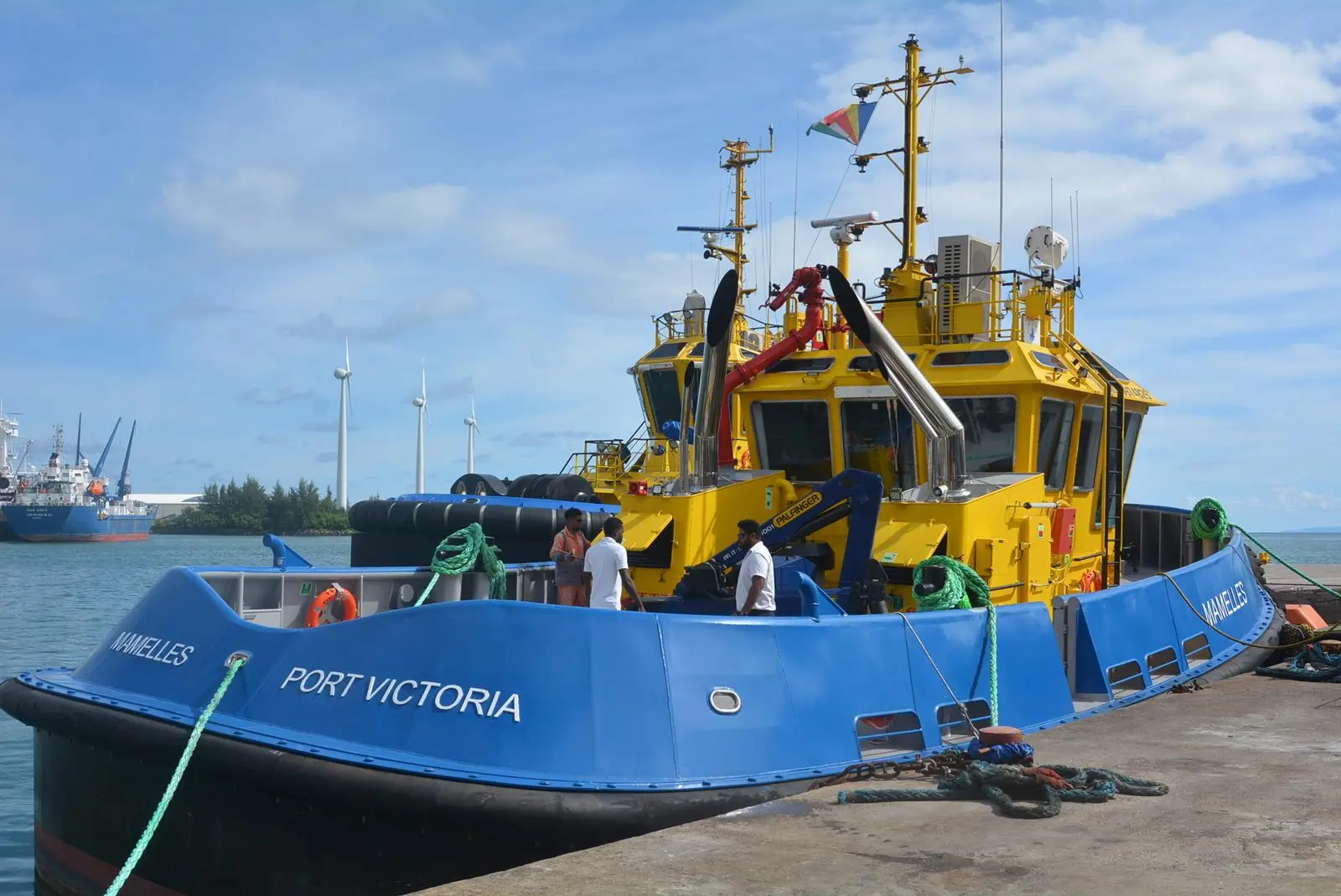
With a compact size of 19.3m LOA on an 8.2m beam Mamelles provides 33tbp and speed 11.5kn from twin Caterpillar C32 main engines developing 1,940kW in total and is a design described by Sanmar as “ideally suited to smaller ports and sometimes crowded harbour conditions”. Overnight accommodation is provided for four persons in the forecastle.
Mamelles will be kept busy at Port Victoria in the Seychelles, an important industrial fishing, cruise ship and super yacht destination in the Indian Ocean and a port visited by around 800 vessels annually. It will join another Sanmar product at Seychelles, the larger 60tbp RAmparts 2400SX tug Ste Anne.
Lengthy delivery to Canada
Considering shiphandling tugs in general, the wide choice on offer is no better demonstrated than comparing the delivery of the twin-screw conventional but nonetheless modern example to the Seychelles with the departure from Sanmar’s facility of two electric ElectRA 2300SX tugs with destination Vancouver in British Columbia, Canada.
The two vessels, built with the names Dynamo and Dynamo II, are renamed Saam Volta and Chief Dan George respectively by their new owner SAAM Towage, who operates in South, Central and North America including nine ports in British Columbia. The tugs will be charged using clean energy from the British Columbia power grid.
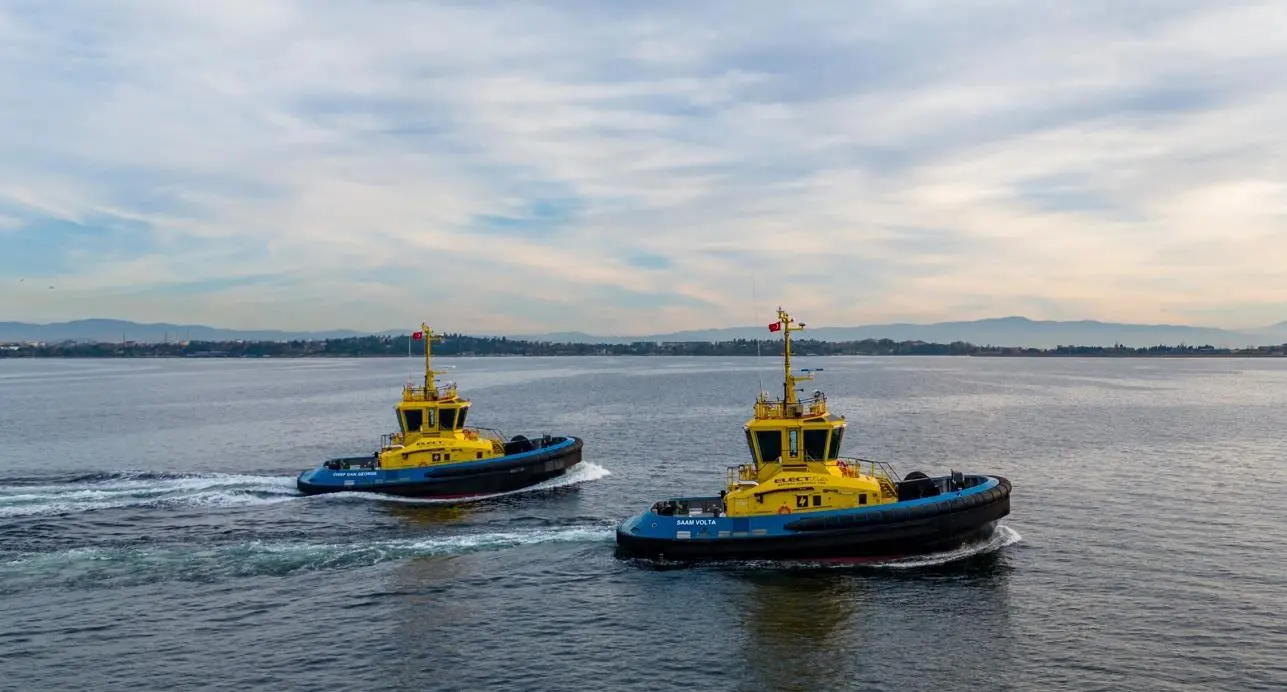
The pair are each 23.4m LOA on a beam of 11.85m and provide 70tbp via Li-ion battery banks, Sanmar saying that at full capacity they “reduce CO2 emissions by 2,600 metric tons a year”.
Local shipyards often build tugs for local operators making delivery a relatively straight-forward consideration. With major tug builders now having a global client-base for their products, logistics with delivery arrangements can be more complex.
They may be delivered ‘under their own keel’ by ship-delivery specialists or alternatively transported as deck cargo on conventional heavy-lift vessels, and it was this method that was chosen for SAAM’s duo.
Following successful seaworthiness trials Dynamo and Dynamo II were lifted on board the German-owned general cargo ship BBC Emerald using the vessel’s 400t SWL cranes.
A direct route from Turkey to Vancouver would typically be via the Atlantic and Panama Canal. Due, however, to restrictions on the number of ships using the Panama Canal because of low water levels in Gatun Lake, BBC Emerald will make the trip to Vancouver via the Strait of Magellan in southern Chile, a journey that will take around 60 days.