![MaritimeJournal[Seawork]](https://www.maritimejournal.com/wp-content/uploads/2026/09/MaritimeJournalSeawork.svg)

Six vessel Tunisian tug order for Med Marine
Turkish tug builder Med Marine has won a significant order for six Robert Allan Ltd (RAL) designed tugs to operate in the ports of Tunisia.
The order involves construction of six RAL RAstar 2800 ASD tugs, each providing 60tbp, and described as “representing the cutting edge of maritime technology, offering powerful and reliable performance in various towing and harbour operations”.
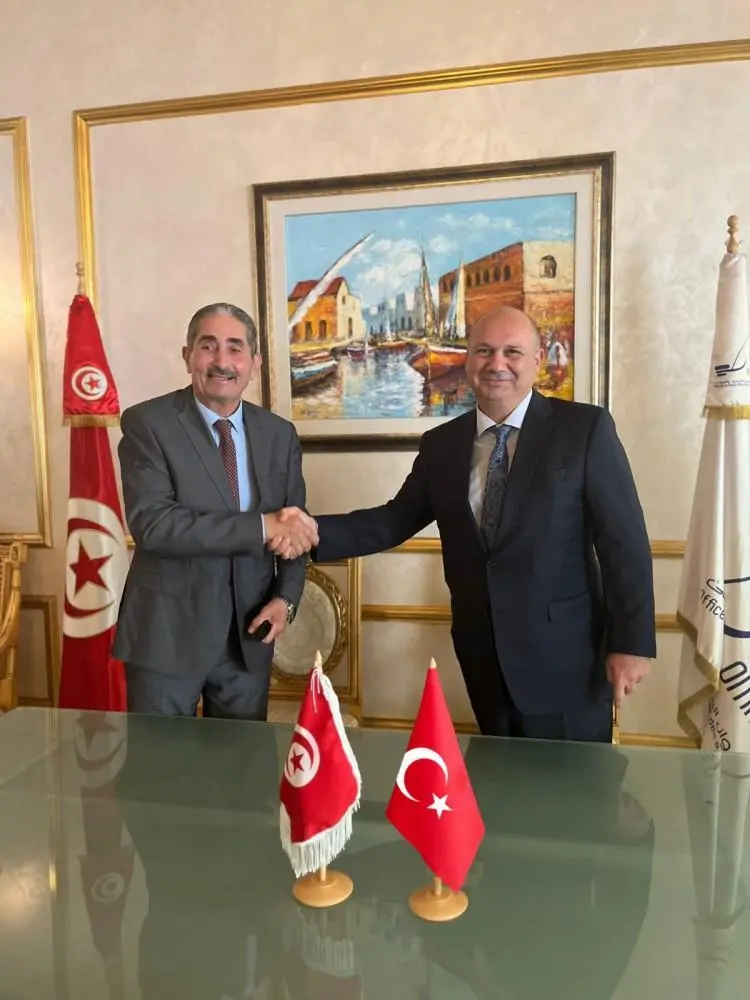
The customer is Tunisia’s Office De La Marine Marchande Et Des Port (OMMP) and the contract signing took place recently in Tunisia following a competitive tender process where Med Marine was selected “as the trusted partner for the construction of these crucial vessels”. The deal has been described as marking a promising partnership between the two “industry giants”.
The RAstar class is one of RAL’s most popular designs of high-performance escort/offshore terminal tug, which features its exclusive sponsoned hull form and prominent foil-shaped escort skeg forward.
Intended for demanding escort operations in exposed areas, like most of RAL’s designs, the RAstar range is offered in a variety of size and power configurations to match the client’s requirements. Options range from the 27m RAstar 2700 up to the RAstar 4200 variant, supplying 125tbp so while OMMP’s six vessels are at the lower end of the spectrum they carry the same basic design details of the range. Some of the RAstar series are offered with dual-fuel capabilities.
OMMP has responsibility for eight ports in Tunisia and its history goes back to ancient times. Initially they were badly equipped and maintained with shallow quays, but over time evolved with Porto-Farina and La Goulette gaining a prominent role from both a military and commercial angle.
While state-owned, a franchise system was established for some of the ports and from 1900 onwards the ports of Tunis, Sousse and Sfax provided access for ships with a draught of 6m with 900m, 450m and 600m of docks available respectively.
Development was affected by the two world wars and in 1947 the State Department of Commercial Ports was created with an autonomous budget. Between the Second World War and the country’s independence, the Tunisian port network comprised five commercial ports: Tunis, La Goulette, Bizerte, Sousse and Sfax.
In 1965 the Tunisian National Ports Authority was created to take responsibility for the efficiency, upkeep and development of the country’s commercial ports.