



Family-owned Finnish tug owner Alfons Håkans is taking the use of tugs for icebreaking to a new level using a separate powered ice bow.

Keeping the waters of the Baltic ice-free during winter months is expensive but essential for maintaining safe navigation and continuity for seaborne trade year-round in much the same way as coastal authorities are expected to maintain aids to navigation.
For clearing heavy ice huge amounts of power are required from vessels that may have limited employment opportunities out of season, one example of a more economical solution has seen ice-classed anchor handlers of Swedish company Viking Supply Ships employed for ice-breaking duties during winter months, returning to work for the offshore industry in summer.
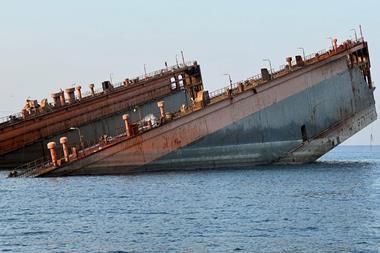
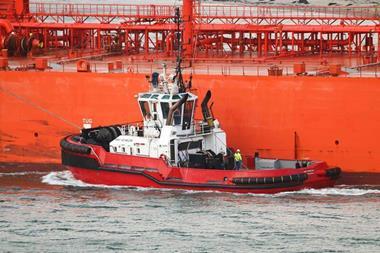
The sector has links to the world of towing with tugs employed to clear ice and it was in the 1980s that Håkans used a lose bow together with a pushing tug, described by the company as a huge ‘spoon’ being pushed through the ice. The idea of using such a bow with propulsion struck managing director Joakim Håkans some years ago and the company’s tug Calypso will now be employed pushing a propelled bow for the coming ten years on the Finnish lake of Saimaa.
Testing and developing an icebreaking loose bow with propulsion is part of the EU program WINMOS II (Winter Navigation Motorways of the Sea II) and the Finnish Transport Agency agreed on a contract with Turun Korjaustelakka, in Naantali, Finland to build the bow.
It is claimed the idea could see the icebreaking capacity match the performance of the state’s biggest icebreakers as explained by Mr Håkans: “… The cost of this kind of a lose bow would be some 20 percent of the cost of a big icebreaker. And when the season is over, you just leave the bow waiting for the next season, while the pusher can work during the open water season with other jobs. This would mean huge savings. The idea behind this concept is purely one of efficiency and cost cutting.” He adds that they are at the testing the concept stage and as to actual configuration of the propulsion system it remains to be seen if the bow should have pushing or pulling propulsion.
By Peter Barker