


Offshore increases its influence in renewables
Two recent vessel orders demonstrate growing interest accompanied by the potential benefits from the involvement of the offshore oil and gas industry in the expanding marine renewables market.
When the harnessing of wind energy moved from onshore to offshore it followed that land-based windfarm developers were asked to put on a pair of boots and carry on as before. Many lessons were learned in those early days and a lasting relationship between windfarm developers and marine contracting industries soon developed.
Early developments, particularly in the UK, involved projects in relatively shallow waters close to shore, with the marine civil engineering industry well placed to provide specialist skills and equipment. As windfarms have moved into deeper and less friendly waters further offshore, so all elements of the story have matured and developed.
Meanwhile for decades, the offshore oil and gas industry has successfully completed projects that are off the scale compared to offshore wind, so it was perhaps inevitable the two industries would grow closer as offshore wind developed, particularly with the different set of challenges involved. The influence of the oil and gas industry with offshore wind has actually been evident virtually from the start, including the transfer of skills and deployment of vessels but the money earning vagaries of the two industries have often influenced the depth of such involvement.
Long term O&M provision for windfarms is developing into a somewhat niche area, prompting various solutions. Two recent orders are worthy of mention, marking a notable commitment to offshore renewables by some big names in the oil and gas sector.
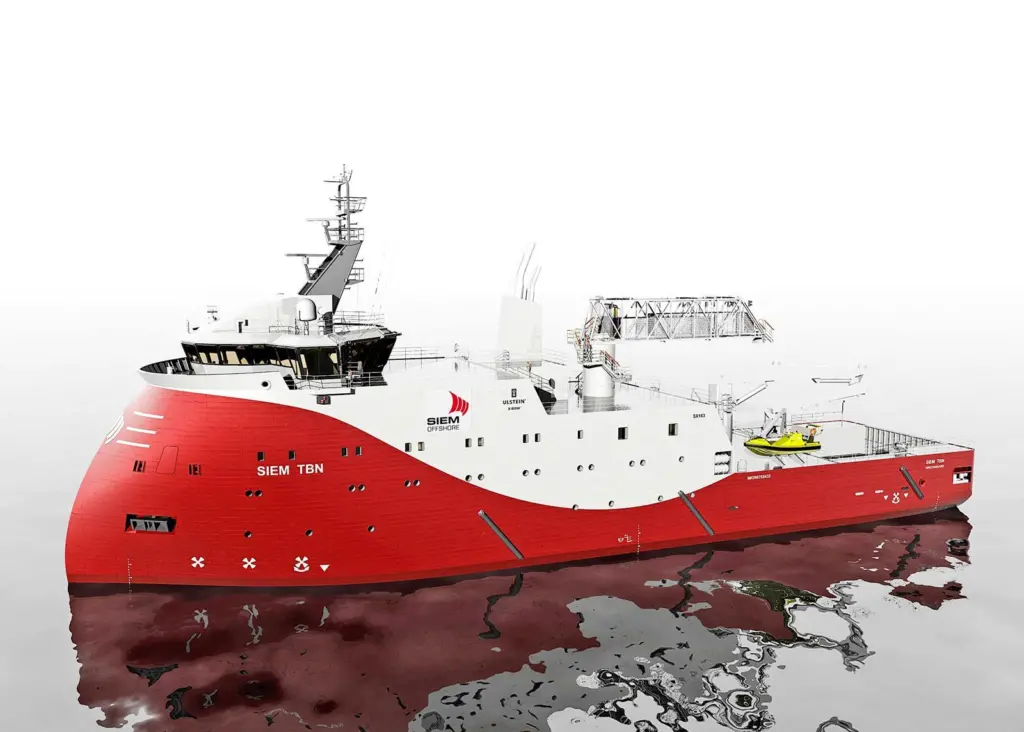
Late in 2012, Siem Offshore of Norway ordered a new design SX163 installation support vessel (plus option) from ULSTEIN, to be built by Norwegian Shipyard Fjellstrand. The 74m vessel will feature ULSTEIN’s characteristic X-BOW, include accommodation for 60 persons and be equipped with cranes and an active heave compensated gangway based offshore personnel transfer system. A feature worthy of mention is the adoption of two diesel-electric powered Voith Schneider Rudder ECS propeller units. The ship will be delivered in March 2014.
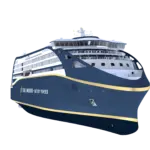
Two other major players in the offshore oil and gas industry are Esbjerg, Denmark based ESVAGT A/S and Fosnavåg, Norway based Havyard Ship Technology, part of the Havyard Group AS. Havyard recently announced an order from ESVAGT for two Service Operation Vessels based on the proven Havyard 832 support vessel design adapted for operation with the maintenance of offshore windfarm installations.
Two firsts accompany this order. ESVAGT is a new customer for Havyard and it will be the first time they have designed vessels for windfarm maintenance duties. The emphasis is on designing a new type of vessel but based on familiar technology.
Arve Leine, design manager at Havyard Design & Solutions states: “We are not trying to reinvent the wheel every time. The most successful development of new products are often based on recycling familiar technology, but quite likely improved and made use of in new ways.”
The ESVAGT vessels will be 83.7m LOA, with a speed of 14 knots and built at Havyard’s shipyard in Leirvik, Norway. They will be delivered in December 2014 and March 2015.
As mentioned, the offshore industry’s involvement in wind has been of a somewhat opportunist nature but has long had influence, sometimes indirectly. Recent newbuild offshore support vessels have occasionally included the option for use with renewables but these two orders are designed primarily for that industry, with the capability to also operate with oil and gas. The implications of potential further cost reductions with the sharing of experiences from the oil and gas industry also makes this a potentially important development.
By Peter Barker
Related Articles
 MARINE CIVILS NEWS
 OTHER NEWS
 MARINE CONSTRUCTION