![MaritimeJournal[Seawork]](https://www.maritimejournal.com/wp-content/uploads/2026/09/MaritimeJournalSeawork.svg)






Ditching diesel: the route to offshore wind decarbonisation
With the offshore wind industry poised for rapid growth, Leo Hambro, commercial director at Tidal Transit, shares his thoughts on how the industry can expand more sustainably, and explores routes to industrial decarbonising through vessel electrification.

“Offshore wind is at the forefront of the global transition to clean energy. It offers a robust and scalable solution to replace fossil fuels, cut emissions, and secure a more sustainable future. However, despite its green credentials, offshore wind operations still rely on diesel-powered crew transfer vessels (CTVs) to transport personnel and equipment to and from wind farms. If the sector is to achieve true net zero, then phasing out the use of diesel should be high up on the priority list.
The financial imperative
”The economic argument for electrifying crew transport is overwhelming. As carbon regulations tighten, operators reliant on diesel will face rising costs. What’s more, carbon taxation is only set to increase, with the EU’s Emissions Trading System (ETS) expanding to include shipping. It’s safe to say that the longer offshore operators delay the switch, the greater their risk and exposure to financial penalties.
Then there’s the cost of diesel itself. With fuel prices rising, reliance on fossil fuels presents a long-term financial risk. Electric CTVs (E-CTVs), by contrast, offer a more stable cost structure. By harnessing the very power that offshore wind farms generate, operators can bypass the volatility of fuel markets and cut running costs.
On top of alleviating the costs attributed to fuel, electric propulsion also reduces maintenance expenses. This is because diesel engines require frequent servicing and repairs, whereas electric powertrains have fewer moving parts and therefore experience lower overall wear and tear.
The carbon case
Data suggests that the CTVs operating in the UK and EU alone burn around 1,500 litres of diesel every day. Across the hundreds of vessels servicing wind farms, the cumulative emissions are staggering – in excess of 475,000 tonnes of CO2 per year. For offshore wind to deliver truly net-zero energy, the next step should be to address its own operational footprint.
The electrification of crew transport is one of the most effective solutions that wind farm operators can take to tackle emissions. Unlike alternative fuels (such as hydrogen), which are renowned for their energy losses during production and storage applications, battery-electric propulsion delivers near-100% efficiency from generation to use.
By eliminating CO₂ emissions at the point of use, E-CTVs drastically reduce the industry’s contribution to climate change while also slashing harmful air and noise pollution in marine environments.
A case in point: leading the charge towards electrification
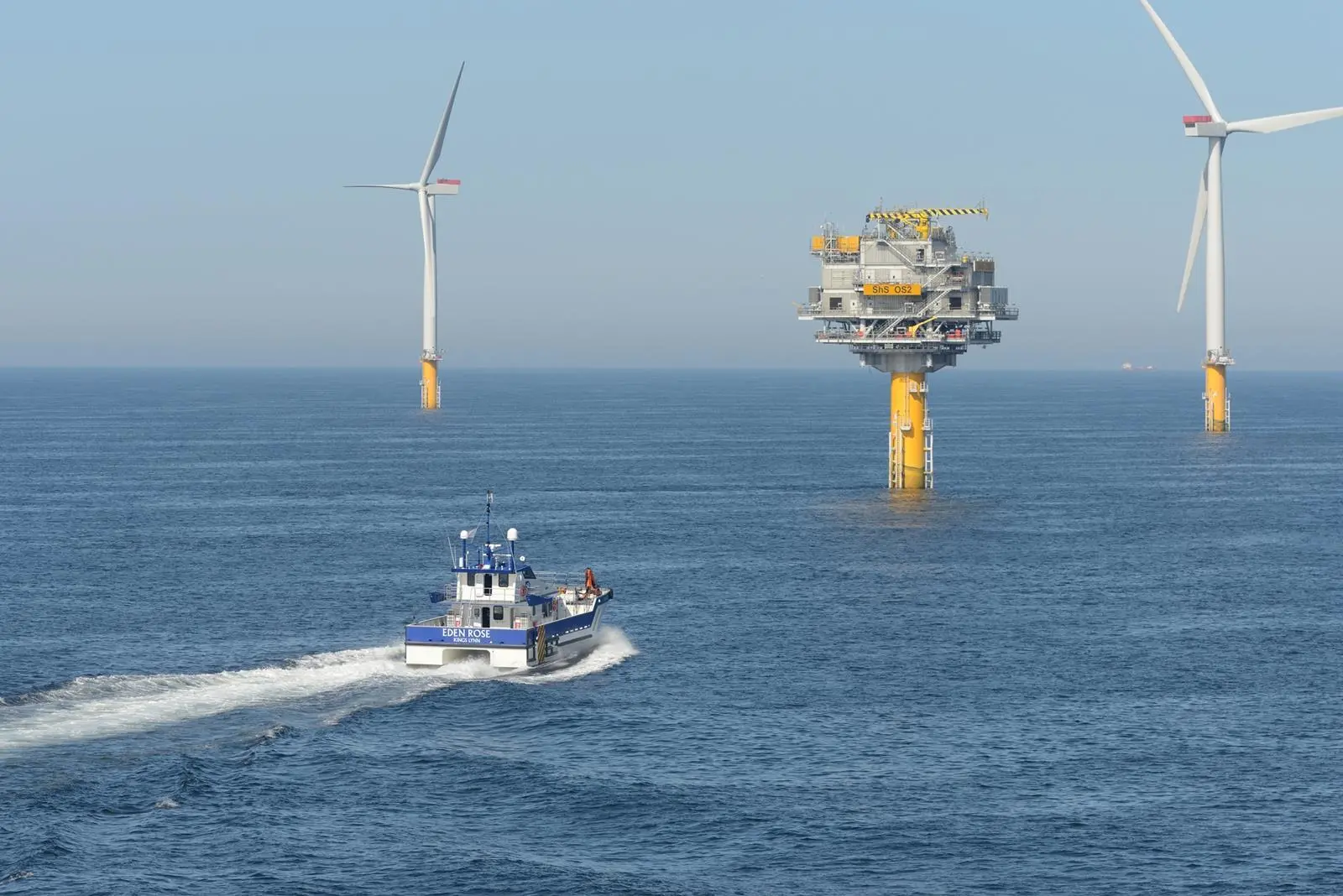
While the transition to electric crew transport presents challenges, it is already becoming a reality. At Tidal Transit, we’re a few months away from launching the world’s first fully electric retrofit CTV, demonstrating that existing vessels can be transformed rather than scrapped and offering a new circular economy approach to decarbonisation.
There are several other projects across the UK and Europe making waves in accelerating the transition to electric propulsion. Take Bibby Marine, for example, which is developing the first ever fully electric commissioning service operation vessel (CSOV) – a much larger vessel type that can carry up to 120 passengers, crucial for the installation, commissioning and maintenance of offshore wind farms.
Bibby’s E-CSOV will offer the ability to operate on battery power alone, with estimates suggesting that adoption could save 175,000 tonnes of CO2 compared to a more traditional SOV over its 25-year lifespan.
Elsewhere, Corvus Energy, which is providing its revolutionary battery energy storage systems to both Tidal Transit and Bibby Marine’s electric vessels, is also supplying a groundbreaking 40 MWh of energy storage to the world’s largest battery electric ship. The 130m ferry will have capacity for 2,100 passengers and crew, 225 cars and even a 2,000 square metre duty-free shop.
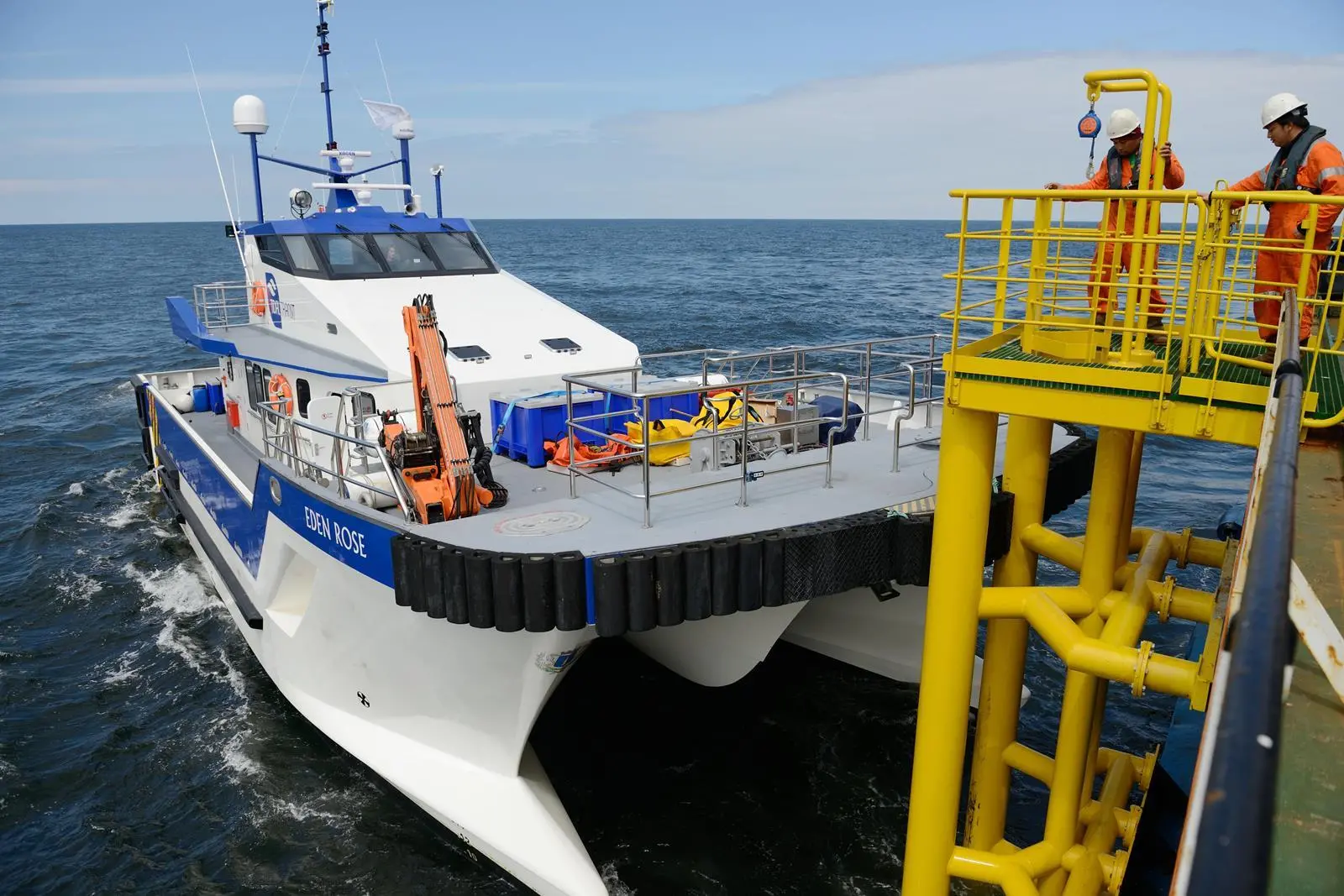
The success and scalability of electric and hybrid vessels is closely tied to the development of robust portside and offshore charging infrastructure to support operations. Another major sector player, MJR Power & Automation, is installing a shoreside charger at Grimsby Docks to facilitate fast and efficient charging for electric vessels operating in and around the North Sea. Portside chargers like these can also provide ‘cold ironing’ to fossil fuel-powered vessels, a system which provides power to docked ships, allowing them to shut down their auxiliary engines that would otherwise be running on fossil fuels to power onboard systems.
The time is now for industrial change
The message to the offshore wind sector is clear: electrifying crew transport is not only viable, but often the most sustainable and financially sound choice. Evolving policies and tightening carbon regulations will encourage change and those who lead the electric transition will help define the future of offshore wind.
Indeed, the blueprint for a fully electrified, low-carbon marine future is already taking shape. By embracing this momentum and investing in scalable, zero-emission solutions, the offshore wind industry can not only uphold its green credentials, but also inspire broader transformation across the maritime and energy sectors.
Related Articles
 OTHER NEWS
 FEATURES & VIDEOS
 MARINE CIVILS