

- Subscribe
- Special Reports
Batteries in Maritime
Autonomy at Sea
Alternative Fuels
Tugs, Towing & Salvage
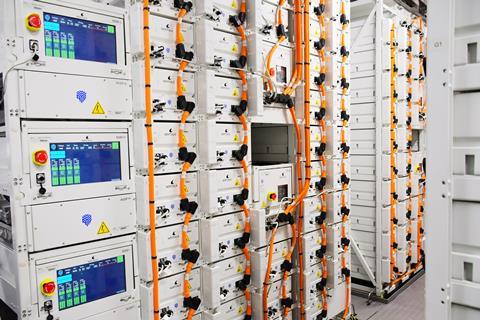
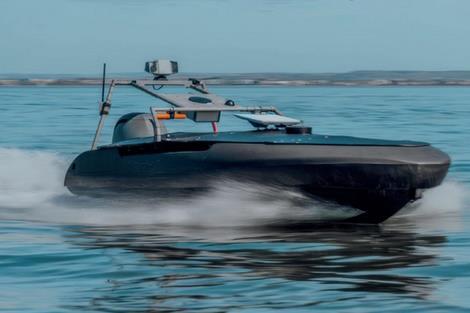

Examining the growing role of batteries in maritime, questioning their green credentials while exploring industry insights, operator experiences and lessons learned from early electric vessel adoption worldwide. Highlighting the innovators advancing subsea and maritime technology, from autonomous underwater swarms to cloud-connected assets and data-driven predictive models, reshaping how real-time conditions at sea are understood globally today. Exploring one of the workboat sector’s dilemmas today: which emerging fuels hold the most promise in terms of cost, availability, practicality and performance? Or should we simply clean up the Black Gold? Looking at how tugs, towing and salvage vessels are adapting to stricter regulations; contemplating new propulsion technologies and alternative fuels; and changing design strategies for one of maritime’s most demanding sectors. Read More Read More Read More Read More
- Industry Database
- Events
Seawork
15th - 17th June 2027Speed@Seawork
14th June 2027Seawork Conferences



The 28th edition of Europe’s largest commercial marine and workboat exhibition provides businesses the opportunity to showcase their services, equipment, vessels and supplies to an international audience. Speed@Seawork on 14th June in Cowes offers a sector specific event that showcases fast vessels operating at high speed for security interventions and Search & Rescue. Taking place at the annual Seawork Exhibition in Southampton, UK from 15–17 June 2027, Seawork Conferences deliver a varied programme of sessions featuring expert speakers addressing the latest topical issues in the commercial marine industry. Visit the Seawork Website Speed@Seawork on the Seawork Website View on Seawork
Special Reports
Autonomy at Sea - A Special Report
A word from the editor…
While the word ‘autonomy’ is bandied about rather a lot, strictly speaking it’s not quite here in the commercial marine world.
On land in California, Waymo’s electric autonomous taxis have really taken off, with the company’s statistics reporting that more than 14 million trips were made last year. These are almost completely autonomous: they take bookings, drive to required destinations, park legally and lock themselves when not in use, or return to a depot.
The only function a human has is to physically plug them in to charge up.
In commercial marine the pace is slower, as is often the way with newer technologies, and most truly autonomous vessels are found in defence or research contexts.
But it’s coming, and with the cost, safety and efficiency benefits, why wouldn’t it?
One of the hurdles is the lack of coherent classification and regulations so far – these are being developed but there is a way to go, with different classification authorities using different parameters to class them, and the IMO telling Maritime Journal that many of its codes and guidance were ’presently under development’.
This report features a selection of the companies that are diving into the space, such as Fincantieri, with its swarm of subsea drones; Subsea Europe Services, which has a holistic approach to connect assets from deep underwater to the clouds above; and Hefring Marine, which is improving its predictive models by daily gathering more and more data on real-time events to inform situations at sea.
Our sponsor, SEA.AI, also explains its machine vision approach, calling it a ‘critical layer’ in maritime autonomy that will reduce crew workload and forms the foundation for increasingly automated operations in the near future.
We talked to Dynautics, who have cut the umbilical and have a ‘nose-up’ approach to battling tricky subsea communications; and ACUA Ocean, whose Pioneer sets an offshore benchmark with hydrogen propulsion.
Across uncrewed maritime operations, CUSP, MarineAI and RAD Propulsion address perception, decision-making and propulsion. CUSP enables practical 3D seabed imaging from USVs for safer offshore wind development. MarineAI reduces cognitive load on ship bridges by prioritising what matters in confined waters; and RAD Propulsion supplies electric drives and open control architectures that deliver quieter, longer-endurance hybrid vessels across defence markets globally.
There’s a lot to get into – enjoy reading!
- Debbie Mason, Editor, Maritime Journal
dmason@mercatormedia.com
Want to learn more about autonomous vessels in the Commercial Marine industry?

Seawork is the proven platform to build business networks, drawing crowds from around the globe for the three-day exhibition and conferences. Seawork delivers an international audience of visitors from over 60 countries made up of industry professionals involved in marine renewables, technology, safety, marine construction, vessel build and more.
In this issue:

Machine vision: A critical layer in autonomy
Autonomy in the maritime sector is often talked about as an end-state: vessels operating with minimal or no crew, navigating complex waterways without human intervention, writes SEA.AI CEO Marcus Warrelmann.
ACUA OCEAN: Pioneers in hydrogen USV technology
After more than three years on the drawing board, the hydrogen powered USV Pioneer last August completed the world’s first continuous, remotely operated, 24-hour offshore operation on zero emissions.
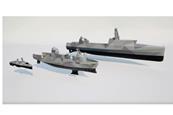
Systems thinking is critical for complex naval autonomy
Will Alexander, Global Business Development Lead – Maritime Autonomous Systems with BMT, tells Maritime Journal why design and thinking systems matter more than ever with autonomy in an increasingly complex and critical naval domain.
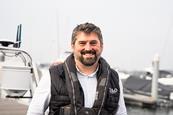
Silent disruptor: Driving the uncrewed revolution
Hampshire, UK-based RAD Propulsion is becoming one of the most quietly influential players in the booming uncrewed and electric-propulsion sector. CEO Dan Hook talks to Maritime Journal about how RAD is capitalising on the growing demand for uncrewed, long-endurance vessels.

From sky to sea: A holistic security solution
Traditional maritime security has always relied on crewed patrols and fixed surveillance. As threats grow and operations become more complex, operators and governments are adopting remote and autonomous technologies to improve awareness across the maritime domain, says Jannik Sauer, Chief Technology Officer, Subsea Europe Services / FLANQ.

Offshore wind on the CUSP of SBP breakthrough
As offshore wind capacity deployment continues to scale, developers need increasingly detailed characterisation of the seafloor to de-risk engineering activities such as cable route planning, landfall design and foundation installation.
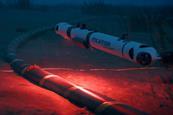
Into the DEEP: Fincantieri enters subsea robotics sector
When Fincantieri, one of the world’s largest and oldest shipbuilding groups, announced three years ago that it was entering the subsea robotics sector, many in the maritime world assumed it would be a gradual move – perhaps the development of an underwater vehicle here, a defence research project there. Vice- president Underwater Gabriele Maria Cafaro tells Maritime Journal all about it.

When AI adds noise, safety runs aground
Too much AI is failing basic tests in maritime, with many ‘decision support’ systems behaving like information amplifiers, writes Oliver Thompson, director of Engineering with Marine AI.

Cutting the umbilical: Dynautics dives in with ‘Phantom Two’
Beneath the waves, radio signals die, GPS disappears and pressure mounts. It is here, far from roads, runways or rails, that true autonomy is particularly desirable; and it is here that Dynautics is quietly building its reputation. CEO Dr Henry Robinson talks to Maritime Journal about his company’s true autonomy.
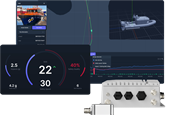
From safety to systems: how Hefring began
Iceland-based Hefring Marine did not start with autonomy in mind: to begin with it was all about safety. CEO Karl Birgir Björnsson talks to Maritime Journal about the journey to all-round data collection, enabling predictions in real time.

