
Midas touch? Balaena CEO on his company’s rapid growth
There’s no point in waiting around, the founder and chief executive of the rapidly growing group Balaena believes, insisting that in just five months’ time, a company that has already quadrupled its size in five years will be almost unrecognisable from what it looks like today.
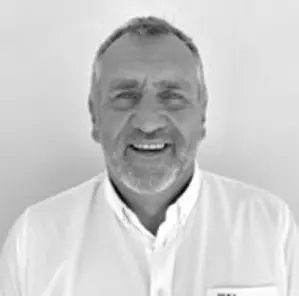
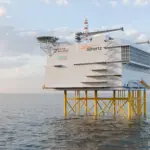
Simon Gillett founded Balaena in 2019 with an invention of his own: a floating offshore platform containing wind, wave and solar energy and a desalination facility that could be taken to islands and coastal locations to provide fresh water, sanitation and energy.
“Great product – but it came at the wrong time, just before Covid-19, and all people wanted then was PPE, gloves and masks,” he says. “But while that was shelved, I started looking for someone to build it and ended up buying Gibdock because Gibraltar was one of the customers we were talking to about our platform.
“That’s how it started. We took Gibdock and within a couple of years doubled its revenue, tripled its profit and pointed it in the right direction. I thought maybe we can do this again and again, and here we are.”
And the key to this first of many transformations? Customer care, says Gillett.
“Focus on the customer,” he says. “Focus on the customer, give them what they want, when they want it, for the price you agreed. It’s as simple as that.”
It was also a slight change of customer, he says – from being a 100% commercial shipyard, Gillett focused more on moving up the value chain and took the company into oil and gas and conversion projects, then bringing in defence as well.
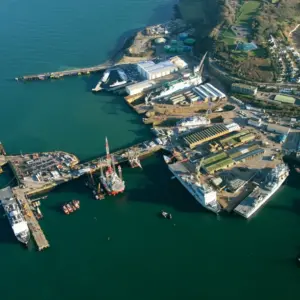
Seven years later, a company with a single Gibraltar dockyard now owns five sites and 12 dry docks and employs around 2,000 people.
Purchases
Soon after the Gibdock acquisition, Gillett bought Padstow, a small boatyard in the southwest of England ‘that was doing one fishing boat a year, with six employees’.
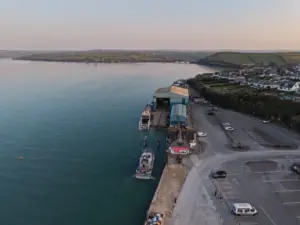
“We bought that with the aim of looking at military small boats,” he says. “It’s now got nine vessels in there from the MOD and we’ve got 22 employees. Again, we focused on getting the right customers in, doing the right job and getting more of them.”
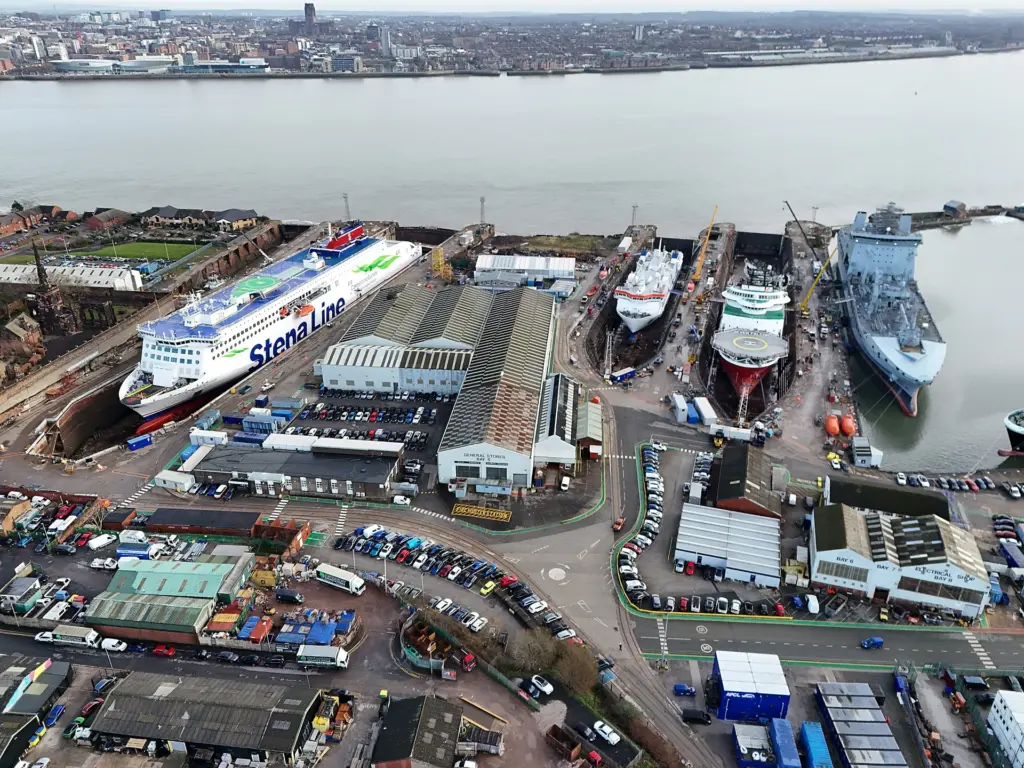
Balaena’s most recent purchase happened in June this year, when the iconic Cammell Laird – a shipyard with almost 200 years to its name, in Birkenhead – came up for sale. The shipyard has today built exactly 1,397 hulls, Balaena says.
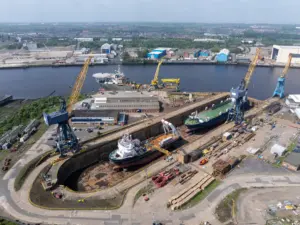
But it wasn’t just Cammell Laird – the deal was the purchase of the entire APCL Group, which owned A&P Tyne and A&P Falmouth as well, and brought the shipyard count up to five.
The APCL buy-out is an example of how Simon Gillett likes to work.
“We’ve had it for 103 days now,” he says. “And my 100-day plan was what I called ears wide open, mouth wide shut. We weren’t going to make any changes for the first 100 days.
But we’ve gone in and changed everything. Not everything, but we’ve made some significant changes already, and we’ll continue to.”
By change, Gillett means the whole IT system, health and safety measures and background bits and pieces – ‘all that kind of work that we need to do to make sure we’re one company’, he says. “The IT team have done a phenomenal job. You hear about these IT programmes going on for years, but our IT system was unified within three to four weeks.”
Vessel range
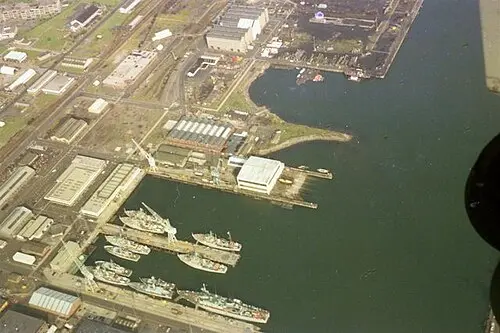
With the sites and personnel it now has under its belt, Balaena aims to create a one-stop shop for all types of vessel up to the HMS Queen Elizabeth (aircraft carrier) class, carrying out all types of repair, newbuild or maintenance work.
The Birkenhead site – which has already changed its name from Cammell Laird to Balaena Birkenhead – is about to hold christenings for three ferries all built there, including the Royal Daffodil, a new ferry across the famous Mersey.
“We start at the bottom end with a 24ft rigid inflatable, and go right the way up to the largest of the RFAs (Royal Fleet Auxiliaries). The only vessel we are not docking at the moment due to size is the Queen Elizabeth class, but everything from that small inflatable up that we look after.
“And we are building in both the surface and subsurface sector and for the military.”
Balaena is also looking at amphibious vessels pending a government tender.
The company is also intending to revive shipbuilding on the River Tyne at Newcastle, once one of the world’s great shipbuilding centres, with shipyards stretching along both banks of the lower Tyne, from around Newcastle and Elswick downstream through Walker, Wallsend, Hebburn, Jarrow, North and South Shields.
A&P Tyne, the last yard standing, has about 100 acres, docks and a substantial build facility and Gillett will focus that site on commercial vessels.
“Workhorses are the bread and butter,” he says. “We’ve got to stick with that. Build anything, or maintain anything, or convert anything – that’s what we do. We want to be that engine room – that’s our raison d’etre, to make it and fix it.”
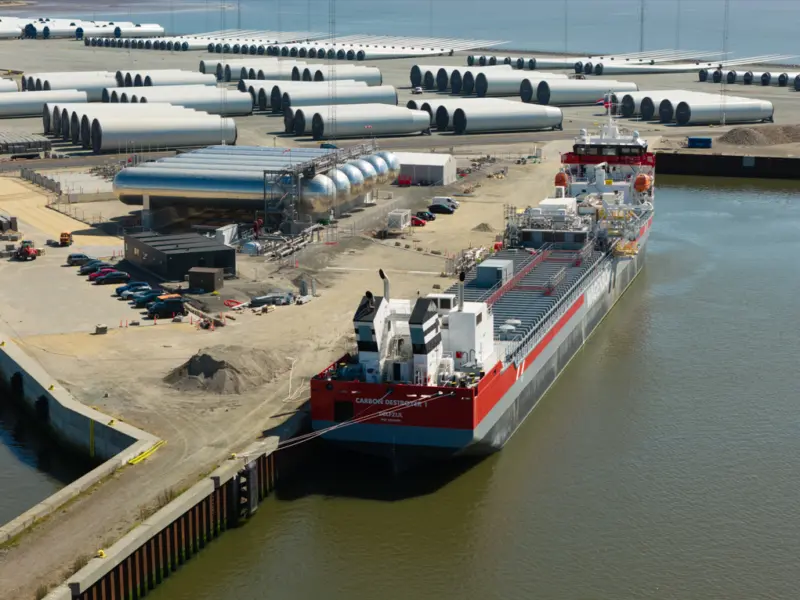
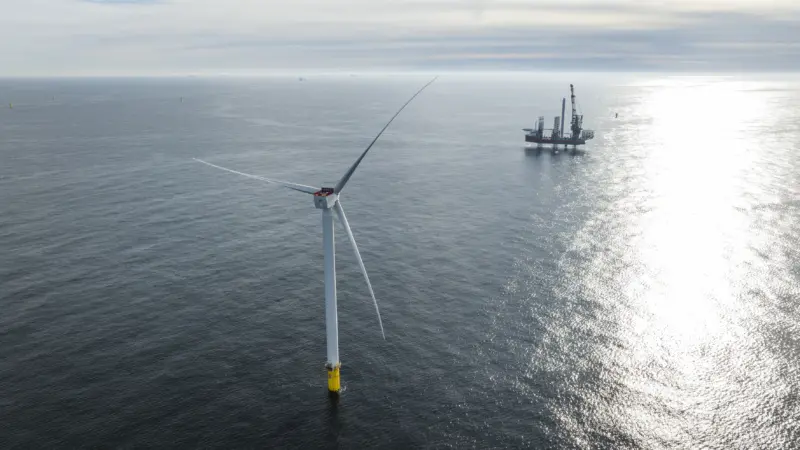
With the burgeoning offshore wind industry Balaena is of course determined to step in, and its Falmouth yard has already been earmarked for a £100 million spend to develop 350m-long wharfs and big offloading quays for turbines, nacelles and blades.
Alternative fuels and autonomy
The question everyone is asking these days is which fuel to go for, amid all the uncertainties over performance, availability and cost.
“At the moment, people are betting on many horses,” Gillett says. “We’re here to do conversions for people, but we’re not actually betting on a technology at all. We’re remaining agnostic about the technology. If someone wants to convert their vessel by putting sails on it, we’re happy to do that.
“We’re looking at whatever it may be.”
Gillett is confident that his design and technical team are equipped to deal with whichever fuel comes their way, and that goes for autonomy too.
“Autonomy is growing arms and legs in all directions,” he says. “Autonomy is certainly going to be a big part of our future. If you look at autonomous ferries on short routes, it makes perfect sense to do that before you get into the military applications.
“We’re keeping a very good eye on that at the moment and talking to some very interesting companies on what developments are looking at there. But we’ll see more and more autonomy as we run after those labour-saving, cost-saving benefits.”
One Balaena, future Balaena
The expansion has involved Balaena creating a common operating structure across the individual yards, moving away from individual identities of its constituent businesses and towards a single Balaena organisation.
“Balaena is the company and then we have our locations from that,” he says. “We are all Balaena now. We have a thing called One Balaena.”
The objective is to allow people and resources to be deployed between the group’s yards.
“People work for one company, and we can deploy them across to other yards,” he says.
“We’ve got one quality standard, one health and safety standard, one IT system. You have one phone number to talk to Balaena and you’re getting that one consistent quality all the way through.
“The brand is the big thing.”
And it is a brand that Gillett is determined to grow – and not slowly, either. In five months, he predicts, the company will have transformed – though he refuses to give details of what that will look like.
“There’s not a full stop coming yet,” he says. “It’s an interesting time. We’re getting into an ever more unstable world where defence is what everyone’s talking about. But of course, with defence growing and instability growing, the oil and gas exploration world is seeing an uptick. We’re seeing an uptick in the demand for floating offshore wind. We’re moving towards more energy security, more energy stability.
“I’m not a patient man, and the time has come to hit the gas even harder now. We’ve not stopped necessarily on the acquisition trail, whether that be facilities or things going forward.
“We’ve made 100 days, so we’ll start to apply more pressure and more speed now.”
Balaena will exhibit at the Seawork exhibition and conference next June.