



Take a stand against ALWC at Seawork
Accelerated Low Water Corrosion (ALWC), the devastating effect of the tiny charge from seawater interacting with pilings, is now well known. However it is also something that many ports would rather keep quiet about, although a recent British survey revealed that up to 90% of them have been affected.
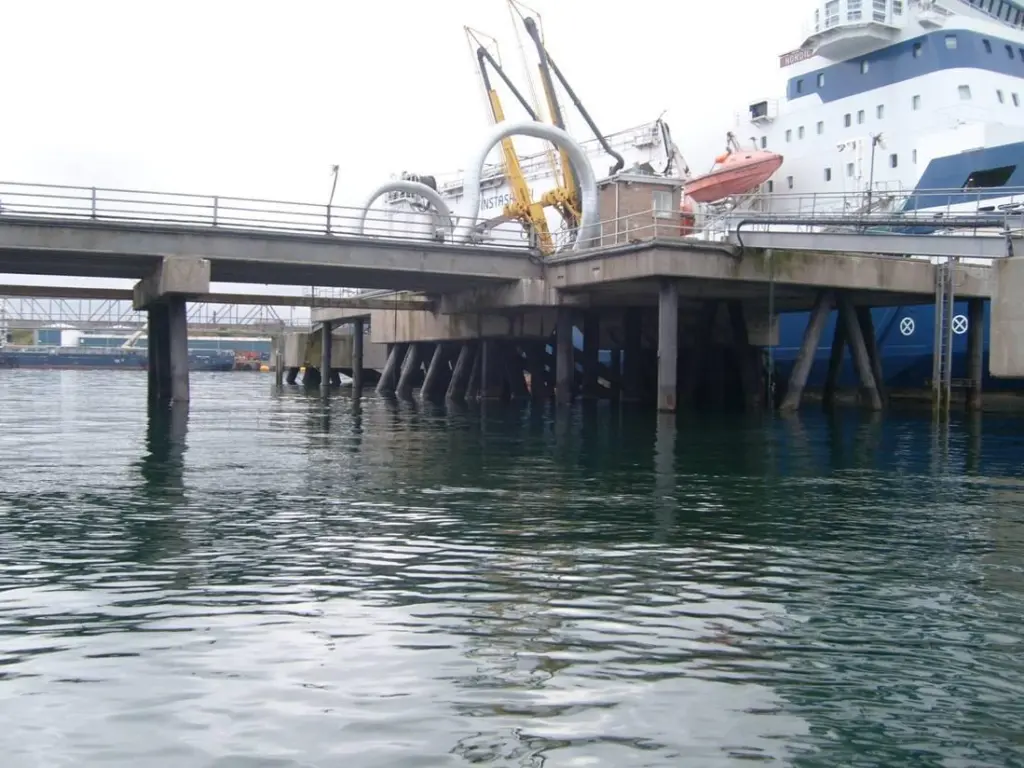
Even so, corrosion specialist iicorr Limited has evidence of ALWC corrosion rates in excess of 2mm per year. The joint expertise of both iicorr (and sister company Subspection) will be on show at Seawork this year.
‘The problem is that we don’t often see ALWC, the damage is generally out of sight, Kevin Paterson of iicorr told MJ. ‘The worst affected area is from the seabed to the low water springs mark.’
Mounting an effective defence is a highly technical job. Subspection and iicorr provide a ‘cradle to the grave’ service for those authorities that want it, including inspection, asset and integrity management and monitoring packages as well as mathematical modelling of cathodic protection systems. The companies also provide for those that want a particularly tailored service.
The range of equipment includes a range of sacrificial anodes, impressed current cathodic protection (ICCP) systems and anti-fouling systems. The commercial applications cover harbours, jetties and piers as well as heavy lift barges, product carriers, container ships offshore drilling rigs and support vessels, as well as military applications.
Mr Paterson said ‘the cradle to grave approach is proving popular’, probably because it takes a huge headache away from the owner. A package delivered for a recent project on a new jetty requiring full modelling and CP design, materials procurement and installation is not unusual.
Installation sees a dive team getting to the particular piles where the anodes have to be installed. These are at specific locations and also at specific depths which have been very carefully calculated. Then it is a case of welding the anodes and brackets, or bracelets. ‘Of course it can be difficult, added Mr Paterson, ‘and visibility can be a big problem.’
But after it is all done, port managers can rely on the teams to do the necessary follow up, and breathe a sigh of relief that their expensive quaywall is not disintegrating.
Related Articles
 OTHER NEWS
 MARINE CIVILS
 MARINE CONSTRUCTION