![MaritimeJournal[Seawork]](https://www.maritimejournal.com/wp-content/uploads/2026/09/MaritimeJournalSeawork.svg)

A new milestone in uncrewed vessel operations
A groundbreaking new project has helped set new standards in vessel autonomy, control and training for uncrewed service vessels (USVs).
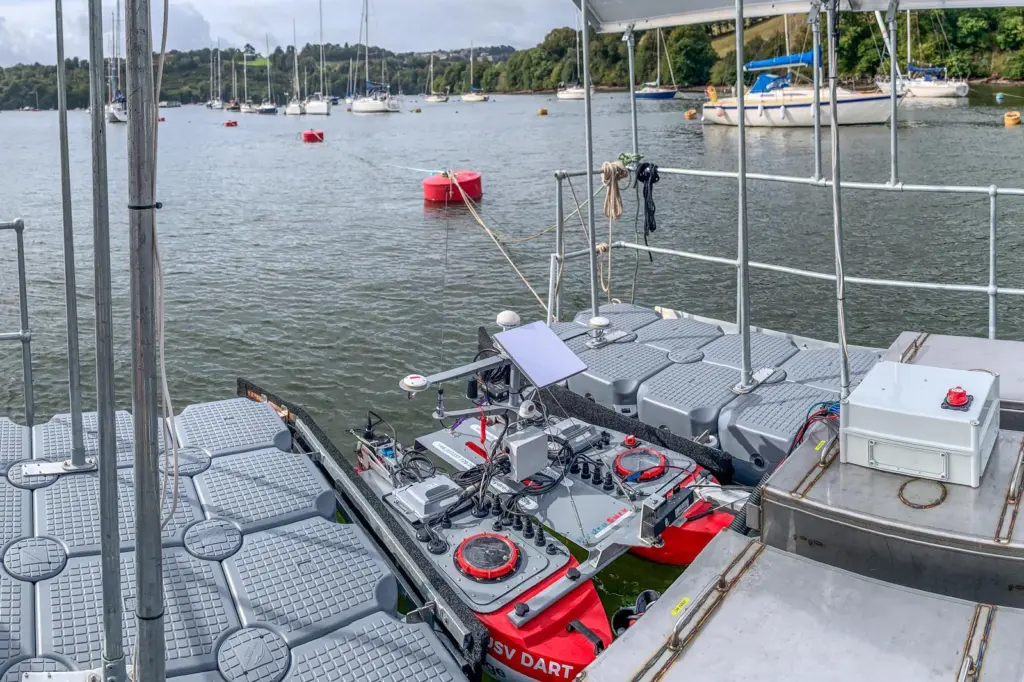
HydroSurv’s ROC + DOCK project, delivered in collaboration with South Devon College and BMT and funded by Innovate UK’s Marine & Maritime Launchpad, demonstrated how resident, zero-emission USVs can operate autonomously from centralised hubs without manual intervention.
“On-water data collection can achieve extraordinary productivity once vessels are set to work. The challenge lies in mobilising crew solely to launch, recover and replenish uncrewed vessels following short-duration voyages,” said David Hull, Founder & CEO, HydroSurv.
“ROC + DOCK addresses this challenge directly by enabling USVs to operate independently from a centralised hub, without the need to send a crew to the worksite. This approach not only reduces cost and decarbonises operations, but provides a blueprint for resident USV networks around the UK coastline.”
Autonomous docking
At the heart of the project was a solar-powered docking station, HydroSurv’s advanced vessel control software and BMT’s REMBRANDT simulator.
Together, these components enabled full hands-off operations, from launch to recovery, while offering immersive vessel training through realistic virtual simulations that replicate live control environments.
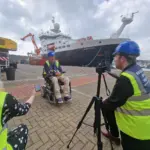
During real-world trials on the River Dart, HydroSurv’s REAV-16 USV successfully executed automated docking and recharging manoeuvres under remote supervision, marking a key milestone for resident uncrewed operations.
With the development of an developed an integrated system to automate USV deployment, recovery, recharging and retasking – the project addresses one of the key barriers to scalable uncrewed operations.
By removing the need for manual intervention, ROC + DOCK enables true force-multiplication of resident USVs operating across geographically separated coastal sites.
Related Articles
 OTHER NEWS
 ACCESSORIES & EQUIPMENT
 SPECIAL REPORTS