![MaritimeJournal[Seawork]](https://www.maritimejournal.com/wp-content/uploads/2026/09/MaritimeJournalSeawork.svg)




AI powers next-gen crew transfer vessel design
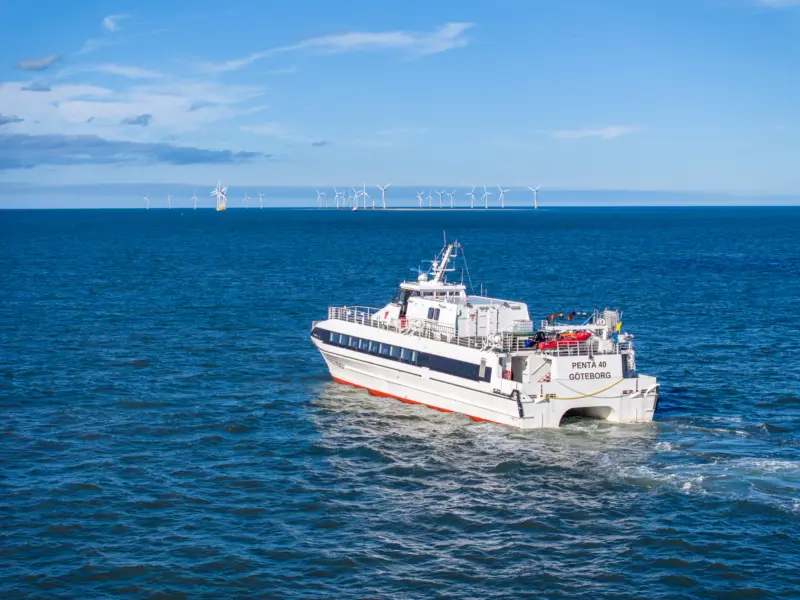
Voltron Future has launched the CTV-26 RON, a next-generation crew transfer vessel (CTV) that fuses vessel building with AI design to advance offshore wind operations.
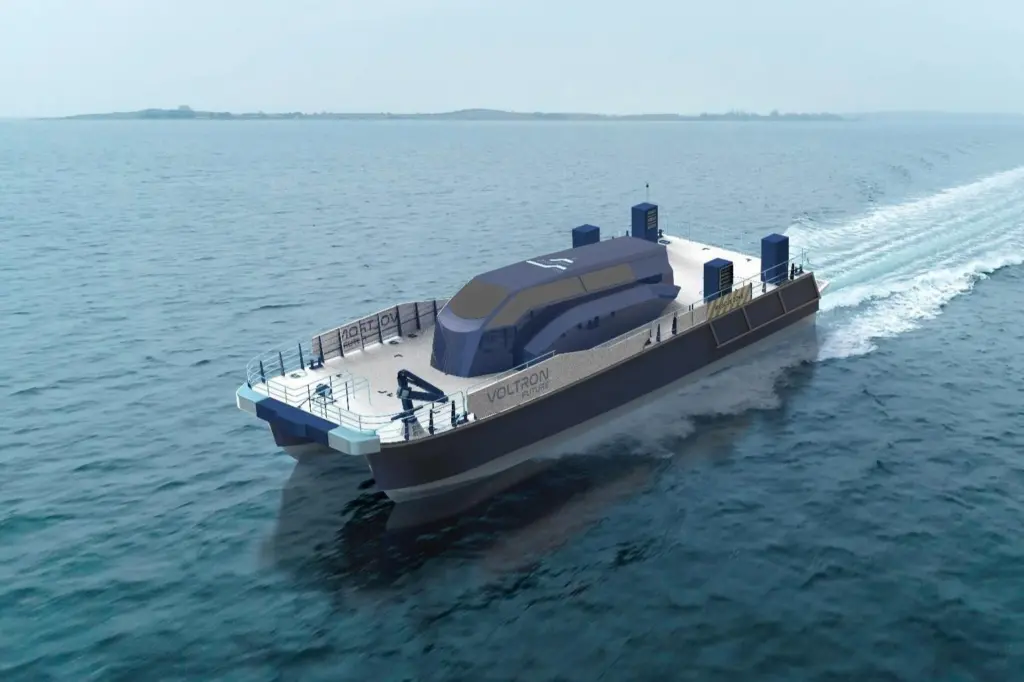
The 26-metre multihull catamaran applies aerospace-style optimisation to shipbuilding, delivering reduced fuel consumption, extended range and improved crew comfort.
“Maritime design has long been limited by slow, traditional processes,” said Umair Rauf, CDO of Voltron Future.
“By applying the fast paced optimisation mindset proven in aerospace and automotive, and by working with cutting edge partners, we are bringing a new generation of sustainable vessels to market.”
AI optimisation
The CTV-26 RON is a 26 metre multihull catamaran engineered for reduced fuel consumption, extended range and superior seakeeping.
Designed in consultation with windfarm operators,the vessel is designed to carry 24 passengers and four crew at up to 36 knots while complying with IMO, SOLAS, DNV/ABS and EU standards.
The project also underpins a new Voltron white paper detailing the AI-driven project that slashed design cycles and operational costs.
Using Compute Maritime’s NeuralShipper, engineers generated optimised CTV hull forms within minutes, meeting design constraints while reducing drag and fuel use.
Istanbul Technical University validated hydrodynamic predictions with advanced CFD modelling, ensuring reliable performance at sea.
Inductiva.AI enabled instant large-scale CFD simulations and AirShaper refined the aerodynamics of the bridge and superstructure to improve airflow, cut drag and enhance safety.
By blending rapid optimisation techniques from aerospace and automotive sectors, Voltron Future said it is redefining CTV design for offshore wind.
The CTV-26 RON showcases how AI design is being used to deliver cleaner, faster and more cost-efficient support for the global renewable energy transition.