![MaritimeJournal[Seawork]](https://www.maritimejournal.com/wp-content/uploads/2026/09/MaritimeJournalSeawork.svg)



NATO launches Baltic subsea infrastructure protection
Critical Baltic Sea subsea infrastructure such as communications cables are being given NATO protection following a string of recent incidents in which sabotage has been suspected.
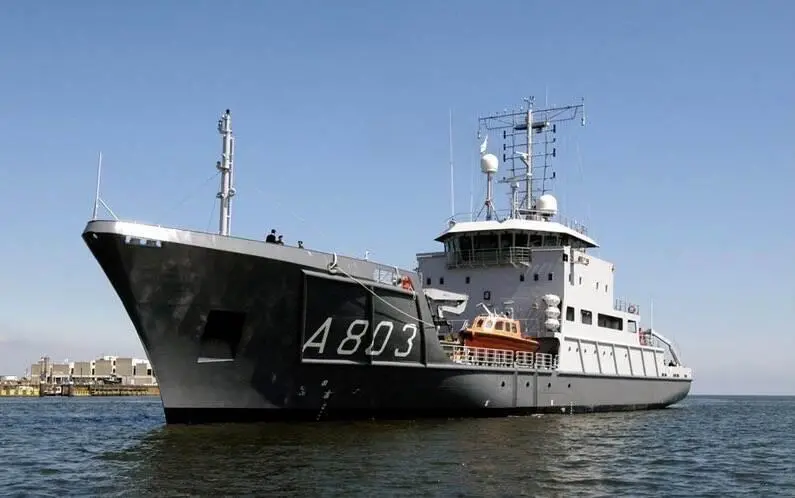
Alongside the military assets is the Damen designed and built hydrographic survey vessel HNLMS Luymes, which has the necessary sonar and data-gathering equipment for counter-mine measures as well as sea-floor mapping.
Two cables were damaged recently, the first between Sweden and Lithuania, disrupting communications services, the second, between Finland and Germany, which operator Cinia Oy confirmed had been ‘cut by an external force’.
Commander Arlo Abrahamson, spokesperson for NATO’s Maritime Command (MARCOM), told Maritime Journal there was a range of ships and military assets participating in ‘Baltic Sentry’, ‘some of which fall under NATO’s direct operational control and some that are national assets in support of the broader activity’.
“We don’t discuss the numbers of ships involved in our activities as that number changes frequently,” he said. “What we can say is that we will employ the right ships, aircraft, and military assets, in the right places, at the right times, to support the activities, in coordination with our Allies.
“Regarding current NATO assets, ships from Standing NATO Maritime Group 1 (SNMG1) and Standing NATO Mine Countermeasures Group 1 (SNMCMG1) are currently participating in Baltic Sentry along with Allied maritime patrol craft operating under MARCOM and national support.
“Our NATO maritime task group and mine countermeasures task group will be working closely with Allied militaries, navies, coast guards, aircraft, and other maritime agencies, to collectively coordinate vigilance activities associated with Baltic Sentry.
“The current ships assigned to those NATO Task Groups are HNLMS Tromp to SNMG1 and HNMLS Luymes and FGS Datteln to SNMCMG1.
“I would note we expect more assets join both task groups in the future.”
Related Articles
 INDUSTRY NEWS
 OTHER NEWS
 MERGERS & ACQUISITIONS