![MaritimeJournal[Seawork]](https://www.maritimejournal.com/wp-content/uploads/2026/09/MaritimeJournalSeawork.svg)


Offshore wind and beyond: launch of a hybrid powerhouse
UK-based Tor Group has unveiled a ground-breaking multi-role support vessel designed for more than just offshore wind, blending advanced hybrid technology with ship-shaped design and modular construction, writes Peter Barker.
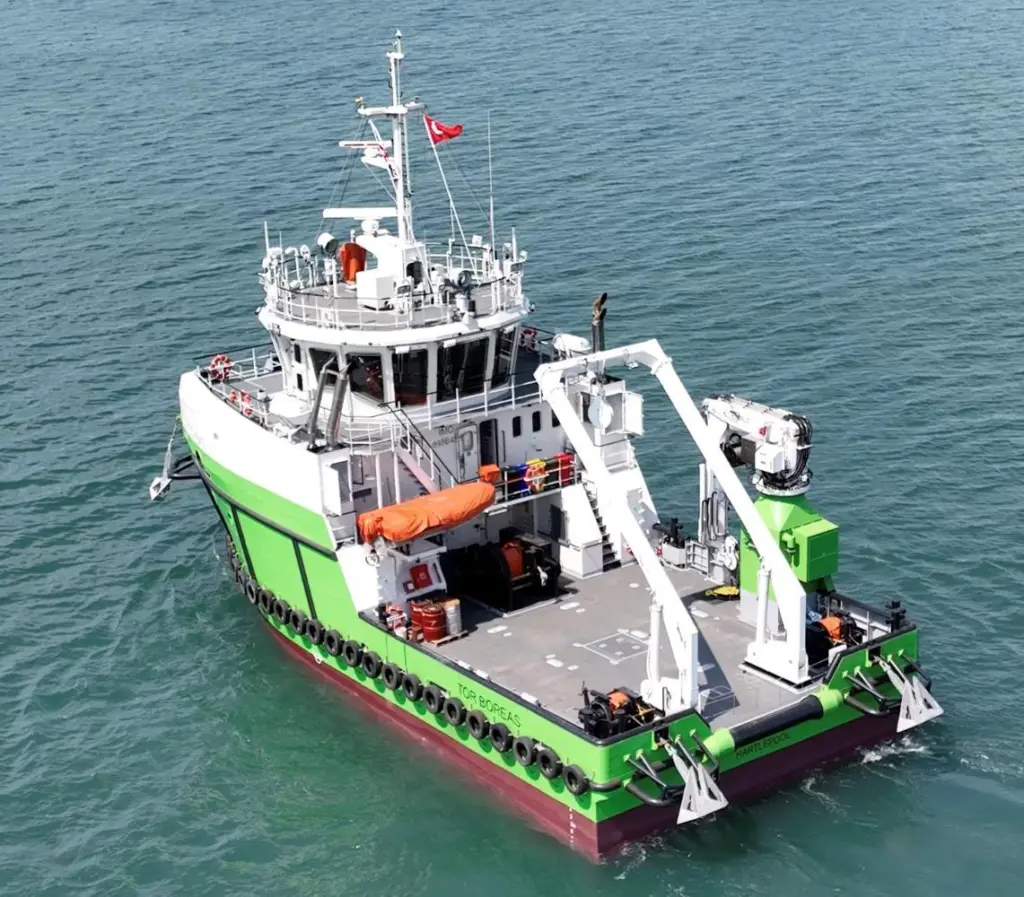
Tor Group is expanding its fleet of workboats for the UK market and while it has a particular eye on the burgeoning offshore wind industry, this latest iteration offers a platform for other sectors.
Aside from the heavy-lift construction requirements, servicing the needs of the offshore wind sector, from commissioning through to longer-term operations and maintenance phases, demands a range of specialist vessels – for example craft that fall into the workboat category, or those designed purely as crew transfer vessels to ferry technicians to the site.
This is a long-term requirement once the wind farm is commissioned.
While Tor Group’s new-build vessel Tor Boreas falls into the former category, it also offers a platform that can support multiple sectors including similar offshore energy and marine civil engineering projects.
Building such a vessel from scratch, but based on similar designs, also presents the opportunity to develop a vessel that incorporates the latest technology hybrid propulsion technology.
Designed by Macduff Ship Design for Tor Boreas, the vessel was built by Tor Group’s own shipyard in Turkey and is described as a ‘new class of vessel, and a new way of building’, using modular assembly to enable more time off the slipway in a purpose-built facility.
Ship-shape
The ubiquitous pontoon-shaped workboat with offset wheelhouse/accommodation has become the standard workhorse, fulfilling many roles in the marine support sector, but in Tor Boreas Tor Group has opted for a conventional ship-shaped design, offering protection for the aft work deck.
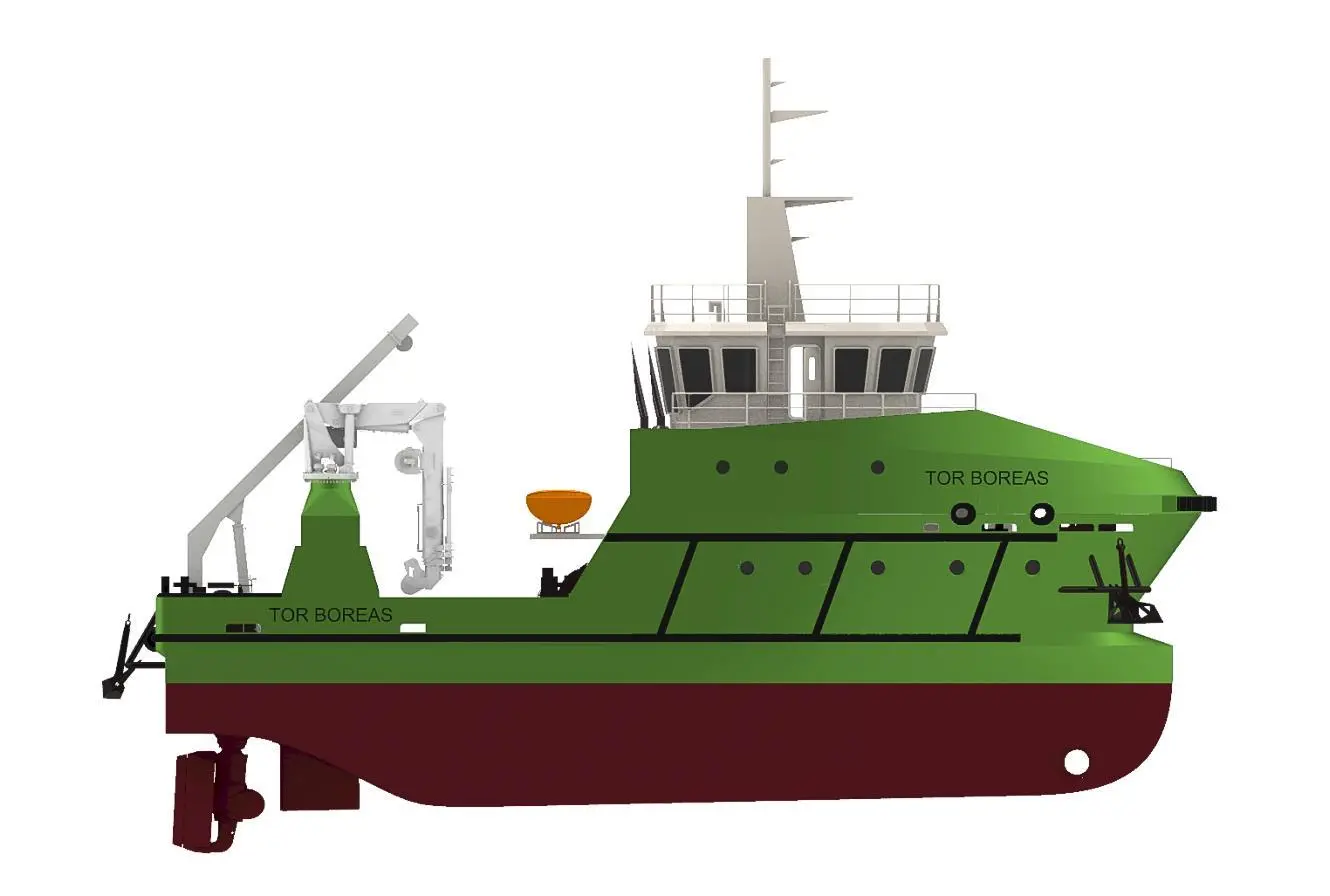
This in turn potentially improves sea-keeping capabilities, particularly during transit phases as wind energy projects move further offshore.
The choice of a conventional ship-shaped hull form suggests much thought has gone into the wider requirements not only with wind farms appearing in deeper waters further offshore but wider market opportunities.
Its high bow and protected working deck, along with its gyro stabilisation system, suggests it will provide a comfortable platform beyond the previously shallow water depths of the early wind farms close inshore. And while there will always be a place for shallow-draught ‘multi cat’ type workboats, it will be interesting to see how much interest this different approach attracts.
This configuration is a common choice for the aquaculture support sector and Aberdeenshire-based Macduff Ship Design has been able to bring its wide knowledge and experience of designing fishing vessels, including for the aquaculture industry, to the drawing board for Tor Boreas. Indeed, the fishing sector is stated as one area of potential interest for the design.
“It’s been a challenging build with the supply chain disturbances from Covid-19 still evident across the sector, but we are delighted with Tor Boreas,” said Kemal Torlak, Tor Group’s CEO.
“She represents both a new class of vessel for Tor Group and a new way of building, using modular assembly to enable more time off the slipway in a purpose-built facility. We see a great future both for this initial vessel and others of her class.”
While the vessel’s BV class notation includes Wind Farm Service Ship – M2 Tug, Tor Group says this multi-purpose ‘cutting edge’ utility vessel is available to support multiple industries.
Innovation
Producing vessels that tick the operational efficiency box as well as being environmentally friendly are common requirements nowadays and Tor Boreas features a diesel-electric arrangement via three MAN D2676 diesel generators, each rated 340ekW, 400V. They supply energy to VEM permanent magnet e-motors powering Schottel SRP 210FP azimuth drives with manoeuvrability enhanced by a Veth VT-9 bow thruster. Vessel speed is stated as 11kn.
The engine exhaust system ensures compliance with IMO Tier III emissions standards and the vessel has DP capability along with a four-point mooring arrangement featuring Delta Flipper anchors, providing longer term station keeping.
Below deck, Tor Boreas is divided into six compartments complying with single compartment flooding requirements and consisting of forepeak; crew accommodation space with two twin berth ensuite cabins; generator room; gyro stabilisation unit and sewage plant; switchboard room and propulsion room.
Crew comfort for such vessels has improved greatly over time and Tor Boreas is fitted with a Veem gyro stabilisation unit, the system ‘significantly reducing vessel motions for crew comfort, allowing service operations to be conducted in higher sea states than would normally be possible’. Ten cabins are provided for six crew and 12 passengers.
Related Articles
 OTHER NEWS
 ACCESSORIES & EQUIPMENT
 SPECIAL REPORTS