![MaritimeJournal[Seawork]](https://www.maritimejournal.com/wp-content/uploads/2026/09/MaritimeJournalSeawork.svg)


Saved from the scrapyard: 50-year-old Mary Rose saviour
After a grounding last September nearly ended her useful life, a half-century-old vessel has been showcased after setting sail for a new career. Our reporter Peter Barker paid her a visit.
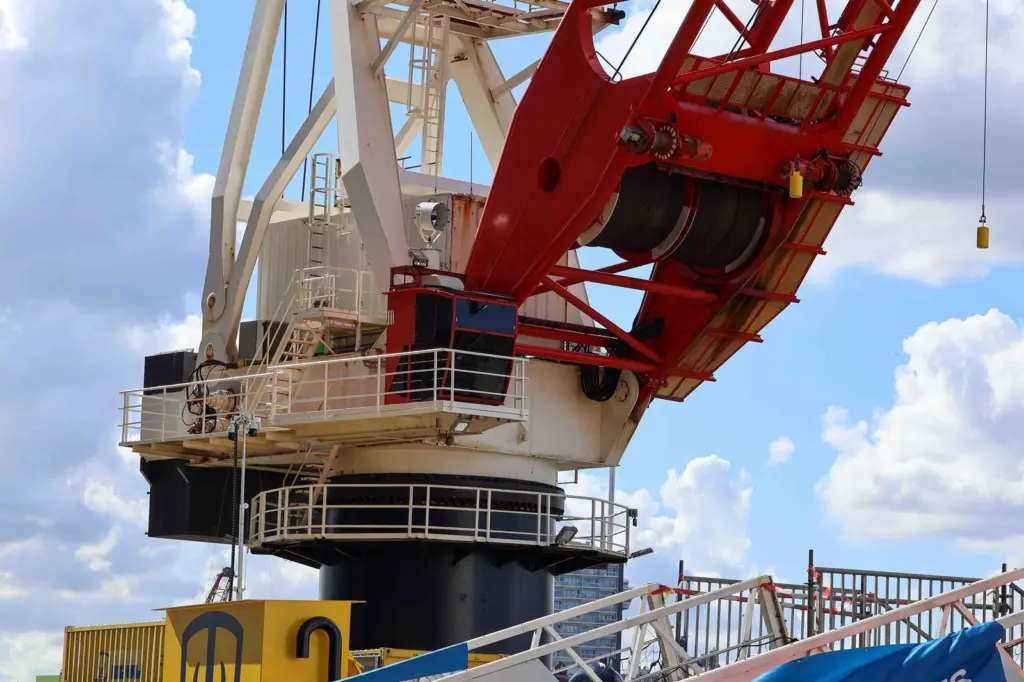
Pipelay and construction support vessel Tog Mor, which means ‘heavy lift’ in Irish, was saved from the breaker’s torch by Dutch maritime company HEBO, which showcased the vessel at Rotterdam’s World Haven Days festival last week.
The vessel grounded during a storm in the Gulf of Mexico last September. While the crew were safely rescued, then owner Allseas considered the damage to Tog Mor so severe that it sold her – at the time saying that she was to ‘embark on a new chapter’.
In stepped HEBO, which in line with its current expansion plans saw further offshore potential in this veteran of the offshore industry for employment as an offshore construction barge, supporting projects in the civil and energy markets.
The vessel had sustained severe damage to its hull following the grounding, with extensive flooding to the spaces below main deck, including where the mooring system anchor winches were.
The accommodation was also partly flooded and damaged and HEBO has spent the best part of a year, latterly at its base in Rotterdam’s Werkhaven, work including cleaning out the under-deck compartments and replacing damaged steel.
Most of the bridge and accommodation decks have been replaced, including modernising and upgrading facilities, the vessel now with capacity for 144 persons in single, two and four-berth cabins.
A member of the crew told MJ about the “considerable amount of work” that was required to restore Tog Mor for its new role, including the ‘particular attention’ needed around the mooring system’s winches.
The vessel has a length overall of 111.4m, breadth of 27.43m and shallow-water draught of 2m to 3.5m. A clear deck space of 1,300m2 with cargo capacity of 10t/m2 is provided on the 7,235gt, 3,102dwt vessel, with a helideck on top of the accommodation.
Its 300t Liebherr revolving crane was largely undamaged following the grounding and the opportunity was taken to spruce up this vital element of HEBO’s future plans for Tog Mor, now re-named Hebo-CB 1.
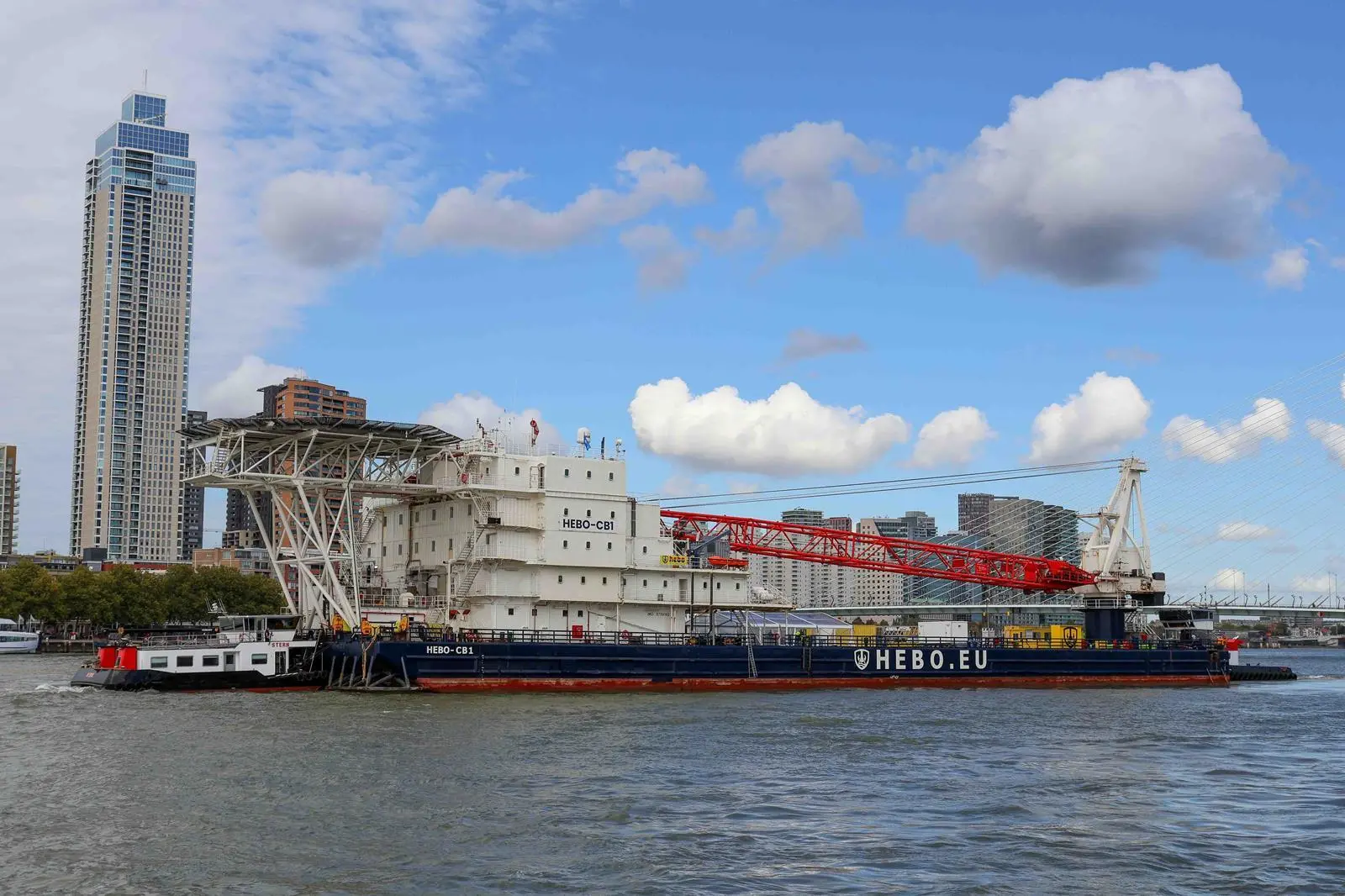
Her new lease of life will see her active in roles including platform decommissioning, salvage and wreck removal.
“We are thrilled to welcome Tog Mor into our fleet as Hebo-CB 1,” said Marius Punt, CEO at HEBO. “This barge conversion, along with its impressive features, will bolster our operations and help us to better serve our clients in the civil and energy sectors, particularly as we see increased activity in offshore projects.”
Raising of the Mary Rose
Hebo-CB1 was built in 1976 by Nederlandsche Dok en Scheepsbouw Mij V.o.f. Amsterdam to the account of Allseas Group, a Swiss-based pipelay, heavy lift and subsea construction company with strong Dutch family connections.
In its first year it is listed as having three names: Piegi of Kishorn, Dino II and then SML 168, before taking the name Tog Mor (Irish for ‘big lift’), a name that has remained until now. Originally classed with ABS, it remained under Lloyd’s Register classification during its time with Allseas.
Tog Mor’s global claim to fame was in 1982 when its image was broadcast live to millions of viewers worldwide, being involved in lifting King Henry VIII’s Tudor warship (and flagship) Mary Rose from the seabed. The vessel had sunk during the Battle of the Solent in 1545 just off Portsmouth.
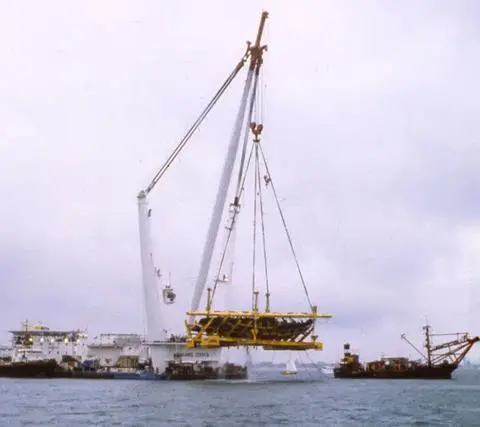
Under pressure of a tight timeline due to imminent commercial commitments and after the delicate wreck was transferred into a purpose-built lifting frame, Tog Mor transferred the frame into a bespoke steel cradle.
This was eventually raised to the surface and placed on a barge for towing to shore. The Mary Rose is now in a museum within Portsmouth Historic Dockyard.
At the time, Tog Mor was also described as a sheerlegs pontoon with a fixed unique Stülcken mast crane, later replaced by a 300t rotating crane. Following her moment of fame the vessel settled into a life of pipelaying, installing more than 400km of nearshore pipeline during her career with Allseas.
Expanding HEBO
For the Dutch, HEBO’s brightly coloured service vessels, floating cranes and barges are a regular sight in its harbours and inland waterways system.
As well as providing what can be considered routine activities including transportation, wind turbine installation and removal and civil engineering projects, it also has an important role providing salvage and oil spill response services in ports including Rotterdam.
Its fleet list includes 13 floating sheerlegs, 37 pontoons, 11 multi-purpose vessels, nine tugs and two fast craft, the company clearly with the capacity and experience to dip its toes into deeper waters further offshore.
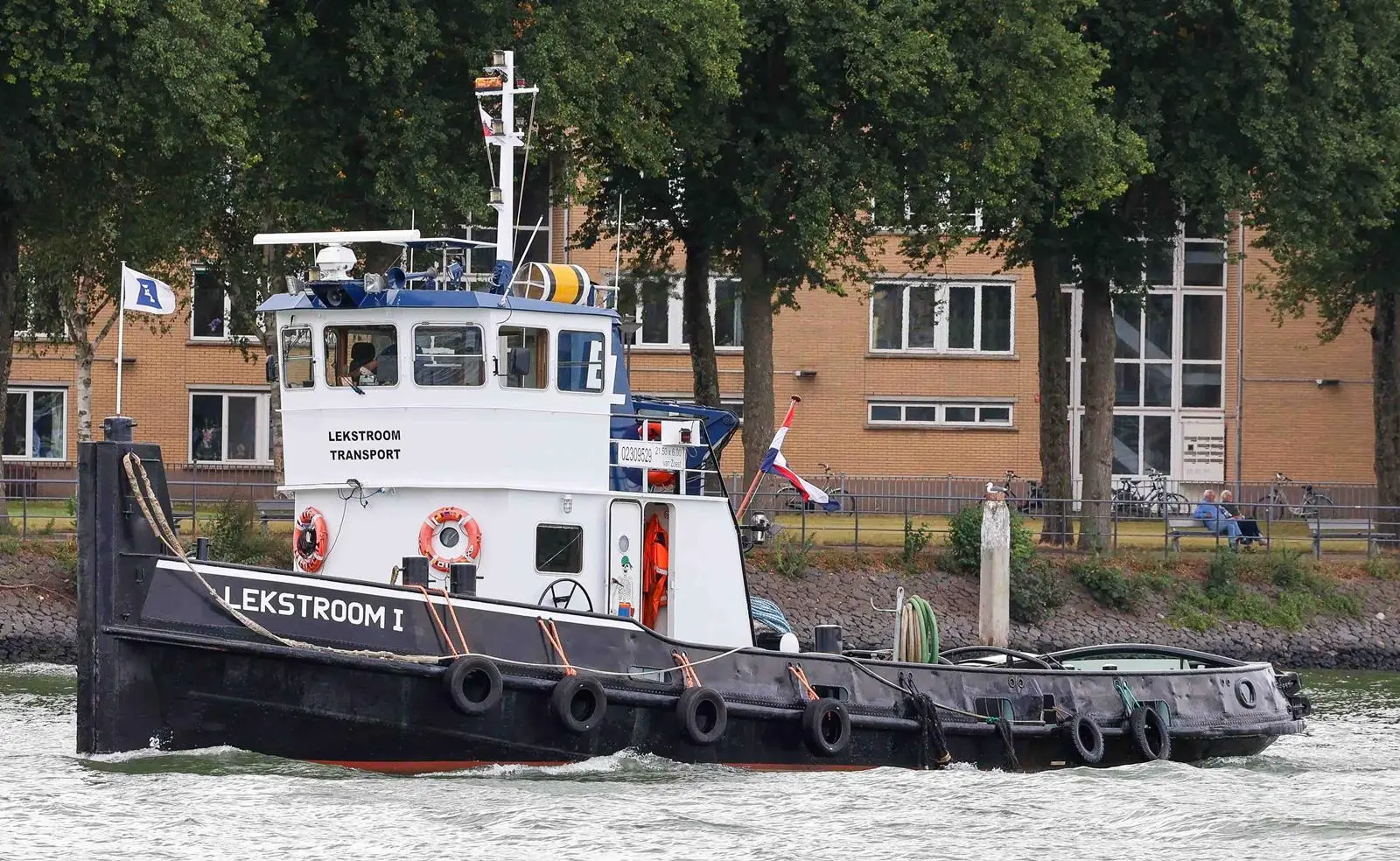
Capacity in the floating sheerlegs sector was enhanced in mid-2023 when it joined forces with fellow Rotterdam-based company Bonn & Mees, to operate under the Marine People group brand, 100% owned by the families of both company founders.
The merger saw the Rotterdam-based blue and grey floating sheerlegs Matador, Matador 2 and Matador 3, along with supporting tugs Pieter L and Jan Leenheer, become part of the new arrangement.
In 2024 Rotterdam-based Lekstroom Transport BV joined the Marine People group, the 126-year-old, family-owned company having connections to the renowned Eerland family adding further tugs and pontoons to the group.
Lekstroom’s tugs and HEBO’s barges were also active in the afloat infrastructure provisions for Rotterdam’s World Haven Days.