![MaritimeJournal[Seawork]](https://www.maritimejournal.com/wp-content/uploads/2026/09/MaritimeJournalSeawork.svg)




Volvo Penta launches new IPS and partnership
Volvo Penta last week officially launched its upgraded integrated IPS platform in crew transfer vessel Impresser, the first of two sister vessels to have it installed.
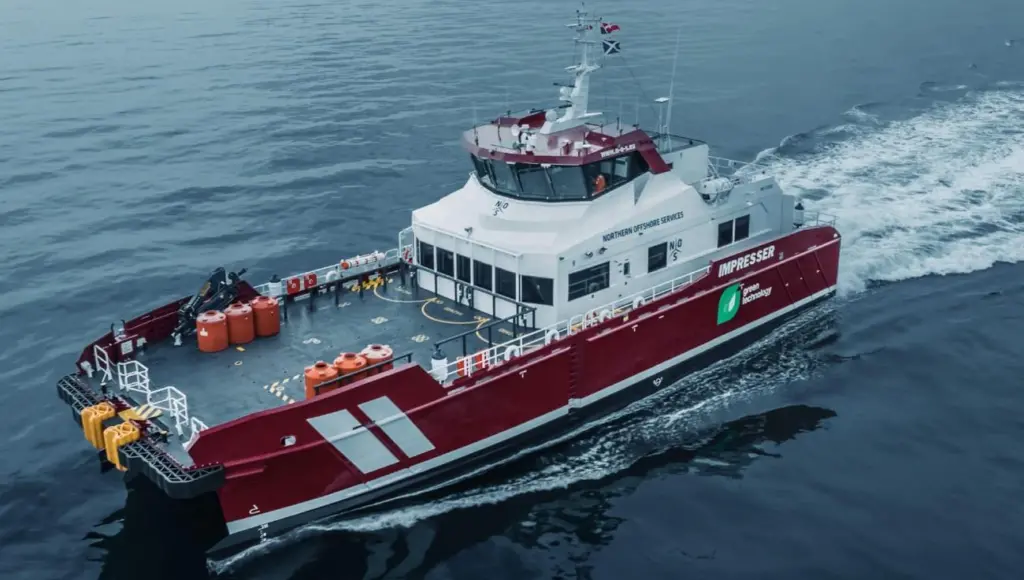
Volvo Penta last week officially launched its upgraded integrated IPS platform in crew transfer vessel Impresser, the first of two sister vessels to have it installed.
A partnership was announced with Impresser builder Northern Offshore Services (N-O-S), and the vessel was christened during the two-day event before going back to work in Scotland.
N-O-S was founded in 2008 on the tiny Swedish island of Donsö, which arguably has the densest shipping population in the world: 15 shipping companies operate on the island of just 1,400 people.
It was founded by lifelong friends Martin Landström and David Kristensson, both master mariners, and has experienced remarkable growth since 2008, counting 67 vessels in its fleet across many classes and now forging partnerships in Japan and the US.
“It was the only thing we knew,” said Kristensson.
“We are driven by technology and development,” said Landström. “We want to extend the life of our vessels as well. We need to think ahead, prepare to go a lot further so our vessels last 20-25 years. And we are having to prepare for what a customer won’t pay for today but will have to pay for tomorrow.
“Batteries and offshore charging are when it starts to get interesting, and we would like to replace two of the diesel engines with batteries, so the hotel load can be run on batteries for the working day.”
“These vessels need to be electrified,” said Kristensson. “They are so close to the energy source that it makes no sense not to be able to charge offshore.”
And with a CTV market that is really taking off – there were 273 registered CTVs in 2023, he says, and 540 predicted to be on the seas by 2035 – the drive for electric is bound to intensify.
IPS Professional Platform on Impresser
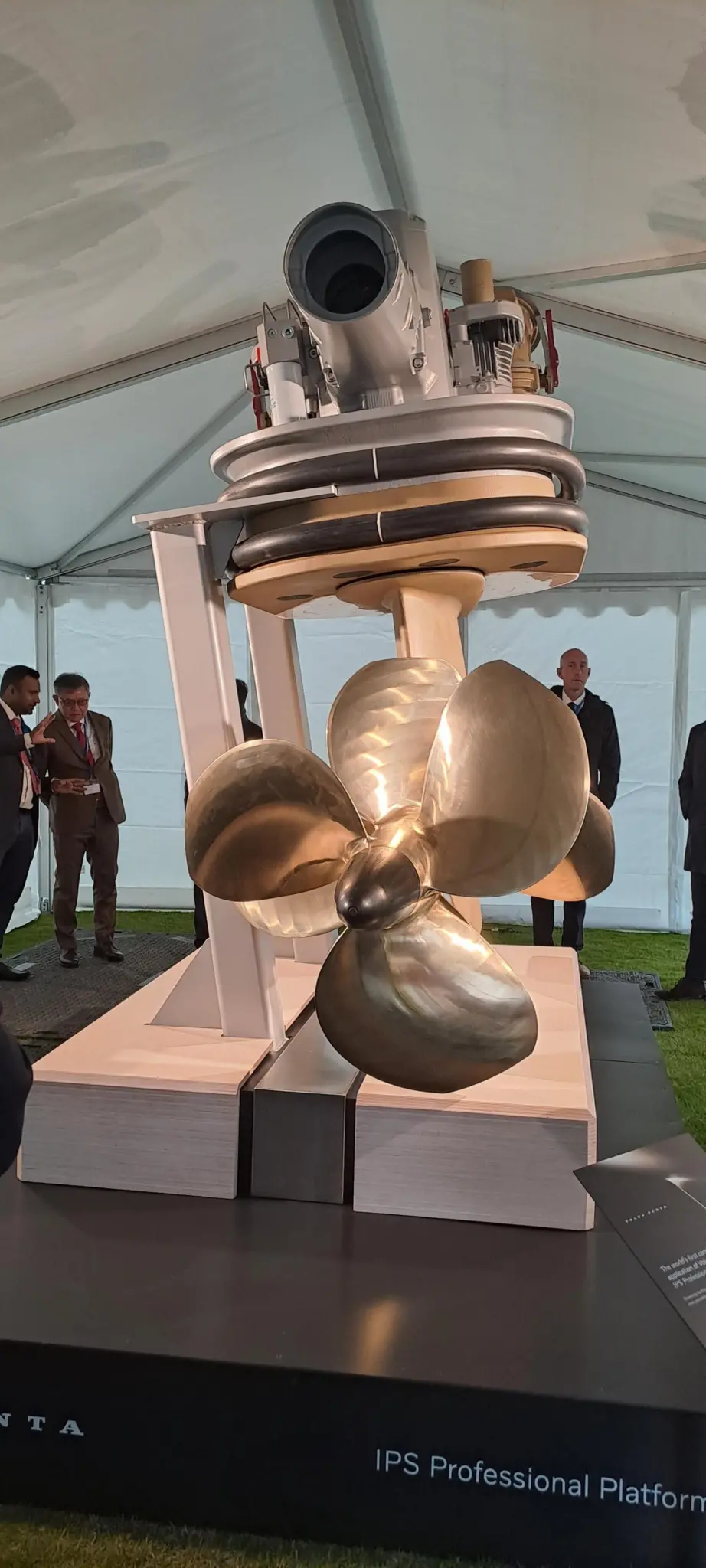
“The dashboard, joystick, engines, propulsion and drive are all vertically integrated – the entire software is in-house so the entire electrical system controls the drive, etc,” he said. “This is what makes it such a strong platform.”
The system comprises four D13 engines (588kW), connected to IPS Professional Platforms, which can be switched on and off at will, depending on what stage of the operation they are at.
Two D4 engines provide the auxiliary power, with 112kW each.
Twin forward-facing counter-rotating propellers work as rudders, pushing water directly back, creating a powerful thrust, reducing torque and allowing precise control.
“They have a steering system and individually stable rudders whose angles can be controlled by computer, which provides key manoeuvrability when pushing up against the wind turbine,” Linden said.
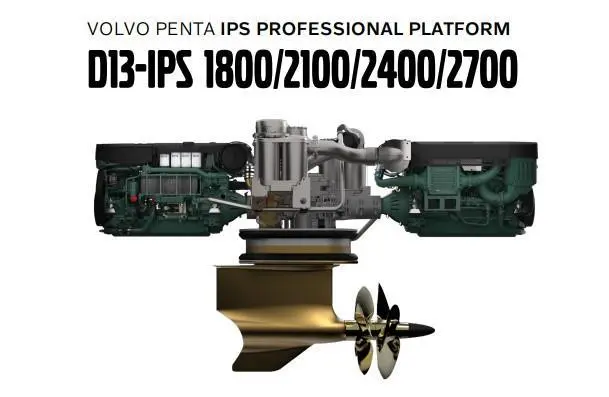
“Because the IPS platform has an Eco Mode, engine use is automatically optimised based on what the vessel actually needs, enabling fuel savings of up to 30%.”
Future proofing
And of course there are batteries: everything now is being designed to ‘future proof’, and on each side the Impresser has two batteries (by ZEM) of 94kW each, with a DC grid also installed for future battery installation.
Volvo Penta says the vessel can be converted to run on methanol, though Linden admits sources of what some consider to be the alternative fuel frontrunner are somewhat limited.
HVO – or hydro-treated vegetable oil – is already an option, however, for the combustion engine, which Linden says will be around for a while yet, even if it will run on different fuels.
“We can then exchange it for an electric engine or swap to a full electric drive – or we can switch one engine off, reducing fuel consumption,” said Linden.
As well as the convenience of an integrated drivetrain, which makes maintenance far easier, the ability to switch out the engines and batteries as and when best used is key.
It uses Samsung batteries for now – but Volvo Penta does have plans to launch its own battery manufacturing facility – watch this space.
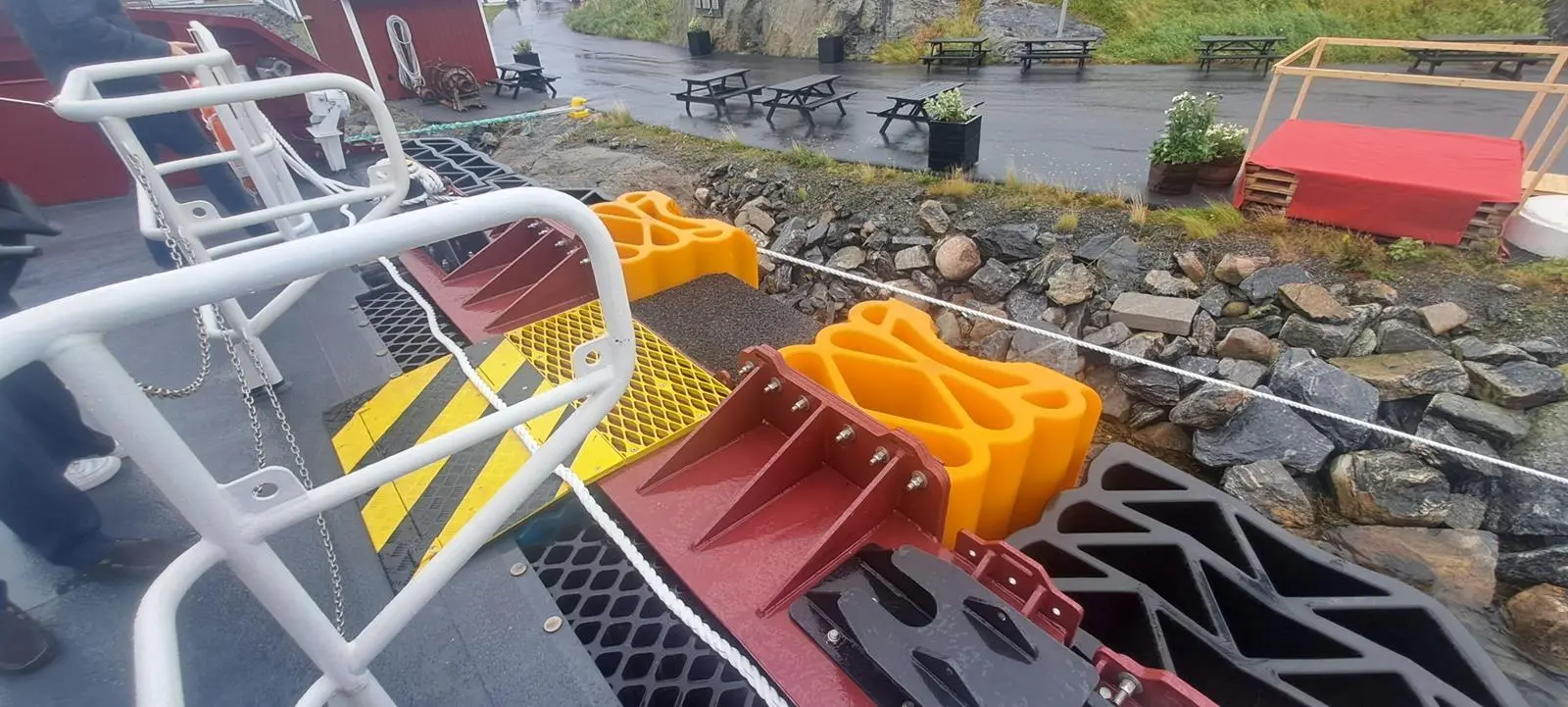
A second I-Class vessel equipped with the Volvo Penta IPS Professional Platform, will see real-world operation in early 2025.
Related Articles
 INDUSTRY NEWS
 OTHER NEWS
 MERGERS & ACQUISITIONS