

Wärtsilä solution for Condor ferries
Wärtsilä is to retrofit two UK-based Condor Ferries with its new Aquarius Ready ballast water management system (BWMS) solution.
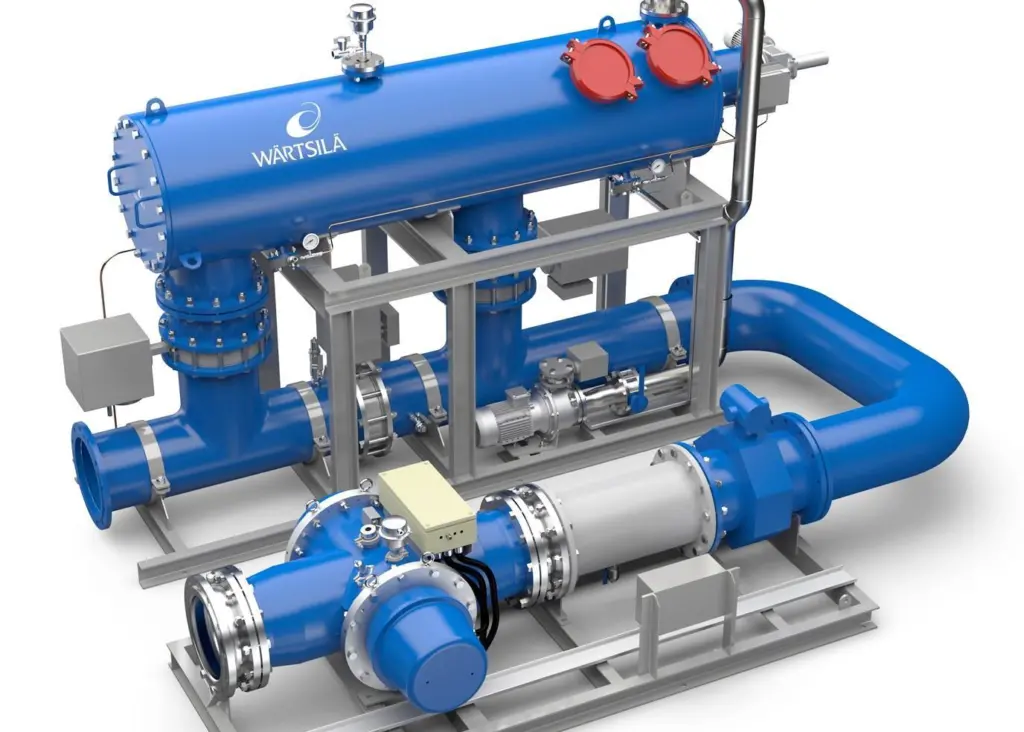
The Aquarius Ready solution is a phased process that has been developed by Wärtsilä to prepare vessels for the fitting of BWMS, while minimising vessel downtime, thereby enabling more efficient operations.
“The demand for Wärtsilä BWM systems is increasing rapidly as owners prepare their ships for regulatory compliance,” said Dr Joe Thomas, director, Wärtsilä Ballast Water Management Systems.
Wärtsilä says its Aquarius Ready solution enables cost saving and installation flexibility, while having Wärtsilä as a single point of contact between the yards, the class societies, and the flag state authorities is a huge benefit for owners.
“This partnership with Wärtsilä has allowed Condor to be ready to fit ballast water treatment without the need to lay up any of our ships, since the preparation work, which requires the ship to be out of service, was completed during planned refit periods,” Graham Belgum, fleet director, Condor explained.
Preparation work included making the required connections to the main ballast line, installing the bypass and isolating valves, preparing the space needed and carrying out the foundation work.
“Fitment can then take place in-service when the International Convention for the Control and Management of Ships’ Ballast Water and Sediments is ratified,” added Mr Belgum.
Since it can be installed at a time and location convenient for the customer, Wärtsilä’s concept avoids capacity bottlenecks in the delivery and installation of equipment, while providing the needed flexibility to accommodate the vessel’s operational priorities. Wärtsilä says the process towards compliance with ballast water regulation is, therefore, both timely and efficient.
Condor Ferries operates ferry services between mainland England, the Channel Islands, and France.
This Wärtsilä contract was signed in February 2014 and the final equipment delivery is due to take place within 12 months from the ratification of the IMO Ballast Water Convention.
The International Convention for the Control and Management of Ships’ Ballast Water and Sediments was adopted by the International Maritime Organisation (IMO) in 2004.
The Convention will enter into force 12 months after it has been ratified by 30 states representing 35% of the world’s merchant shipping tonnage.
It will apply to all ships and offshore structures that carry ballast water and are engaged in international voyages and requires all vessels to have a ship-specific Ballast Water Management Plan approved by the Administration on board, a ballast water record book on board, ballast water exchange, an approved ballast water treatment system and an international ballast water management certificate.
But it’s not without its problems. The global shipping industry is concerned about “serious” implementation problems associated with the Convention, including the “lack of robustness” of the current IMO type-approval process and the criteria to be used for sampling ballast water during Port State Control inspections, but governments chose to gloss over at the recent MEPC meeting.
Related Articles
 ENVIRONMENT
 MARINE CONSTRUCTION
 ENVIRONMENT