![MaritimeJournal[Seawork]](https://www.maritimejournal.com/wp-content/uploads/2026/09/MaritimeJournalSeawork.svg)




Spanish method to assess early-stage costs of marine energy devices
Universidad Politécnica de Madrid (UPM) has devised a new procedure to obtain more accurate costs for future marine energy parks, reports Andrew Williams.
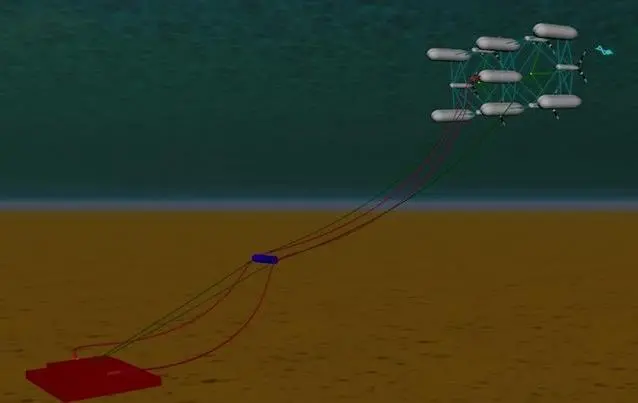
As team member Amable López Piñeiro, a researcher at UPM, explains, the key objective of the project was to develop a method to assess the life cycle cost of a power generation park based on marine energy devices. The work was initially prompted when partners in the OCEAN LIDER initiative – led by the Spanish utility Iberdrola, and focused on the development of GESMEY and Hive-TEC Tidal Energy Converters by the GITERM-UPM R&D Group – expressed an interest in evaluating the costs that arose during the project.
LEVELIZED COST
In order to help in calculating these costs, Piñeiro reveals that the UPM team chose the popular LCOE (Levelized Cost of Energy) model – largely in view of the fact that it is the ‘most widely model used in the field of renewable energies.’
“The key result of the project has been the allocation of more than 100 items into individual cost divisions – using numerical modelling specifically orientated towards investigating costs associated with use during the conceptual or basic design of the devices to harness marine energy,” he says.
STRUCTURED ANALYSIS
In addition to this creating this intricate segregation of cost elements, the Madrid team has also devised a novel procedure that is hoped marine energy developers can follow in order to gain a clearer understanding of the cost associated with their own individual designs and processes. According to Piñeiro, the procedure is based on what he calls the ‘classic division’ between CAPEX (capital expenditure) and OPEX (operating expenditure) costs.
“First, the manufacturing and assembly cost of each subsystem has been modelled – in most cases using a linear model of a parameter value multiplied by reference data – completed with a more elaborate model for the main elements, such as rotor, generator, gear and so on,” he says.
“Next, the installation cost of the devices in the offshore farm has been modelled, defining realistic installation procedures, with the help of simulation tools such as OrcaFlex and Matlab. Then we calculate the costs associated with the facilities – ships and technicians – necessary for each operation,” he adds.
For Piñeiro, the most complex part of the model, which he points out is still undergoing improvements, is the analysis of maintenance costs – based on the ‘definition of the maintenance strategy, with the costs of each operation and the reliability data of the equipment.’
“The calculation of the annual energy produced takes into account the energy histogram of the resource – tidal currents or waves – as well as the capacity factor of the device, its availability rate and the efficiency of the energy chain equipment from water to wire,” he says.
THREE ADVANTAGES
Generally speaking, Piñeiro believes there are three ‘fundamental advantages’ of the developed method. Firstly, it uses a database of item costs obtained from the offshore wind sector that allows users to use a common reference point. Secondly, it analyses these costs in a structured way ‘that facilitates sensitivity analysis and identification of the aspects to be improved in a design’ – and thirdly, it can be used in early design phases ‘prior to the construction of the device.’
“This means the method can be used at both the low and medium TRL (Technology Readiness Level) stages of development,” says Piñeiro.
Looking ahead, Piñeiro believes that the new procedures should prove to be of some assistance to marine energy developers when designing and developing energy devices.
“As soon as you have a conceptual design of a device, you should use it to analyse its annual energy production and its cost, comparing its cost profile with that obtained from other devices, in order, from the economic point of view, to highlight the strengths and weaknesses of the new design,” he adds.
Related Articles
 OFFSHORE RENEWABLES
 OFFSHORE RENEWABLES
 ENVIRONMENT