



Bubbling bottom not to blame
A strange odour that lingered around the Nidelven river in Norway was, according to local media, thick enough to cause nose and throat irritation.
There were a number of theories: one of them held the river itself accountable for gas bubbles that had been trapped by a layer of crushed limestone. This limestone had been distributed as part of an environmental mitigation plan in 2016: along with dredging, around 400,000 square metres of new seabed had been laid to keep the effects of a couple of hundred years of pollution from continuing to contaminate the water column.
So, could it be an environmental measure gone awry?
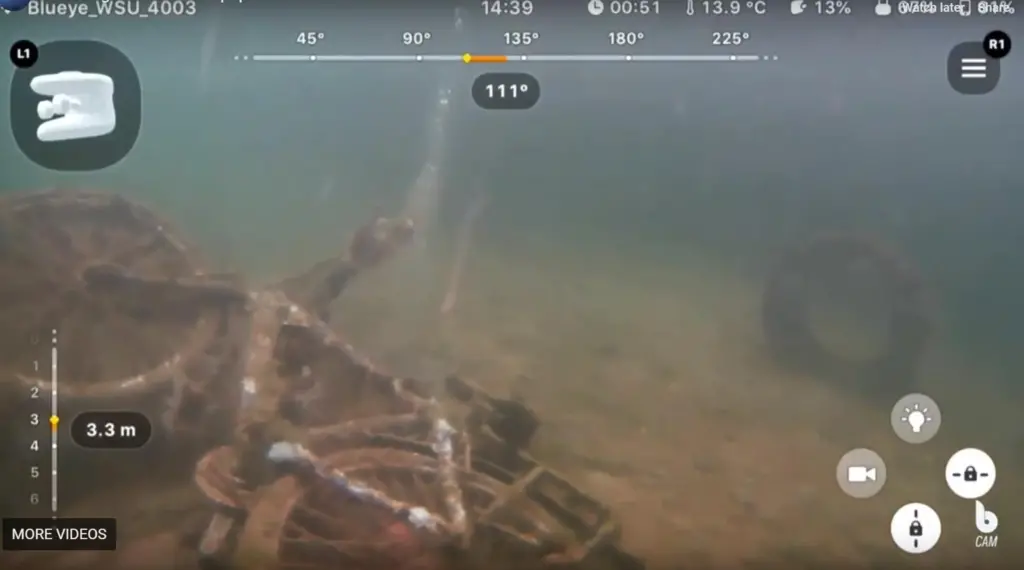
The newspaper decided to follow up in true investigative style and worked with Norwegian ROV manufacturer BluEye to see if there was any substance to the story. In all, four of underwater units were used to cover the area, two launched from land, the other pair from a boat midstream, the live video feed being streamed back to shore. Usefully, BluEye’s ‘Pioneer’ has strong LED lights and HD camera which allowed the teams to capture live video images even in a fairly murky city canal.
With direction from residents, the ROV located bubbles coming from the river and even returned to the site with a ‘spear’ mounted to its top which enabled it to open up suspicious, underwater molehill-like mounds that might have been created by the motion of venting gas.
But while the video made it obvious there were indeed gases being released from the limestone bed, the experts rejected this as the real source of the problem and the general consensus on seeing the video was that it’s not an uncommon occurrence. This, happily, put the river and its bubbling bottom in the clear.
Instead, the culprit appears to be much more mundane: an asphalt boiler being used by construction workers on a bridge.
By Stevie Knight
Related Articles
 ENVIRONMENT
 MARINE CONSTRUCTION
 ENVIRONMENT