



Project tests methanol emissions
A project to evaluate methanol as a marine fuel in Asia will involve the installation of a methanol-powered engine in a vessel to test its fuel efficiency and low emission viability at the Port of Singapore.
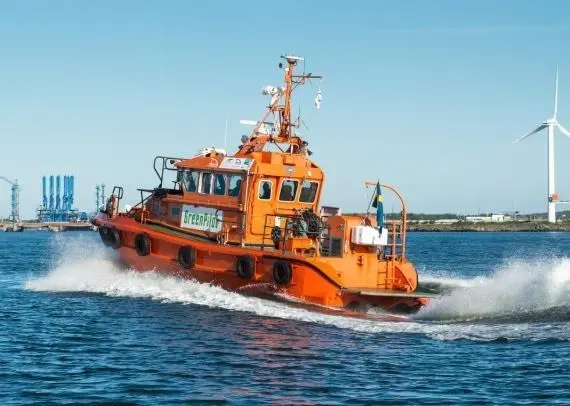
The first phase of the project consists of desktop and bench-testing the engine employed in the GreenPilot evaluation programme in Gothenburg, Sweden. In the second phase, the engine will be shipped to Singapore for installation onboard a harbour craft vessel, likely a pilot boat, for service within a fleet for a six-month sea trial, followed by an engine ‘teardown’ to test clearances and material compatibility.
“For maritime players in Singapore, the project will be a useful demonstration of the benefits of Methanol as a marine fuel, encouraging them to consider it as an alternative fuel once they gain a better understanding,” said Chris Chatterton, COO of the Methanol Institute (MI), which is backing the project at Singapore’s Nanyang Technological University (NTU).
Mr Chatterton added: “The GreenPilot project together with others such as the SUMMETH (Sweden) and Methaship (Germany) projects, have shown that Methanol can be easily adopted as a marine fuel at reasonable cost and without the complexity of other low emission alternatives.”
The GreenPilot project demonstrated that it is feasible to convert a pilot boat to methanol operation using available technology. Spark-ignited engines with port-injected methanol were found to have engine efficiency similar to diesel engines. Emissions reductions were substantial compared to conventional fuel oil: there is no sulphur in methanol and NOx emissions were reduced so that the engine could meet Tier III NOx emission standards.
Particulate emissions from combustion were 99% lower than those from conventional fuel oil and when methanol from fossil-free feedstock is used, greenhouse gas emissions can be reduced significantly.
Related Articles
 POWER & PROPULSION
 VESSELS
 POWER & PROPULSION