![MaritimeJournal[Seawork]](https://www.maritimejournal.com/wp-content/uploads/2026/09/MaritimeJournalSeawork.svg)


Encouraging local tug crews in South Africa
Transnet National Ports Authority (TNPA) is contributing to the development of local skills for crewing its tugs with its cadet training programme.
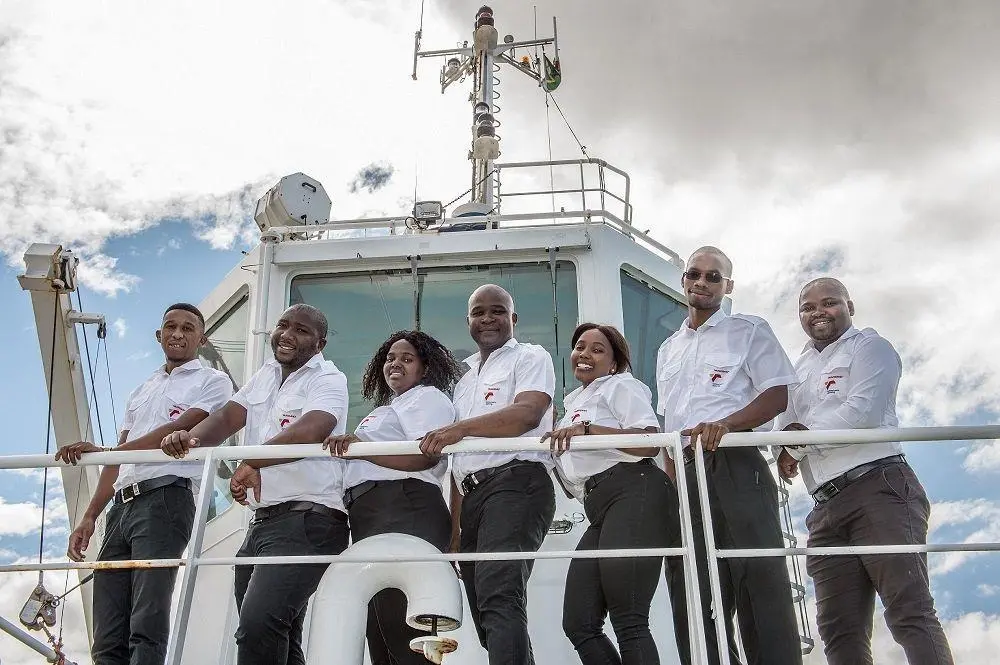
Encouraging young people into the shipping industry is a topic of concern globally which TNPA is addressing head-on with its training of locals with skills to qualify as tug masters where previous success has seen some embark of careers as harbour masters and marine operations managers, qualifications in high demand internationally.
Recently, Port of Ngqura celebrated the intake of seven marine cadets representing a group of ten out of a national group of 31 who recently completed academic and sea-based training before being employed for three years to complete their tug master training. The remaining three are being similarly employed by Port of Richards Bay with 21 cadets still in the process of completing their cadetship ashore and afloat.
An important aspect of the programme for TNPA is “uplifting surrounding communities” with various interventions in place to attract and develop these highly-skilled local people. It begins at previously disadvantaged high schools where bursaries are offered to deserving applicants at adopted schools nationally. The marine career awareness programme includes: media exposure, career exhibitions, visits to schools, allowing learners to visit TNPA ports and partnerships with various stakeholders in the education world.
The seven Port of Ngqura trainees, five male and two female, were initially recruited from schools in the Eastern Cape and have returned home after being away completing academic and sea-based experience elsewhere.
Port of Ngqura tug master Sibusiso Dlamini says: “The Tug Master Trainees are trained to handle and manoeuvre tugboats within port limits and in rare cases they will do coastal voyages between ports. The training also include the managing of crew and ensuring that tug maintenance is done effectively.”
Siphokazi Magetuka, HR manager at Port of Ngqura added: “This initiative is more than just bricks and mortar or the latest technology. None of our strategic plans can succeed without having the appropriate pipeline of maritime skills, knowledge and experience in place. At the heart of this programme is the need to continuously improve the operational efficiency of our ports, to remain globally competitive and in the process lower the cost of doing business, offering our customers quality service.”
By Peter Barker

Related Articles
 SPECIAL REPORTS
 TUGS & SALVAGE
 EQUIPMENT